Seine Side Stories: Why the Bouquinistes are the Soul of the River
Practical tips 10 min read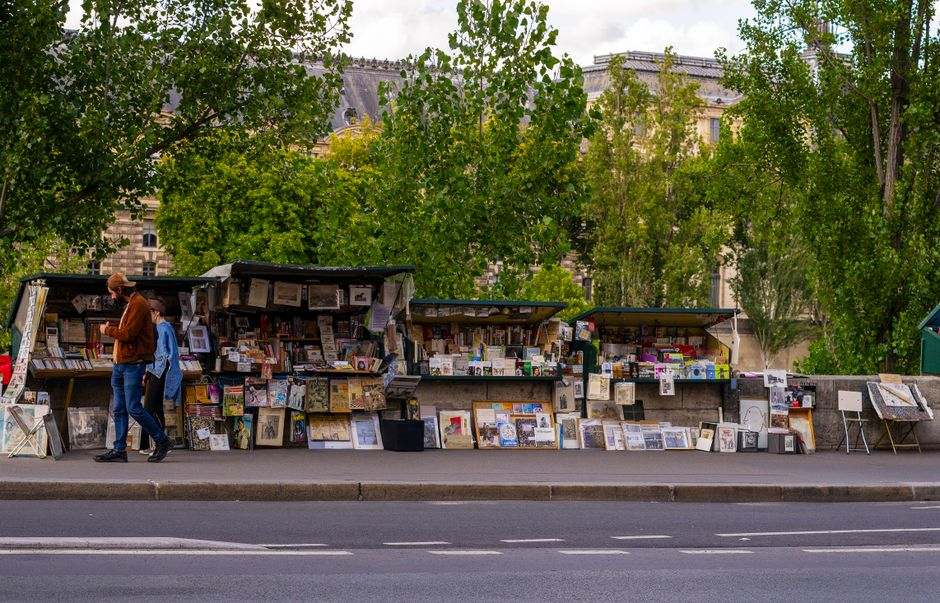
Quick answer
Discover the timeless allure of Paris's bouquinistes along the Seine—five centuries of riverside booksellers enduring wars and revolutions. Explore their green boxes brimming with 300,000 treasures...
Here is a fuller, more polished version of the article with stronger pacing and a more natural editorial flow.
The Bouquinistes of the Seine
Between Pont Marie and Quai Voltaire, nearly three kilometers of green metal boxes line the stone parapets of the Seine. Inside them are books, prints, postcards, magazines, maps, engravings, and all kinds of printed ephemera, together amounting to hundreds of thousands of objects. To walk that stretch is to move through one of Paris’s most distinctive living traditions, one that has survived war, revolution, urban planning, and the digital age.
The bouquinistes are more than simply booksellers by the river. They are part of the city’s identity. Their boxes have become as familiar to Paris as the bridges and quays themselves, and yet the profession behind them has a long history of adaptation and resistance. What began as a controversial and sometimes illicit trade has become one of the most recognizable symbols of Parisian culture. That survival is what makes them so compelling: they are not a reconstructed heritage site, but a working tradition that still opens for business every day, weather permitting.
What keeps them interesting is also what keeps them fragile. The bouquinistes exist in the space between utility and heritage. They are practical sellers with stock to move, but they are also custodians of a very particular kind of urban memory. Browsing their boxes is not the same as shopping in a bookstore. It is slower, less predictable, and far more dependent on chance. That sense of discovery is part of the appeal, and it is what continues to draw both Parisians and visitors back to the riverbanks.
A Trade with a Long Past
The origins of the bouquinistes go back to the 16th century, when itinerant booksellers known as colporteurs sold volumes from baskets or makeshift stalls along the Seine. At the time, the riverbanks were still developing as commercial spaces, and many sellers relied on portable setups: canvas sheets, trestle tables, or baskets hung around the neck. The trade was practical, mobile, and loosely organized, which made it vulnerable to suspicion from authorities.
That suspicion was not entirely accidental. Books were political objects as much as cultural ones, and during the Wars of Religion, sellers along the Seine were accused of trafficking forbidden Protestant texts. By 1557, the authorities banned them from operating. As with many attempts to suppress the circulation of printed material, the prohibition did not really solve the problem. The trade adapted, as it often would later.
The French Revolution changed the scale of everything. Suddenly, libraries from aristocratic houses and church collections were being broken apart, and a flood of books entered circulation. That created opportunity for sellers who knew how to move printed material cheaply and quickly. By the time Napoleon’s era arrived, the bouquinistes had begun to resemble the profession we recognize today: not wandering peddlers, but fixed sellers working specific stretches of riverbank day after day.
The city eventually formalized the arrangement. In 1859, sellers were granted concessions allowing them to operate from sunrise to sunset in designated locations. Later, in 1891, they were permitted to leave their boxes attached permanently to the railings. The familiar green metal boxes, standardized and regulated, became part of the city’s visual order in the early 20th century. During World War II, they even played a hidden role in the Resistance as secret drop points for messages. That detail alone says a great deal about the bouquinistes: they are not just picturesque objects in the urban landscape. They have been woven into the practical life of the city for generations.
What the Boxes Hold
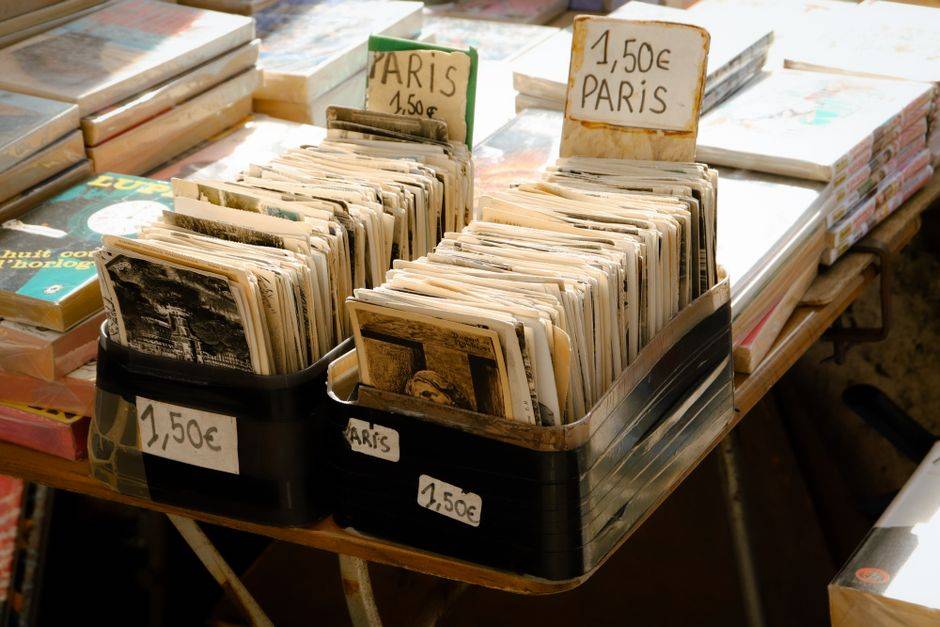
Today, the bouquinistes occupy both banks of the Seine, with sellers distributed between the right bank and the left bank in long, continuous runs. Their inventory is strikingly varied. Some boxes contain rare first editions, old maps, and fine engravings. Others are full of secondhand paperbacks, vintage postcards, poetry collections, art books, political pamphlets, old magazines, or cookbooks. You may find inexpensive souvenirs in one box and an item of real historical value in the next.
That unpredictability is the whole point. The bouquinistes offer a kind of browsing that modern retail has nearly erased. There is no algorithm recommending the next book, no search filter narrowing the field, and no polished interface making the process efficient. Instead, you flip through things physically, one by one, and let yourself be surprised. A book appears because your eye caught a faded spine. A print ends up in your hands because it was tucked behind a stack of postcards. That accidental quality gives the experience a real charm.
Some sellers specialize deeply. One may know 19th-century literature, another comic books, another engravings or maps. Others keep a more general stock but still possess years of practical knowledge about what they sell. Many have been in the same spot for decades. If you ask a serious question, you may get a surprisingly detailed answer. That is one of the pleasures of the bouquinistes: they can be casual browsing spaces, but they can also become expert-led encounters if you show real interest.
What matters most is the physicality of the whole thing. These are objects you can handle, compare, and notice in person. The paper, the smell, the wear, the inscriptions, the oddity of an old print or a forgotten pamphlet all contribute to the experience. In a city so often defined by museums and monuments, the bouquinistes preserve a more informal kind of culture, one based on exchange rather than display.
A Living Heritage
In 1991, UNESCO recognized the riverbanks and their booksellers as part of the World Heritage landscape of Paris. That recognition acknowledged something important: the bouquinistes are not decorative clutter. They are part of the city’s cultural patrimony. Their boxes, their routines, and their place along the Seine all contribute to the identity of central Paris.
At the same time, the future is not entirely secure. The bouquinistes have had to contend with changing reading habits, pressure on riverside space, urban redevelopment, and the general uncertainty that comes with any long-lived street trade in a modern city. Some of the pressures are economic, others logistical, and others tied to the changing expectations of what riverfronts should look like in the 21st century.
That tension is part of their story. The bouquinistes survive not because they are frozen in time, but because they continue to function. They are working sellers, not museum pieces. The boxes open and close daily. Stock changes. Weather affects the day. Some sellers chat, others stay reserved. That ordinary repetition is exactly what gives the tradition its strength. It remains alive because it still serves a purpose.
There is also something quietly modern about the whole arrangement. In a world where so much shopping has become frictionless and anonymous, the bouquinistes insist on slowness and contact. You have to be there physically. You have to look. You have to ask. You have to discover the thing rather than be served it. That makes the experience feel almost radical now, even though it is centuries old.
How to Visit Well
The best time to visit is usually on weekday mornings, when sellers are setting up and the riverbanks are quieter. Early in the day, the boxes are easier to browse, and the pace is more relaxed. It is also a better time if you want to talk to the vendors, since they are less rushed and more likely to answer questions.
A good visit depends on patience. You do not come here with a checklist. You come to wander, stop, compare, and browse until something catches your attention. That might be a vintage postcard, a cheap paperback, an art print, or a book you did not expect to find. The point is not to arrive with certainty. The point is to let the place work on you a little.
If you are looking for something specific, it helps to ask. Sellers often know exactly where particular categories are located, and some are happy to point you toward a box that matches your interest. Others are quieter and more focused on the rhythm of the day. Either way, the interaction is part of the experience. This is a trade built on human presence, and that remains true even after all these centuries.
The riverbanks themselves also matter. The bouquinistes are best understood not as isolated stalls but as part of the Seine’s broader landscape. Their green boxes sit against bridges, embankments, and old stone railings that have accumulated meaning over time. Walking the route gives you a sense of continuity that is hard to replicate elsewhere in the city. The books are important, but so is the setting in which they are sold.
Why They Endure
The bouquinistes survive because they offer something that digital commerce cannot: serendipity, texture, and surprise. You do not scroll through them. You walk past them. You do not optimize the search. You notice something by chance. That slower form of discovery gives the experience a human scale that feels increasingly rare.
They also survive because they are deeply Parisian without feeling exclusive. You do not need specialist knowledge to enjoy them. You do not need to be a collector or a scholar. You only need enough curiosity to stop and look. That openness is part of their charm. They belong to the city, but they are accessible to anyone willing to take the time.
There is also an emotional dimension. The bouquinistes connect the present to a much older printed world. They remind you that books once lived very differently, circulating through hands, stalls, tables, and riverside boxes rather than screens and platforms. The trade has changed, of course, but that old relationship between the city and the printed page still survives here in visible form.
The River Between Books
The writer Blaise Cendrars famously described the Seine as the only river in the world that flows between two rows of books. It is a striking line because it captures both the poetry and the practicality of the bouquinistes. Their boxes are not merely decoration along the water. They are part of what the river means.
That is why the bouquinistes matter so much. They are not just a picturesque detail for tourists to photograph. They are a working tradition that has adapted for centuries without losing its character. They remind you that Paris still has places where history is not displayed from a distance but handled, opened, sold, and passed from one person to another.
For anyone who wants to experience Paris beyond the obvious landmarks, the bouquinistes are one of the city’s most rewarding stops. They ask for very little, but they offer a great deal: chance, conversation, memory, and the possibility of finding something you were not looking for. In a city full of planned beauty, that kind of discovery feels especially valuable.
Keep exploring: bring Haussmann style into your home · planning Paris and Rome together · Plan your Paris trip with a local
Get our free Insider Paris Guide: the neighborhoods, restaurants and hidden corners we send our own clients. No tourist traps, no filler.
Get the free guide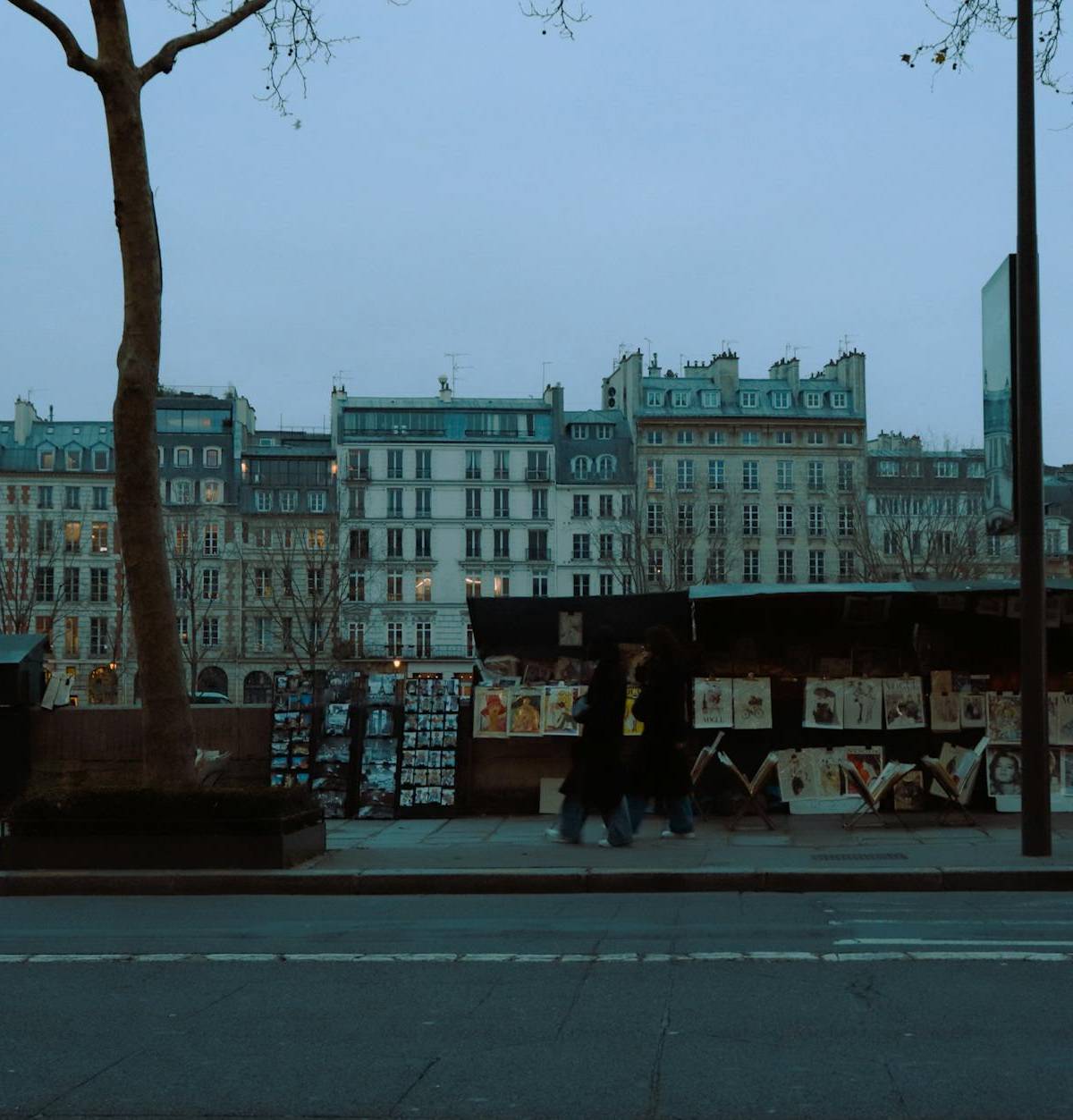
Ready to experience Paris for yourself? Plan Your Paris Trip with Chic Trip - a custom route, coordinated bookings and one accountable planner.
Planning your own Paris trip? Estimate your budget with the free Paris trip cost calculator, find out how many days you need in Paris, check when to book everything in Paris, or build a day-by-day plan with the Paris itinerary planner.
About Chic Trip
A journey designed exclusively for you: a personal itinerary, restaurant recommendations refined with your feedback, approved reservations and practical details in the Chic Trip app. Your written proposal confirms the total, inclusions and booking conditions before you commit. Start with a free call or email; no payment or price acceptance is required to enquire.