Where Kings Built Their Immortality
History 8 min read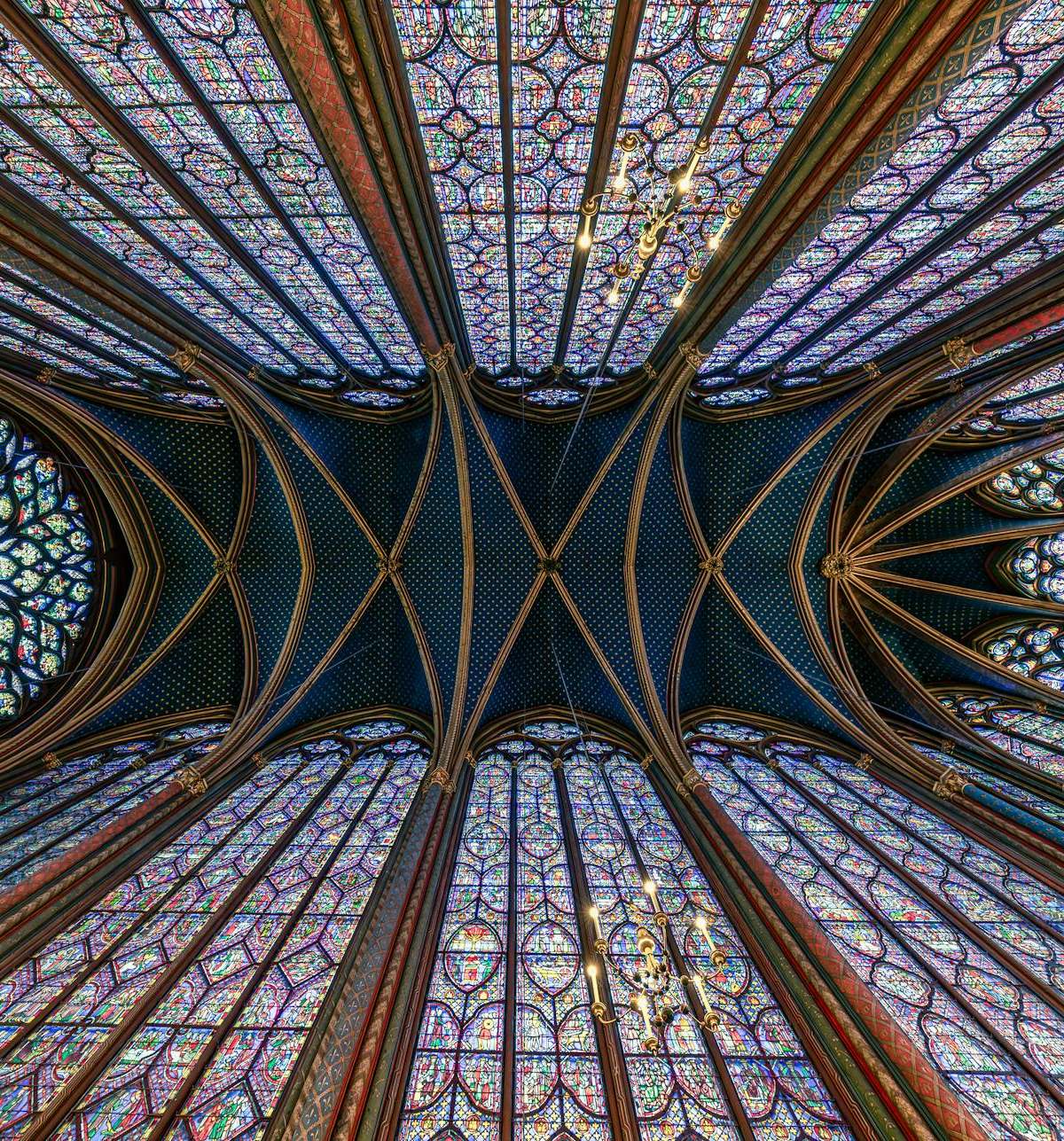
Quick answer
Discover how French monarchs commissioned architectural masterpieces to cement their legacy. Explore Sainte-Chapelle and Saint-Denis through a luxury traveler's lens.
The stone remembers everything. Walk through certain doorways in Paris and you're not entering monuments—you're stepping into the architectural psychology of absolute power. French kings didn't just rule; they commissioned buildings designed to outlive empires, stained glass meant to prove divine favor, and tombs engineered to guarantee resurrection. What remains isn't ruin. It's a curated theater of monarchy, where Louis IX's obsession with holy relics sits three blocks from the cell where Marie Antoinette waited for the blade. Americans raised on democratic principles find themselves quietly awed by the audacity of men who believed God wanted them draped in ermine.
Sainte-Chapelle
10 Boulevard du Palais, 75001 Paris
Louis IX—later canonized as Saint Louis—spent a fortune acquiring what he believed was Christ's crown of thorns, then built a reliquary chapel so transcendent that medieval pilgrims called it "the gate to Paradise". Completed in just seven years between 1241 and 1248, the Sainte-Chapelle wasn't meant to be humble. Fifteen stained-glass windows and a rose window form literal walls of light, depicting 1,113 biblical scenes in cobalt, ruby, and gold. The effect on a sunny afternoon is hallucinogenic—light fractures across stone floors, and you understand why kings tied their legitimacy to spectacle. This was propaganda rendered in colored glass, announcing France's dominance over Western Christendom through sheer visual overwhelm. The lower chapel, designed for palace staff, feels almost cramped; the upper level, reserved for the king and distinguished guests, soars.
Chic Tip: Book a timed ticket online to skip the security line that snakes down Boulevard du Palais, and visit between 2-4 PM when afternoon light hits the western windows.
Basilica of Saint-Denis
1 Rue de la Légion d'Honneur, 93200 Saint-Denis
This is where French kings go when they die. The Basilica of Saint-Denis holds the remains of forty-two kings, thirty-two queens, and sixty-three princes—nearly every French monarch from the 10th century through Louis XVIII in the 19th. The building itself pioneered Gothic architecture; Abbot Suger's 12th-century reconstruction introduced the ribbed vaults and stained glass that would define the style. But the real draw is the necropolis. Effigies lie in rows, some serene, others gruesomely realistic, depicting monarchs at the moment of death and resurrection. During the Revolution, mobs systematically exhumed the royal corpses—forty-six kings, thirty-two queens—and dumped them into two mass graves covered in quicklime. The tombs survived only because archaeologist Alexandre Lenoir claimed them as art. Walking among them feels less like museum-going and more like trespassing in a family crypt where terrible things happened.
Chic Tip: The basilica sits in a working-class suburb most tourists skip—take the Métro line 13 to Basilique de Saint-Denis and walk through the outdoor market en route to see contemporary Paris layered over royal France.
Palace of Versailles
Place d'Armes, 78000 Versailles
Louis XIV moved the entire French court seventeen kilometers outside Paris to prove a point: the Sun King didn't need a city; the city needed him. What began as a hunting lodge became 2,300 rooms, 67,000 square meters of floor space, and gardens engineered to defy nature with fountains, sculptures, and 200,000 trees. The Hall of Mirrors—73 meters of floor-to-ceiling arched mirrors reflecting gardens through seventeen windows—was designed to bankrupt visiting diplomats with envy. This is where the Treaty of Versailles was signed in 1919, where Marie Antoinette played peasant in her private hamlet, where the ancien régime ate itself from the inside through sheer excess. Restoration work continues; the 2026 season promises newly opened rooms and events that treat the palace as living theater rather than embalmed history. Crowds are murderous in summer, but the scale still astonishes—this was a man who believed architecture could substitute for humility.
Chic Tip: Skip the main palace queues and head first to the Trianon estates and Marie Antoinette's hamlet, then circle back to the State Apartments after 3 PM when tour groups have departed.
La Conciergerie
2 Boulevard du Palais, 75001 Paris
Before it became revolutionary France's antechamber to the guillotine, La Conciergerie was a medieval royal palace, home to French kings before they moved to the Louvre. The vast Gothic hall with vaulted ceilings—called the Salle des Gens d'Armes—dates to the 14th century and once hosted royal banquets. Then 1789 happened. The palace became a prison where 2,600 people awaited execution during the Terror, including Marie Antoinette, who spent seventy-six days in a damp cell after Louis XVI's beheading. You can visit a reconstruction of her cell, draped in black curtains, furnished with a cot, a chair, and guards who watched her constantly. Her domestic servant Rosalie Lamorliere left accounts of the former queen's final weeks—humiliated, exhausted, her hair turned white—subsisting on bouillon and bread. The juxtaposition is deliberate: royal grandeur in the architecture, revolutionary brutality in the cells. It's a monument to regime collapse.
Chic Tip: Buy a combined ticket with Sainte-Chapelle—they're on the same block of the Île de la Cité, and the architectural whiplash from divine monarchy to imprisoned queen takes thirty seconds on foot.
Place des Vosges
Place des Vosges, 75004 Paris
Henri IV commissioned Paris's first royal square in 1605, completing it in time for his son Louis XIII's engagement to Anne of Austria in 1612. Thirty-six identical brick-and-stone pavilions surround a central garden where a statue of Louis XIII now stands, though the king himself never saw the finished project—he was assassinated four years before completion. The symmetry was revolutionary: perfect arcades, uniform rooflines, and only two buildings—the King's Pavilion and the Queen's Pavilion—allowed to break the pattern. This became the template for European royal squares, exporting French classical style as architectural doctrine. Today, the arcades house galleries, antiquarians, and the occasional Michelin-starred restaurant. Locals still sunbathe in the central garden, unbothered by the weight of absolutist urban planning overhead. It's Henri IV's vision of controlled elegance, now quietly absorbed into daily Parisian life.
Chic Tip: Visit late afternoon when the western arcades cast long shadows across the gravel, and peek into the Hôtel de Sully's courtyard at number 62 for intact 17th-century interiors.
Chic Trip specializes in threading these royal sites into itineraries that respect both chronology and stamina—Saint-Denis in the morning before crowds, Sainte-Chapelle timed for optimal light, Versailles structured to avoid the worst bottlenecks. History this layered needs more than a map; it needs choreography.
⁂
The Architecture of Absolute Power
French kings didn't build homes. They engineered monuments to immortality, commissioning stone and glass testaments designed to outlast dynasties, revolutions, and the messiness of democratic memory. What survives across Paris and its periphery isn't nostalgia—it's the physical infrastructure of monarchy, fortresses that became palaces, hunting lodges that swelled into complexes where entire courts maneuvered for favor. Eight centuries of Capetian, Valois, and Bourbon rulers left a landscape engineered for spectacle: keeps built to dwarf invaders, galleries designed to showcase divine favor, gardens where geometry substituted for nature. Americans steeped in Jeffersonian ideals walk these spaces and confront an uncomfortable realization—absolute power, whatever its moral failings, produced architecture that still commands reverence.
The Louvre: Fortress to Power Center
Rue de Rivoli, 75001 Paris
Philip Augustus ordered construction of the original Louvre in 1190 as a military fortress, not a residence—thick walls, defensive towers, and a central keep designed to repel Viking invasions along the Seine. For nearly two centuries it functioned as Paris's armory and treasury, a blunt instrument of defense rather than elegance. That changed under Charles V in the 14th century, who recognized that kings needed to project sophistication as much as strength. He commissioned sumptuous apartments, a vast library, and reception halls fit for diplomatic theater, transforming the fortress into France's principal royal residence.
Francis I demolished much of the medieval structure in the early 16th century, replacing Gothic severity with Renaissance grace. He imported Italian architects and artists—including Leonardo da Vinci, who died at the French king's chateau in Amboise—and designed a palace meant to rival anything in Florence or Rome. Successive monarchs kept building: Catherine de Medici added the Tuileries Palace to the west, Henri IV commissioned the Grande Galerie to connect the two structures, creating a sprawling complex where power could flow seamlessly between ceremonial spaces and private apartments.
Louis XIV spent his childhood in the Louvre before abandoning it for Versailles in 1682. The palace, suddenly vacant
Keep exploring: grand monuments of the Napoleonic empire · bring Haussmann style into your home · Plan your Paris trip with a local
Get our free Insider Paris Guide: the neighborhoods, restaurants and hidden corners we send our own clients. No tourist traps, no filler.
Get the free guide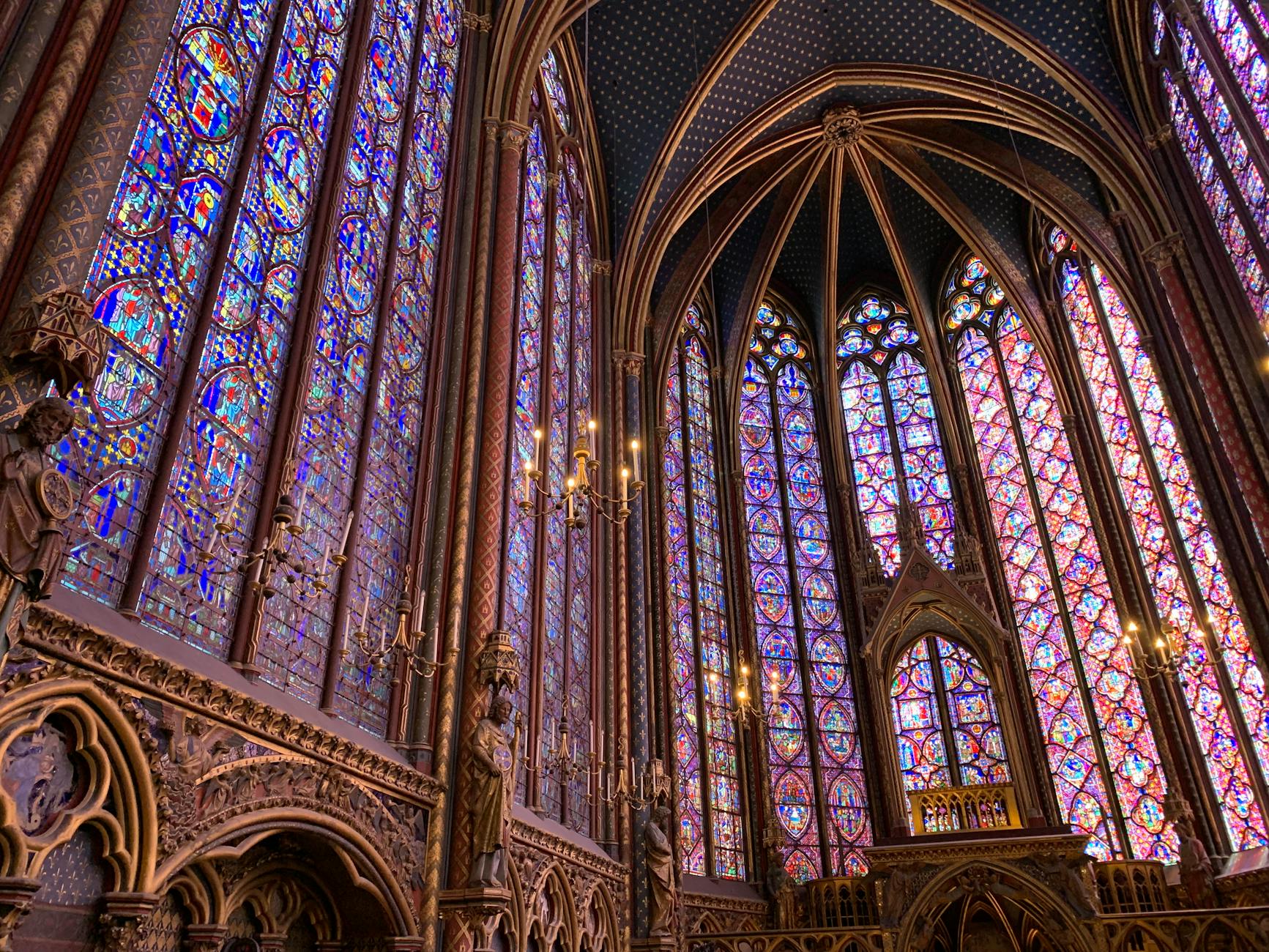
Ready to experience Paris for yourself? Plan Your Paris Trip with Chic Trip - a custom route, coordinated bookings and one accountable planner.
Planning your own Paris trip? Estimate your budget with the free Paris trip cost calculator, find out how many days you need in Paris, check when to book everything in Paris, or build a day-by-day plan with the Paris itinerary planner.
About Chic Trip
Chic Trip is a Paris-based trip planning and booking concierge for American travelers. Founder Frederic Canesso and his Paris team design day-by-day itineraries and coordinate restaurant tables, official timed entries, tours and airport transfers. The planning fee depends on trip length and group size. Restaurant reservations and official tickets are at face price, hotels at public rates, and tours and transfers at clear package prices quoted upfront. Tell us about this trip or read our traveler reviews and feedback.