The Belle Époque: Architecture and Glass Canopies of the Great Department Stores
History 13 min read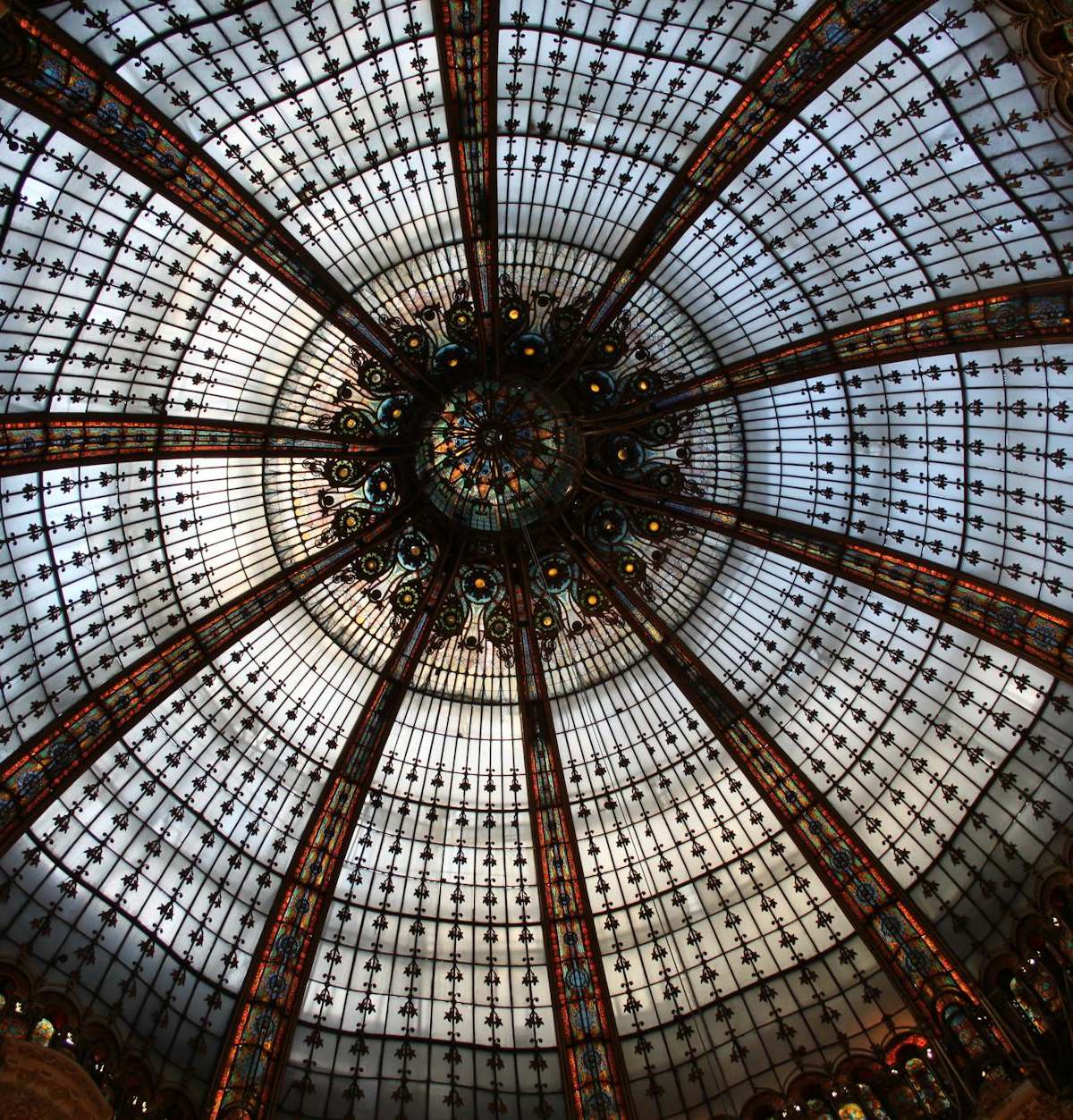
Quick answer
Discover the stunning Belle Époque architecture of Paris's iconic grands magasins, where glass canopies and iron frameworks turned shopping into a luxurious art form. Explore Le Bon Marché and more.
Between 1852 and 1912, Paris invented modern consumer culture in buildings so beautiful that shopping became secondary to simply being inside them. The grand department stores—grands magasins—rose during the Second Empire and Belle Époque as cathedrals to commerce, temples where iron frameworks held stained glass ceilings, where natural light flooded merchandise displays through architectural innovations borrowed from railway stations and exhibition halls. These weren't just retail spaces. They were manifestos declaring that capitalism could be beautiful, that shopping deserved architecture previously reserved for churches and palaces.
The survivors—Galeries Lafayette, Printemps, Le Bon Marché, La Samaritaine—still operate, though their original revolutionary impact is difficult to comprehend now when every city holds shopping centers. In the 1860s through 1910s, however, these buildings shocked visitors. Entire city blocks transformed into single retail environments, electric lights replacing gas lamps, escalators carrying customers between floors, glass roofs that seemed to defy structural possibility. They changed how people shopped, how they moved through urban space, and ultimately how Paris looked.
Le Bon Marché: Where It All Began
Aristide Boucicaut opened the first modern department store at 22 Rue de Sèvres in 1852, though a small shop had existed on the site since 1838. What made it "modern" wasn't just size but operating principles that revolutionized retail: fixed prices marked on merchandise (no haggling), ability to enter and browse without obligation to buy, money-back returns, catalog mail-order service, and aggressive advertising that treated shopping as leisure rather than necessity.
By 1869, success demanded new construction. Boucicaut commissioned architect Louis-Auguste Boileau (though sources also credit Alexandre Laplanche) to design a building worthy of his vision. Construction began September 9, 1869, and was interrupted by the Franco-Prussian War siege of Paris in 1870, during which the incomplete building served as food distribution center.
The structure resumed after the war, but quickly proved too small. In 1872, Boileau brought in engineer Armand Moisant to design an iron framework that would support multiple expansions through 1887. Gustave Eiffel's involvement—often credited as primary architect—was actually limited to a "minor expansion" in 1879, far less significant than popular mythology suggests.
What mattered architecturally was the visible iron framework. Earlier department stores concealed their metal skeletons behind stone facades. Le Bon Marché—inspired by the 1867 Paris Exposition Universelle's innovative exhibition halls—made structure visible, celebrating iron's strength and the vast glass surfaces it enabled. Natural light became selling point: merchandise displayed under daylight rather than dim gas lamps looked more appealing, colors more accurate. The building's success influenced every subsequent department store globally.
The current structure occupies over 345,000 square feet across two buildings connected by an elevated glass walkway. The 1920s saw addition of the Pomone design department, riding the Art Deco wave. More recent renovations by designer Andrée Putman added modern escalators that echo the original's innovative spirit while serving contemporary traffic.
Visit today and the Belle Époque atmosphere persists despite modernizations. The light still floods through vast windows. The iron columns still rise to support glass ceilings. Across the glass bridge, La Grande Épicerie—the food hall—displays vegetables and water bottles with such artistry that you'll want to redecorate your life just to accommodate them properly.
La Samaritaine: Art Nouveau Meets Art Deco
In 1870, Ernest Cognacq and his wife Marie-Louise opened a small shop near Pont-Neuf. As it expanded between 1890-1910, Cognacq commissioned architect Frantz Jourdain to create something revolutionary: a building that would "bring art into the street".
Jourdain delivered Art Nouveau perfection. The riveted steel frame supported massive glass roofs, while facades featured glazed lava stone panels in the sinuous organic curves defining Art Nouveau style. Completed in 1910, the structure made its metal skeleton visible—following Le Bon Marché's precedent but pushing further into decoration. The building was light-filled theater, challenging the American architect Louis Sullivan's innovations in Chicago.
By the 1920s, however, Art Nouveau looked old-fashioned. When Cognacq commissioned expansion, he couldn't use Jourdain—the name was too associated with outdated style. Instead, Jourdain's partner Henri Sauvage designed a 1928 Art Deco addition that maintained the cream Parisian stone and exposed steel but embraced geometric modernism over organic curves.
The result: a department store documenting architectural fashion's evolution, Art Nouveau flowing into Art Deco within a single unified complex. Jourdain's light-filled iron-framed building pioneered techniques, while Sauvage's geometric extension showed where architecture was heading.
The store closed in 2005 for massive renovation. SANAA, the Japanese architecture firm, unified the complex, adding glass-roofed courtyards and replacing a nondescript 19th-century building with rippling glass facade that critics compared to shower curtains but which provides striking minimalist contrast to the ornate Art Nouveau sections. They also installed glass mosaic floors on the Art Nouveau building's top level, referencing Jourdain's original design where glass floors once covered the entire store. It reopened in 2021, now containing not just retail but a luxury hotel and residential apartments.
Printemps: Phoenix Rising
Jules Jaluzot founded Printemps in 1865 at 64 Boulevard Haussmann, betting that Haussmann's new boulevard would become commercial center—a gamble that paid off spectacularly. By 1881, the store had grown large enough that when fire destroyed most of it in March of that year, rebuilding became opportunity rather than disaster.
Architect Paul Sédille designed what Émile Zola would describe as a "cathedral of commerce, solid and light". At a time when metal structures were carefully hidden under stone cladding, Sédille created an all-iron-and-glass facade designed to flood merchandise with natural light. The modernity inspired Zola's novel Au Bonheur des Dames, where he described a fictionalized department store that clearly drew from Printemps and its competitors.
Sédille's 1883 building pioneered several innovations: electricity throughout (still novel), compressed-air foundations (first civilian building in Paris to use the technique previously reserved for bridge construction), and that revolutionary transparent facade.
But the jewel came later. In 1921, another fire destroyed most of the structure and its wooden roof. Architect Eugène Brière received commission to design not just repairs but something extraordinary: a stained-glass cupola that would become Printemps's signature. The project took two years, completed in 1923.
The cupola measures approximately 7 meters in diameter and contains 3,185 individual glass panels arranged in Art Nouveau-meets-Art Deco style. The glass work—peacock blues, rich oranges and reds—creates spectacular light shows as sun moves across it during the day.
When World War II threatened in 1939, workers painstakingly dismantled all 3,185 panels, storing them in a warehouse in Clichy-la-Garenne in the Hauts-de-Seine. The precaution proved unnecessary—Paris suffered no significant bombing. But after the war, the panels' location was forgotten. They disappeared into bureaucratic obscurity.
In 1973, Brière's own grandson discovered the storage location and oversaw restoration using his grandfather's original plans preserved in the family atelier. The cupola returned to its original glory, though it required another major restoration in 2019 by the Atelier du Vitrail to ensure it remained in top condition.
Technical note: The structure is properly called a cupola (interior, visible from inside) rather than dome (exterior structure that protects the cupola). Visitors often confuse the terms, but architects maintain the distinction.
Printemps later added amenities that demonstrated Parisian innovation: in 1910, the first animated window displays under the cupola; in 1964, an actual ski slope on the rooftop terrace 50 meters high—"Chamonix-sur-Seine," as wags called it—letting Parisians practice for the mountains without leaving the city.
Galeries Lafayette: The Neo-Byzantine Masterpiece
The youngest of the great Belle Époque stores is also the most famous for its architecture. Théophile Bader and Alphonse Kahn founded Galeries Lafayette in 1893, initially operating from a modest building at the corner of Rue La Fayette and Rue de la Chaussée d'Antin. By 1912, success demanded expansion into a building that would rival—no, surpass—the competition.
Architect Ferdinand Chanut designed the structural geometry, master glassmaker Jacques Grüber created the stained-glass panels, and Art Nouveau metalworker Louis Majorelle crafted the elaborate wrought-iron railings. What they created remains one of Paris's most visited monuments.
The dome rises 43 meters, spanning 1,000 square meters of stained glass arranged in 10 sections forming an immense flower. The style blends Art Nouveau's organic curves with neo-Byzantine inspiration—the rich golds, the structural ambition, the way light transforms the space recalls Hagia Sophia more than typical Parisian architecture. Three tiers of balconies with Majorelle's elaborate wrought-iron tracery overlook the central atrium, the railings themselves worthy of museum display.
The 1912 construction happened with remarkable speed—erected "in record time" according to contemporary accounts. A 1932 renovation introduced Art Deco elements, adding angular faceted details to the flowing Art Nouveau base without destroying the overall elegance.
Then came World War II. In 1940, fearing that bombing would shatter the glass as it had cathedral windows during World War I, workers carefully removed all the colored glass for safekeeping. Paris endured neither significant bombing during the May 1940 German occupation nor during the August 1944 liberation. The precaution proved unnecessary—but ironically, some of the colored glass was lost entirely. After the war, nobody could remember where all the pieces had been hidden.
With no color photography for reference, restorers replaced the missing polychrome glass with largely clear panels. What visitors see today is magnificent but not entirely original—the dome features more clear glass than Grüber intended, a ghostly version of its full 1912 glory. The glass undergoes regular maintenance, with panels removed at night for cleaning in a Paris workshop and temporary replacements installed so visitors don't miss the spectacle.
Recent restoration in 2021 focused on practical improvements: waterproofing, modernizing the lighting systems (now programmable), and installing motorized hoisting points for staging events. Over a century of expansions and renovations—additional floors, plumbing, electrical systems—had drastically reduced natural light entering through the dome. The restoration returned daylight to flood the space as Chanut intended.
The dome remains Galeries Lafayette's signature, attracting 37 million annual visitors. Viewing it requires simply walking through the front entrance at 40 Boulevard Haussmann—no admission, no ticket, open during business hours. The rooftop terrace offers Eiffel Tower views without the queues. Heritage tours provide deeper architectural context.
The Architectural Revolution They Represented
These department stores pioneered building techniques that reshaped Paris and influenced architecture globally. Several innovations stand out:
Visible Iron Frameworks: Previous architecture hid structural metal behind stone facades, maintaining traditional appearance while using modern engineering. Department stores made structure decorative, celebrating iron's strength and the design possibilities it enabled. This transparency influenced everything from exhibition halls to railway stations to office buildings.
Glass as Primary Material: The vast glass roofs and facades weren't just aesthetic—they served commercial purpose. Natural light made merchandise more appealing, colors more accurate, shopping more pleasant. The buildings were essentially greenhouses optimized for retail. This emphasis on natural light influenced modernist architecture's obsession with transparency and light-filled interiors.
Multi-Story Open Atriums: Rather than dividing buildings into discrete floors, the grands magasins created soaring vertical spaces where all levels remained visibly connected. You could stand on ground floor and see up through multiple stories to the glass roof. This spatial drama—borrowed from exhibition halls and later refined in 20th-century shopping malls—made buildings feel larger and more impressive while allowing surveillance of customer movement.
Integration of New Technologies: These buildings embraced electricity, elevators, escalators, compressed-air foundations, and other innovations as they became available. They functioned as showcases for modern engineering applied to commercial purposes. When Printemps installed electricity in 1883, it signaled that the technology was reliable enough for major public buildings. When escalators appeared, department stores adopted them immediately.
Architecture as Marketing: The stores understood that spectacular buildings were themselves advertising. People came not just to shop but to experience the architecture, to promenade under stained-glass domes, to be seen in fashionable spaces. The buildings generated their own crowds, which generated more business. This concept—architecture as attraction—influenced shopping center design globally through the 20th and 21st centuries.
The Belle Époque Context
These stores rose during a period of transformation. Napoleon III's massive public works under Baron Haussmann (1853-1870) had modernized Paris, creating wide boulevards, uniform building facades, parks, sewers, water systems—infrastructure that enabled modern commerce. The 1889 and 1900 Paris Expositions demonstrated what iron and glass could achieve architecturally. Electricity, telephones, automobiles, cinema—modernity was accelerating, and the department stores captured that energy.
They also reflected social change. The rising bourgeoisie had disposable income but lacked aristocracy's inherited taste. Department stores democratized luxury—anyone could enter, browse, purchase stylish goods without navigating the exclusive world of dressmakers and bespoke craftsmen. The fixed prices prevented the haggling that marked traditional markets. The return policies removed purchase risk. The catalog service extended access beyond Paris.
These stores employed hundreds, sometimes thousands. They provided staff housing, meal services, retirement funds, medical care—welfare capitalism that predated government social programs. Émile Zola documented this in Au Bonheur des Dames, where department store life becomes microcosm of urban modernity with all its opportunities and exploitations.
The Belle Époque ended with World War I. The Jazz Age brought Art Deco's geometric modernism, replacing Art Nouveau's organic curves. The stores adapted—La Samaritaine added its Deco wing, Galeries Lafayette incorporated Deco details—but the revolutionary moment had passed. They remained retail institutions but stopped pushing architectural boundaries.
Visiting Today
All four stores still operate, though their roles have evolved. Le Bon Marché at 24 Rue de Sèvres targets luxury shoppers, emphasizing fashion and that extraordinary food hall. La Samaritaine between Rue de Rivoli and the Seine now mixes retail with hotel and residential, the 2021 renovation making it architectural destination. Printemps Haussmann at 64 Boulevard Haussmann remains tourist magnet for fashion, cosmetics, and that cupola. Galeries Lafayette at 40 Boulevard Haussmann draws crowds specifically for the dome, with rooftop terrace and free heritage tours.
The architecture justifies visiting even if you're not shopping. Stand under the Galeries Lafayette dome and look up—43 meters of neo-Byzantine stained glass creating light that shifts hourly. Walk through Printemps and find the 3,185-panel cupola, its restoration story more compelling than most museum exhibits. Cross Le Bon Marché's glass bridge into La Grande Épicerie and witness how Belle Époque space adapts to contemporary use. Tour La Samaritaine's layered architecture where Art Nouveau flows into Art Deco into 21st-century minimalism.
These aren't museums. They're functioning commercial buildings that happen to be architectural landmarks, spaces where capitalism's history remains visible in iron and glass, where the Belle Époque's optimism about modernity and commerce still glows through stained-glass flowers 43 meters overhead.
The grand department stores represented the Belle Époque's conviction that commerce deserved beauty, that shopping could be cultural experience, that iron and glass could create spaces rivaling cathedrals in their power to inspire awe. They pioneered techniques that shaped modern architecture while creating retail environments that still function 150 years later. Understanding their architectural significance, knowing which features justify visiting, and recognizing how they influenced everything that came after—that knowledge transforms them from shopping destinations into essential Paris landmarks. We include them in architectural tours because their innovation matters as much as any museum, and their beauty remains accessible to anyone willing to look up. If that interests you, we're here.
Keep exploring: grand monuments of the Napoleonic empire · planning Paris and Rome together · Plan your Paris trip with a local
Get our free Insider Paris Guide: the neighborhoods, restaurants and hidden corners we send our own clients. No tourist traps, no filler.
Get the free guide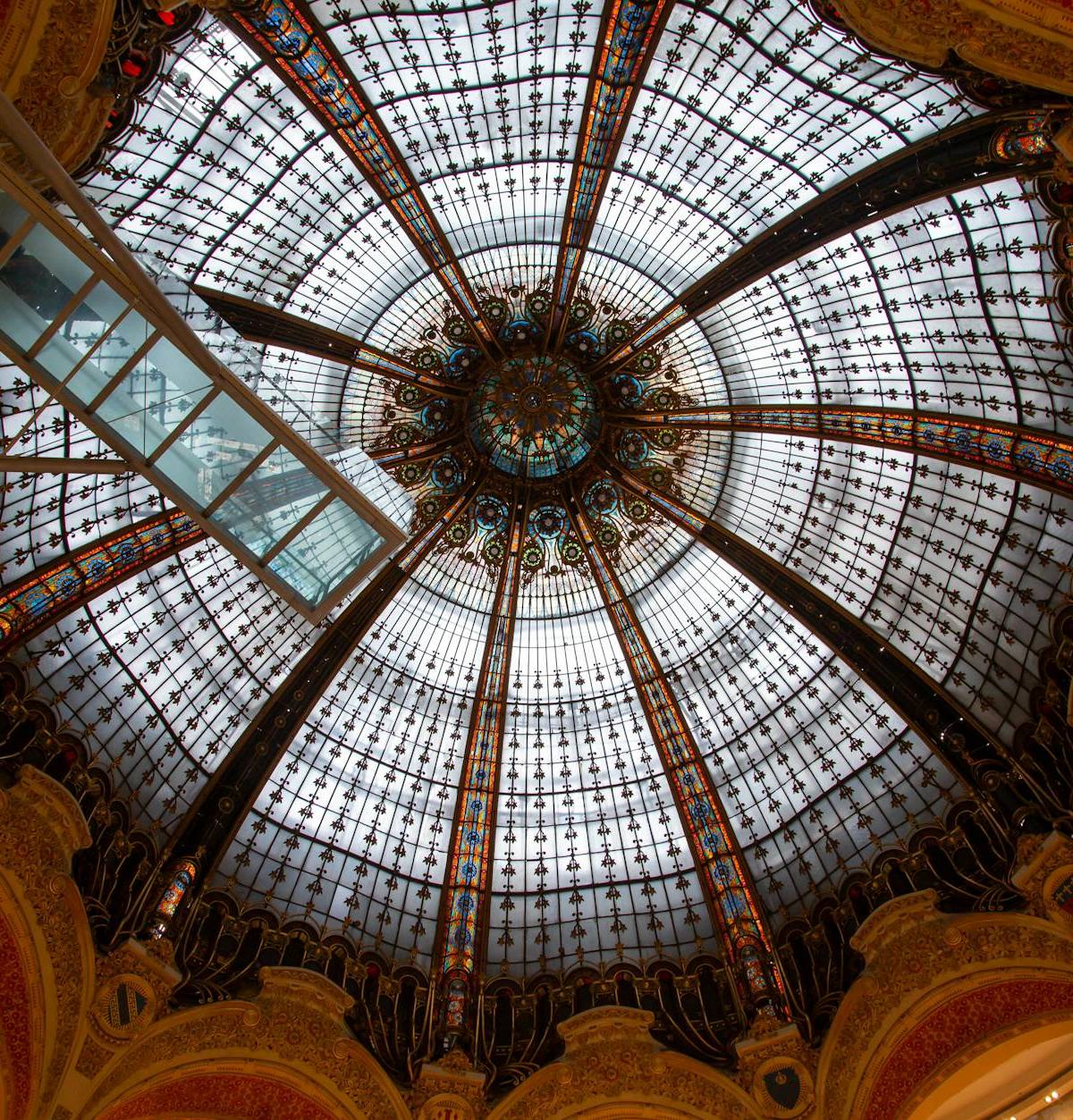
Ready to experience Paris for yourself? Plan Your Paris Trip with Chic Trip - a custom route, coordinated bookings and one accountable planner.
Planning your own Paris trip? Estimate your budget with the free Paris trip cost calculator, find out how many days you need in Paris, check when to book everything in Paris, or build a day-by-day plan with the Paris itinerary planner.
About Chic Trip
A journey designed exclusively for you: a personal itinerary, restaurant recommendations refined with your feedback, approved reservations and practical details in the Chic Trip app. Your written proposal confirms the total, inclusions and booking conditions before you commit. Start with a free call or email; no payment or price acceptance is required to enquire.