The History of Parisian Cabarets: From French Cancan to Contemporary Spectacle
History 11 min read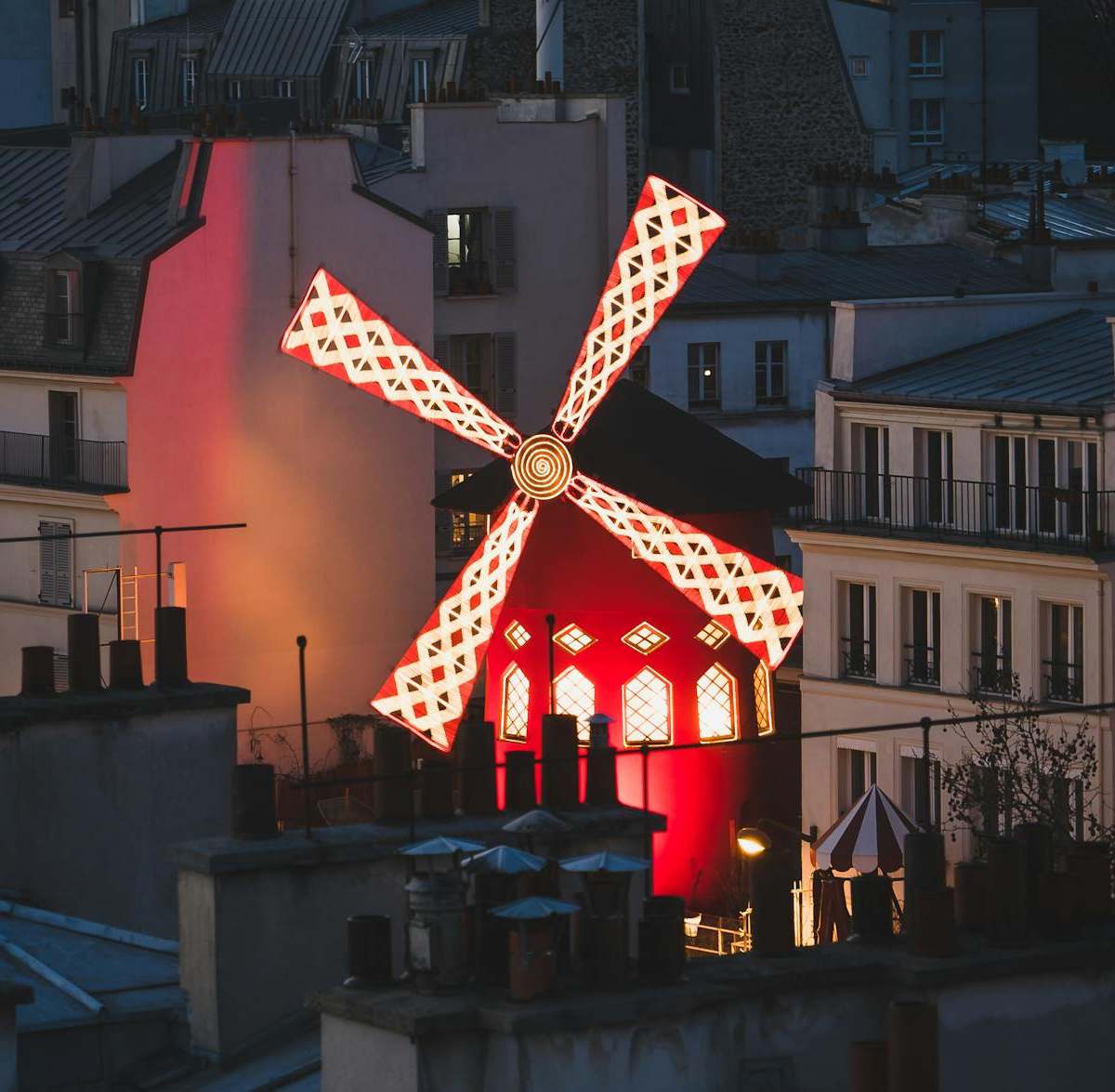
Quick answer
Discover the captivating history of Parisian cabarets from Montmartre's bohemian origins and the iconic French cancan to today's luxurious spectacles at Moulin Rouge and beyond.
Between the late 19th century and the early 20th century, Paris turned cabaret into something far greater than nightlife. It became performance, commerce, scandal, and social theater all at once. In Montmartre, where artists, dancers, writers, and curious bourgeois visitors mixed under gaslight, the cabaret was not just a place to drink or watch a show. It was where Paris experimented with modern entertainment.
That is one reason cabaret history still matters. These venues did more than entertain. They helped invent a new relationship between audience and performance, one built on atmosphere, transgression, and spectacle. The legacy survives in the city’s most famous cabarets today, from Moulin Rouge to Paradis Latin to Crazy Horse, each of which carries part of that history forward in its own way.
Montmartre Before Cabaret
The roots of Parisian cabaret go back before the great Belle Époque venues. In the 18th century, the outer boulevards formed a kind of edge between Paris and its suburbs, with barriers and toll gates shaping where people gathered, drank, and performed. Around Montmartre, cabarets and guinguettes flourished in this in-between space. The Butte was still something of a village then, separate enough from the center of Paris to attract workers, artists, and anyone looking for a little more freedom.
That relative independence mattered. Montmartre was affordable, less closely policed, and socially different from the center of the city. Rents were lower, the atmosphere was looser, and the area became a magnet for those who wanted to live or work outside conventional Parisian respectability. This made it the perfect environment for a new kind of nightlife to take shape. The district was not simply a place where people went out. It became a laboratory for modern bohemian culture.
By the late 19th century, the area had changed again. The older guinguettes gave way to more elaborate cabarets and performance venues along what became Boulevard de Clichy and Boulevard de Rochechouart. These places competed not just with one another but with the city’s larger entertainment culture. They needed to catch the eye, attract strollers, and offer something memorable. That need for attention is what pushed cabaret toward spectacle.
Le Chat Noir and the Artistic Cabaret
Le Chat Noir is where the idea of the cabaret as an artistic institution really took shape. Opened by Rodolphe Salis in 1881 at 84 Boulevard Rochechouart, it was part wine bar, part performance space, and part creative salon. Salis understood something important: if you gathered artists, writers, musicians, and satirists in one room and gave them a stage, the result would be more than entertainment. It would become a cultural event.
The story of the name adds to the myth. According to the cabaret’s own legend, Salis found a thin black cat outside the abandoned premises and took it as a sign. The name also carried literary associations with Edgar Allan Poe, which suited the cabaret’s playful, slightly gothic identity. That mix of humor, irony, and theatrical self-awareness became part of the Le Chat Noir style.
What made the venue distinctive was its refusal to behave like an ordinary café-concert. It brought together painting, song, shadow theater, satire, and performance in a way that felt new for the time. The decor itself reinforced the mood, blending pseudo-historical references with deliberate eccentricity. It was not trying to look natural. It was trying to look like a world apart.
Salis also shaped the room through social selection. Artists and poets were welcomed, while clergy and military officers were not. That may sound theatrical, but it had a real effect on the atmosphere. It signaled that the venue belonged to creative freedom rather than polite convention. In a commercial setting, that was a bold move. It helped create a loyal audience and a strong identity.
Le Chat Noir also became important as a publishing and satirical center. Its newspaper circulated drawings, texts, and songs, extending the cabaret’s reach beyond the room itself. By the time the establishment moved to Rue de Laval in 1885, it had become one of the key gathering places of artistic Paris. Toulouse-Lautrec, Van Gogh, Pissarro, Verlaine, Zola, and many others were all connected to its orbit. When Salis died in 1897, the energy that held the place together faded, and the cabaret soon closed. Yet its influence endured, and fragments of its legacy survive in museums and in the broader idea of the artistic cabaret.
The French Cancan
No cabaret history in Paris would be complete without the French cancan. The dance emerged from earlier forms such as the quadrille and the chahut, but by the mid-19th century it had become something much more daring. In the public balls of Paris, women began to use the dance as an outlet for energy, irreverence, and physical freedom. The result was a performance that openly challenged bourgeois ideas about modesty and restraint.
That challenge was precisely why the dance caused scandal. The raised skirts, high kicks, sudden movements, and exuberant rhythm made the cancan impossible to ignore. It was loud, physical, and unapologetically theatrical. It was also deeply connected to questions of gender and visibility. In a culture that wanted women to be discreet, the cancan made them impossible to overlook.
The dance later crossed the Channel and was renamed “French cancan,” a name that itself suggests both exoticism and noise. Its British reception was not enthusiastic for long. The performance was soon banned as too audacious, which only confirmed its reputation as something subversive. The cancan’s power lay in that tension. It was entertainment, but it was also an act of defiance.
Moulin Rouge and the Temple of Dance
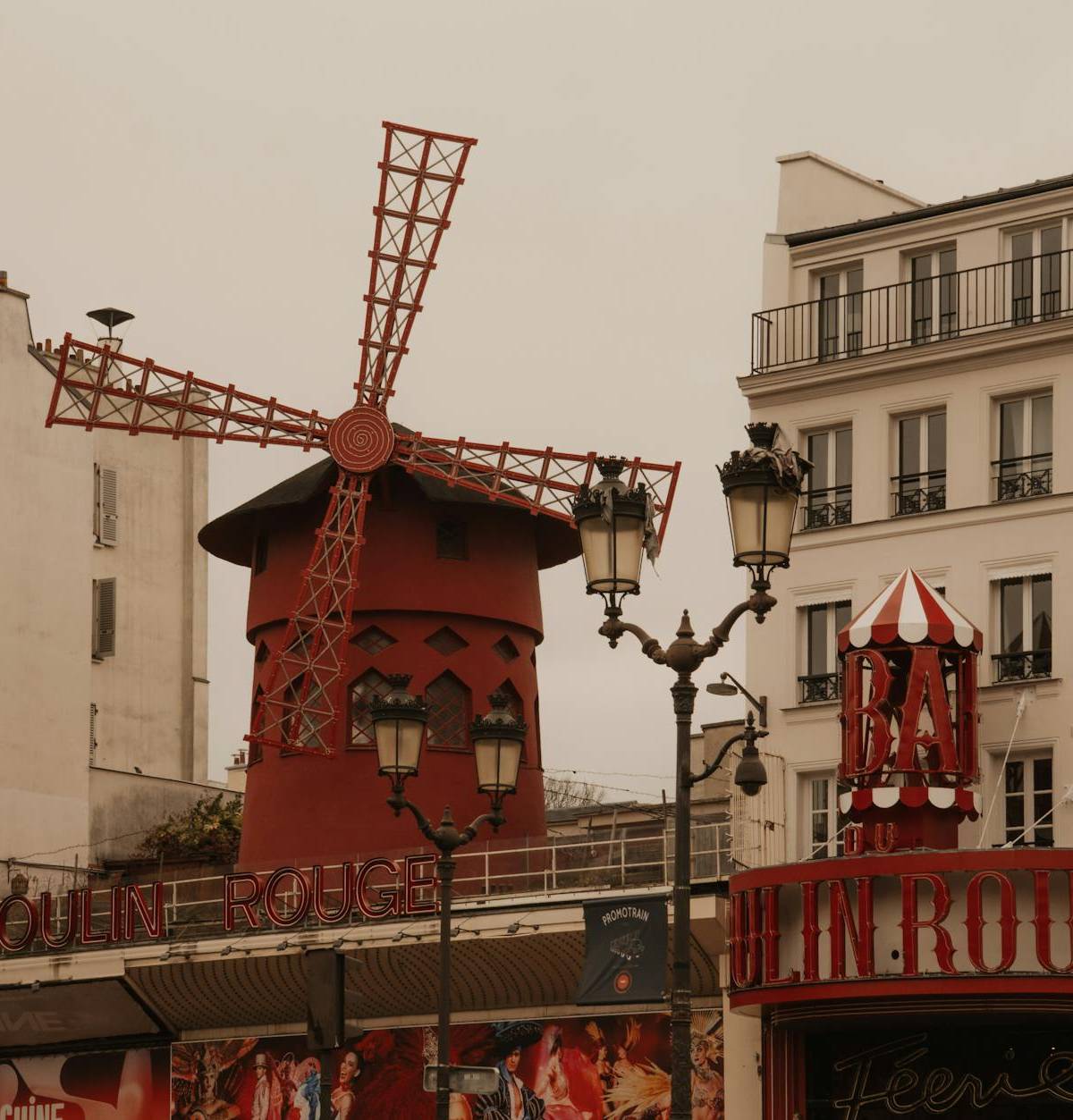
The Moulin Rouge was created in 1889 with the cancan at its center. Founded by Charles Zidler and Joseph Oller at Place Blanche, it was designed from the start as a temple of dance and spectacle. The idea was not just to provide a stage. It was to build an environment that made performance feel like an event from the moment you arrived.
That is why the Moulin Rouge became so famous so quickly. The cabaret was not only about what happened inside the theater. It also offered a carefully staged exterior world, with garden attractions, fairground elements, and visual surprises that helped draw in the crowd. The giant elephant and distorted mirrors added to the sense that this was a place where ordinary nightlife had been transformed into fantasy.
The Moulin Rouge’s success also depended on its ability to produce stars. La Goulue became its most famous dancer, and Valentin le Désossé became her equally iconic partner. Together they embodied the style and energy that defined the cabaret’s early years. Their performances were immortalized by Toulouse-Lautrec, whose posters helped turn the Moulin Rouge into a global symbol of Parisian nightlife.
La Goulue and Valentin le Désossé
La Goulue, born Louise Weber, was a force of nature on stage. Her dancing style was bold, comic, and unforgettable. She was quickly recognized as the star of the Moulin Rouge after its opening. Valentin le Désossé, whose real name was Jules Renaudin, brought a very different presence to the pair. Elegant, upright, and unexpectedly devoted to dance, he came from a more socially respectable background but found in the cabaret a place where his talent could flourish.
Their partnership was part of what made the Moulin Rouge so magnetic. Audiences came not only to see the cancan, but to see the particular chemistry between performers who had become legends in their own time. Valentin’s reputation grew so strong that spectators expected him at every performance, and when he was absent, they would ask for him by name. That kind of audience loyalty is a sign of how completely the cabaret had entered public imagination.
The mythic scale of their performances only increased after the fact. Legends about the number of dances Valentin performed at the Moulin Rouge helped turn him into a kind of folk figure. What is certain is that he loved dancing, never demanded payment for it, and remained one of the great characters of cabaret history. His story reminds us that the cabaret was not only about fame or money. For some performers, it was simply a place to belong.
Paradis Latin and Eiffel’s Legacy
Paradis Latin offers a very different chapter in Paris cabaret history. Built by Gustave Eiffel in 1889, the same year as the Eiffel Tower, it is the oldest theater-cabaret still operating in Paris. Its iron structure reflects the engineering optimism of the Belle Époque, and its long history gives it a special place among the city’s entertainment venues.
Unlike the Montmartre cabarets, Paradis Latin belongs to the Latin Quarter and the Left Bank. That gives it a different audience and a different symbolic role. It sits closer to the world of students, intellectuals, and literary life, which has always made it feel slightly distinct from the more bohemian, more theatrical energy of Montmartre.
Today, the venue presents a modern revue that still leans into cabaret tradition while updating the format for contemporary audiences. It combines choreography, music, humor, and visual spectacle, with a dinner-show structure that makes the evening feel like a full experience rather than a single performance. The setting itself, with its ironwork and restored theater atmosphere, is part of the appeal.
Cabaret Today
Paris cabaret has changed, but it has not disappeared. The surviving venues continue to balance preservation and reinvention, trying to honor their past while remaining appealing to contemporary audiences.
The Moulin Rouge remains the most famous of them all. Its current show continues to draw on the legacy of the French cancan, combining large-scale choreography, elaborate costumes, live music, and a strong sense of visual excess. Dinner-shows there still offer the full Parisian fantasy: performance, glamour, and a certain old-world idea of luxury. What makes the experience powerful is not just the choreography, but the continuity. The venue still understands itself as a place of spectacle.
Paradis Latin also continues to evolve. Its modern revues include contemporary choreography and more polished production values, but the cabaret frame remains intact. The evening is still structured around anticipation, arrival, dinner, performance, and applause. That structure matters because it preserves the social rhythm that made cabaret special in the first place.
Crazy Horse belongs to a different tradition. Opened in 1951, it does not draw directly from the Belle Époque, but it has become a major figure in Paris cabaret culture through its focus on light, shadow, form, and artistic nudity. The visual language is more minimalist than at the Moulin Rouge or Paradis Latin, but the ambition is similar: to turn the body into spectacle while keeping the performance controlled and stylized. Its backstage access and dancer-led tours add another dimension, making it one of the most transparent and educational cabarets in the city.
Why Cabaret Still Matters
What makes Paris cabaret historically significant is not only that it entertained people. It also changed the way performance worked. Cabaret turned nightlife into a form of cultural production. It made the audience part of the atmosphere. It gave performers room to be comic, political, seductive, satirical, or simply outrageous. And it did all of that in spaces that became part of Paris’s mythic identity.
The French cancan remains the most visible symbol of that legacy because it still carries the original tension between joy and defiance. What was once condemned as scandalous is now celebrated as quintessentially Parisian. That reversal tells you a lot about how cabaret worked then and how it still works now. It takes social energy that might otherwise remain private or suppressed and turns it into spectacle.
That is why these venues continue to fascinate. They are not simply tourist stops or nostalgic relics. They are living institutions shaped by a history of experimentation, provocation, and reinvention. To watch a cabaret show in Paris is to step into a tradition that helped invent modern entertainment itself.
Keep exploring: grand monuments of the Napoleonic empire · planning Paris and Rome together · Plan your Paris trip with a local
Get our free Insider Paris Guide: the neighborhoods, restaurants and hidden corners we send our own clients. No tourist traps, no filler.
Get the free guide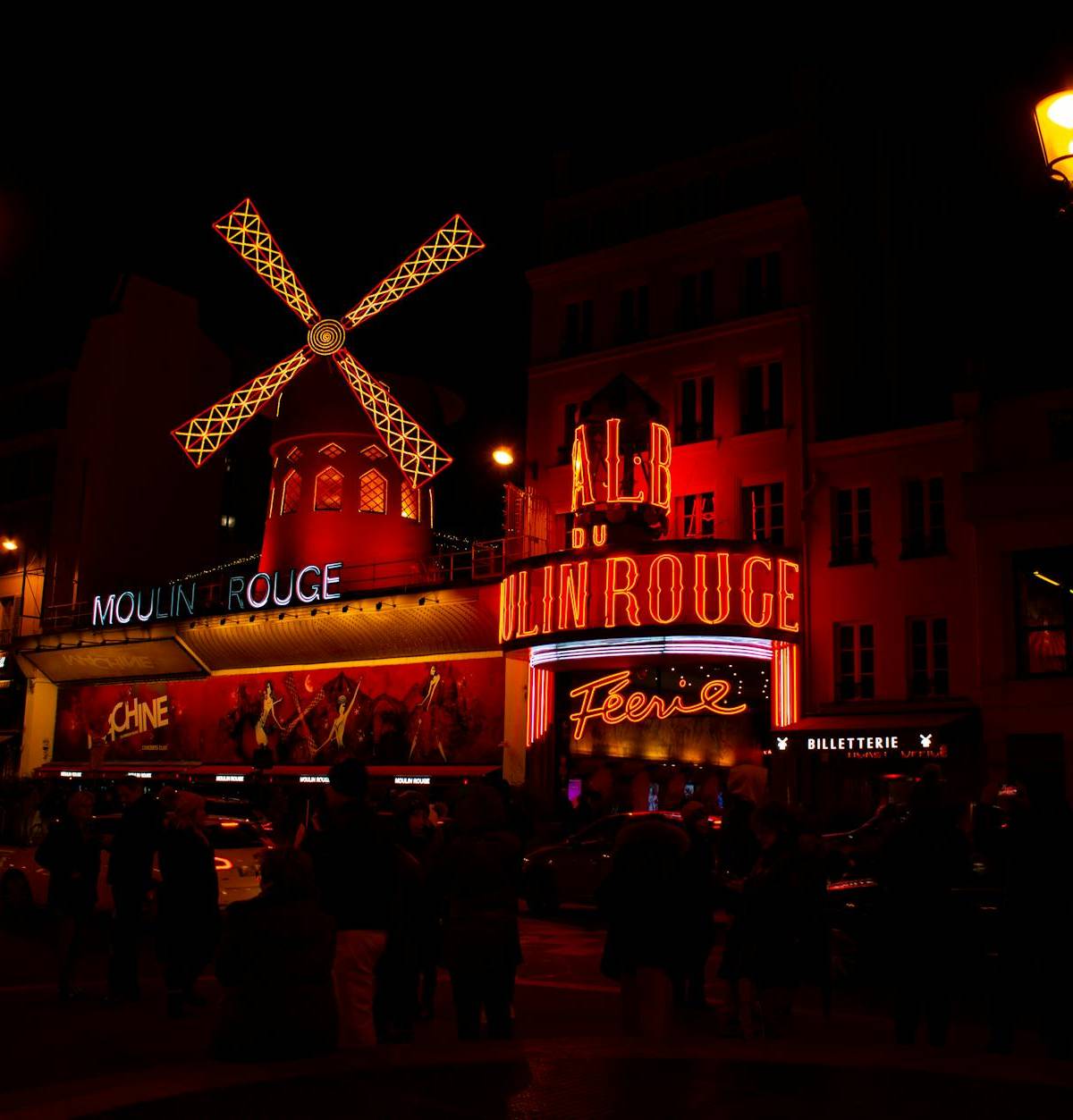
Ready to experience Paris for yourself? Plan Your Paris Trip with Chic Trip - a custom route, coordinated bookings and one accountable planner.
Planning your own Paris trip? Estimate your budget with the free Paris trip cost calculator, find out how many days you need in Paris, check when to book everything in Paris, or build a day-by-day plan with the Paris itinerary planner.
About Chic Trip
A journey designed exclusively for you: a personal itinerary, restaurant recommendations refined with your feedback, approved reservations and practical details in the Chic Trip app. Your written proposal confirms the total, inclusions and booking conditions before you commit. Start with a free call or email; no payment or price acceptance is required to enquire.