The Louvre: Eight Centuries of Transformation
History 6 min read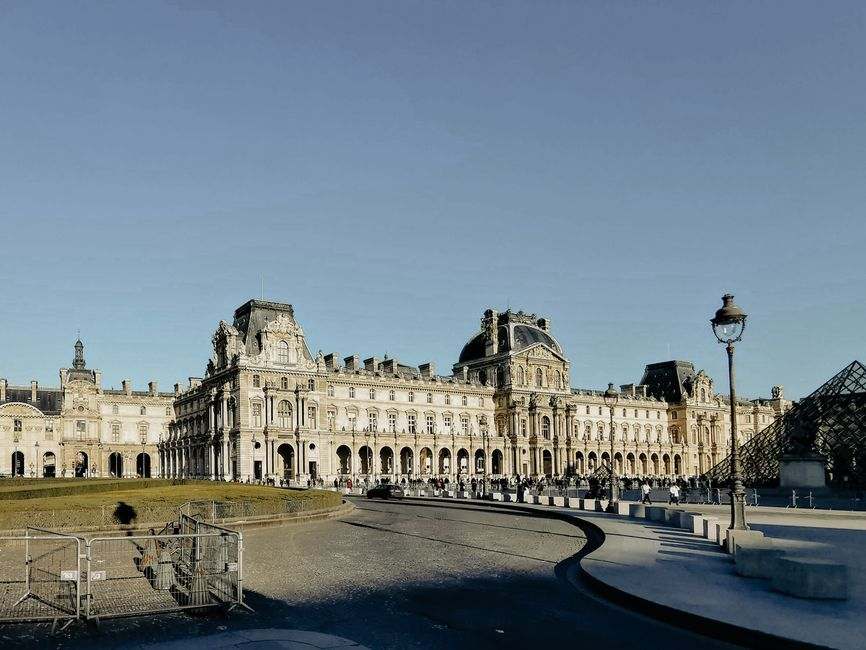
Quick answer
Discover the Louvre's extraordinary evolution from Philip Augustus's fortress to a Renaissance palace and modern icon. Uncover eight centuries of royal ambition, artistic splendor, and cultural rev...
Centuries of history compressed here. Every generation adding layers, none erasing what came before. Multiple eras experienced simultaneously.
Philip Augustus: The Fortress That Started Everything
In 1190, King Philip II—known as Philip Augustus—ordered construction of a defensive fortress on the Seine's right bank, protecting Paris while he departed for the Third Crusade. His engineers designed a square enclosure with towers at each corner and a massive central keep 31 meters high—the tallest structure in Paris, visible for miles. The fortress wasn't meant for comfort; it was intimidation rendered in stone, with walls thick enough to withstand siege and a moat ensuring no invader could approach unseen.
Philip stored the royal treasury, archives, and arsenal inside, transforming the Louvre into a symbol of monarchical power beyond its military function. The name "Louvre" itself likely derives from "Lupara"—a wolf hunters' lodge that occupied the site before Philip's fortress replaced it. For nearly two centuries it remained primarily defensive, a grim reminder that Paris required protection from rivals who'd happily sack the city given opportunity. Excavations between 1983 and 1985 uncovered the fortress's foundations beneath the Cour Carrée, and you can still visit these underground remains—cold stone testimony to a Paris perpetually threatened.
Charles V: Fortress Becomes Palace
Between 1364 and 1380, Charles V commissioned architect Raymond du Temple to transform Philip Augustus's military stronghold into a comfortable royal residence. The king added apartments, leisure areas, and a library that would eventually become the National Library of France—recognizing that monarchs needed to project cultural sophistication, not just military might. Windows replaced arrow slits, tapestries covered stone walls, and gardens softened the fortress's grim exterior. Charles's Louvre signaled a shift in royal priorities: from defending territory to cultivating refinement.
But wars intervened. The Hundred Years' War consumed French resources and attention; successive kings abandoned the Louvre for châteaux in the Loire Valley, where pleasant landscapes and hunting grounds outweighed urban proximity. The palace sat largely vacant through the 15th century, its transformation incomplete, its future uncertain. Paris expanded beyond the defensive walls that had originally necessitated the fortress, rendering the Louvre's military purpose obsolete while its residential appeal remained undeveloped.
Francis I: Renaissance Iconoclasm
In 1546, Francis I ordered the demolition of Philip Augustus's medieval keep—the 350-year-old tower that had defined the Louvre's identity. It was architectural iconoclasm, a deliberate statement that medieval severity had no place in Renaissance France. Francis commissioned architect Pierre Lescot and sculptor Jean Goujon to replace the fortress with a palace embodying classical proportion and humanist ideals. Lescot's design for the Cour Carrée's southwest wing introduced Doric, Ionic, and Corinthian orders, emphasizing symmetry and mathematical harmony alien to Gothic irregularity.
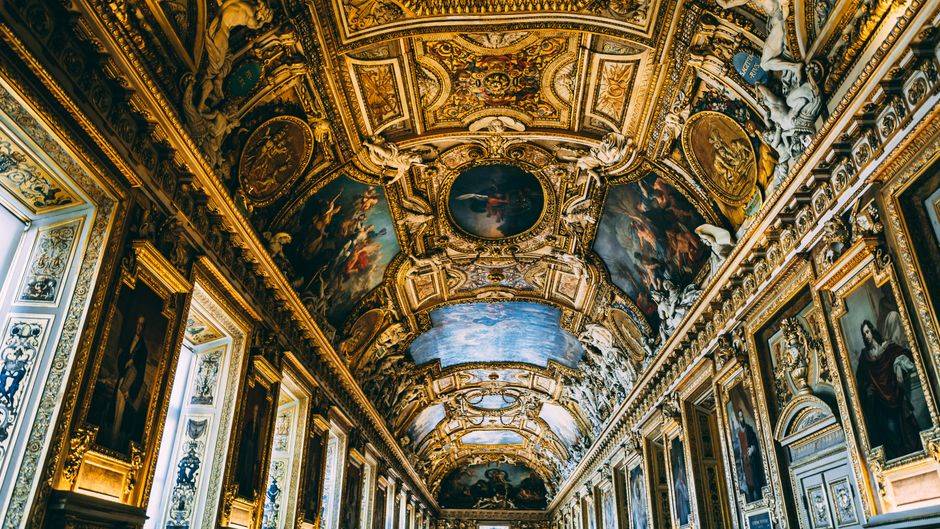
Francis died in 1547, just one year after demolition began, never seeing his vision completed. But he'd fundamentally altered the Louvre's trajectory. His successor Henri II continued Lescot's work, and subsequent monarchs kept building—Catherine de Medici added the Tuileries Palace, Henri IV commissioned the Grande Galerie connecting it to the Louvre, and Louis XIV undertook massive expansions before abandoning everything for Versailles. The Louvre became a centuries-long construction site, each king adding wings and courtyards without coordinated plan, creating an architectural palimpsest where Renaissance collided with Baroque collided with Classical.
1793: The Palace Becomes Public
The French Revolution transformed ownership. On August 10, 1793—the first anniversary of the Tuileries Palace storming that effectively ended the monarchy—revolutionary authorities opened the Muséum Central des Arts in the Louvre's Grande Galerie. The date wasn't coincidental; it was political theater, announcing that royal treasures now belonged to citizens, not kings. Art previously hoarded by aristocrats and the Church became national patrimony accessible to anyone, redefining museums' purpose from private collections to public institutions.
The initial collection comprised 537 paintings confiscated from royal residences, émigrés, and suppressed religious orders. Revolutionary fervor motivated the opening, but practical challenges plagued it—inadequate lighting, no systematic organization, and guards uncertain whether visitors should be encouraged or controlled. Still, the Louvre's 1793 opening marked a watershed: the birth of the modern public museum, establishing that cultural heritage belonged to nations, not individuals. It was democracy applied to art.
Napoleon: Empire Through Acquisition
Napoleon Bonaparte renamed the institution Musée Napoléon in 1803, transforming it into a trophy case for his conquests. Military campaigns across Italy, Egypt, and the Netherlands stripped occupied territories of masterpieces, which arrived in Paris by the wagonload. The Vénus de Médicis, Saint Mark's horses from Venice, and works by Raphael, Titian, and Leonardo became French possessions through force, making the Louvre the richest museum in Europe. Napoleon envisioned a "Universal Museum" collecting the world's greatest art under one roof—French, naturally—as proof of imperial dominance.
His fall in 1815 required restitution. Allied powers demanded return of looted works, and the museum lost hundreds of pieces in treaties designed to humble France. What remained, however, was infrastructure. Napoleon III completed the "Grand Louvre" project in 1857, finally fulfilling Henri IV's 250-year-old vision of connecting the Louvre and Tuileries into one continuous palace. The Napoleonic eras—both Bonaparte emperors—expanded the museum's physical footprint and established acquisition strategies that persist: purchase, donation, and occasional ethical flexibility regarding provenance.
1989: The Pyramid That Nearly Started Riots
When President François Mitterrand commissioned Chinese-American architect I.M. Pei to redesign the Louvre's entrance in 1983, Parisians reacted as if he'd proposed demolishing Notre-Dame. Pei's solution—a 21-meter glass and metal pyramid in the Cour Napoléon composed of 673 glass panels—struck critics as sacrilege, modernist vandalism imposed on classical architecture. Newspapers published furious denunciations; architects called it a "gigantic, ruinous gadget"; politicians accused Mitterrand of megalomania.
The pyramid opened in 1989 anyway. Within a decade, opposition evaporated—it became Paris's third most recognizable symbol after the Eiffel Tower and Arc de Triomphe, proof that France's relationship with its monuments includes initial outrage followed by grudging acceptance followed by fierce protection. Functionally, the pyramid solved real problems: creating a central underground entrance connecting the museum's three wings, adding reception areas, and improving visitor flow through a facility hosting 10 million people annually. Symbolically, it announced the Louvre remained a living institution, not a preserved relic. Eight centuries after Philip Augustus built a fortress, France was still reimagining what the Louvre could become.
The monument still stands. Two centuries ago it meant one thing. Today something different. Layers accumulating over time.
Keep exploring: grand monuments of the Napoleonic empire · bring Haussmann style into your home · Plan your Paris trip with a local
Get our free Insider Paris Guide: the neighborhoods, restaurants and hidden corners we send our own clients. No tourist traps, no filler.
Get the free guide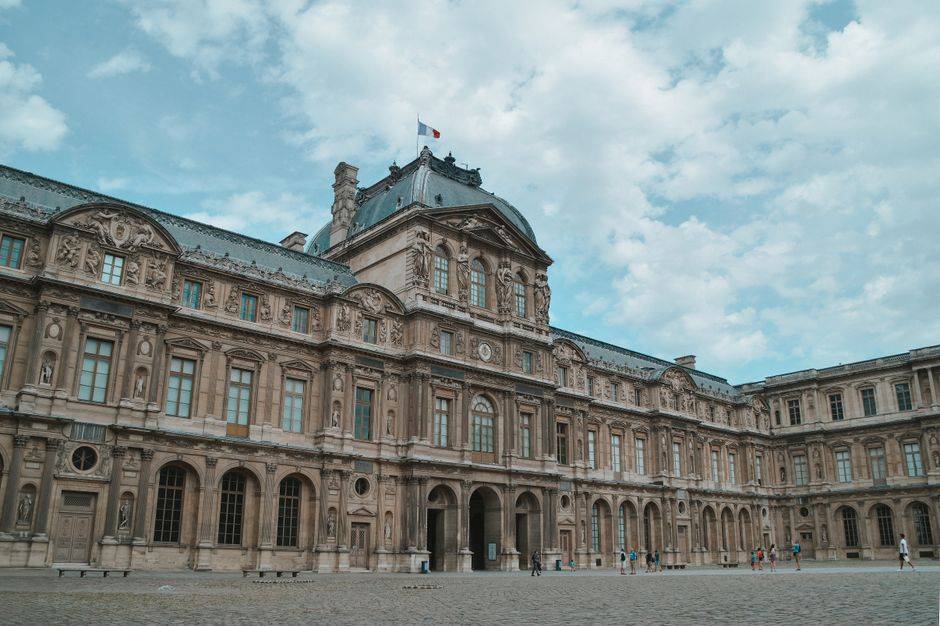
Ready to experience Paris for yourself? Plan Your Paris Trip with Chic Trip - a custom route, coordinated bookings and one accountable planner.
Planning your own Paris trip? Estimate your budget with the free Paris trip cost calculator, find out how many days you need in Paris, check when to book everything in Paris, or build a day-by-day plan with the Paris itinerary planner.
About Chic Trip
Chic Trip is a Paris-based trip planning and booking concierge for American travelers. Founder Frederic Canesso and his Paris team design day-by-day itineraries and coordinate restaurant tables, official timed entries, tours and airport transfers. The planning fee depends on trip length and group size. Restaurant reservations and official tickets are at face price, hotels at public rates, and tours and transfers at clear package prices quoted upfront. Tell us about this trip or read our traveler reviews and feedback.