How to Plan a Paris Trip From Scratch: The American's Guide
Itinerary and planning 11 min read
Quick answer
Everything American travelers need to plan a Paris trip from scratch, in the right order, with real budgets, neighborhood breakdowns, and a day-by-day itinerary framework.
Planning a Paris trip feels overwhelming until you break it into a sequence. The mistake most Americans make is opening five browser tabs at once, then freezing. The smarter move is to work through decisions in the correct order, because each one narrows the next. Book flights before hotels. Choose a neighborhood before comparing room rates. Set a real budget before you start dreaming about tasting menus. This guide walks you through every step, from that first spark of interest to the moment you land at Charles de Gaulle with a plan that actually works.
Step One: Set Your Travel Window and Trip Length
Before you touch a booking site, decide when you want to go and for how long. Paris rewards a minimum of seven nights for first-time visitors. Five nights feels rushed once you factor in jet lag recovery and transit time. Ten nights is the sweet spot if you want Paris plus a day trip to Versailles, Champagne, or the Loire Valley.
Timing matters enormously. Late April through early June offers mild weather, blooming chestnut trees, and manageable crowds. September and October are arguably the best months overall, with golden light, full restaurant schedules after the August slowdown, and thinner tourist lines. July and August are expensive and crowded, though the city is still magical. January through March offers the lowest prices and the most authentically Parisian atmosphere, but expect grey skies and shorter days. Avoid the week of Fashion Week in late September and early October if you want a calmer city and easier hotel availability.
Step Two: Build a Realistic Budget
Americans consistently underbudget Paris trips because they price flights but forget everything else. A useful framework breaks the trip into four buckets: flights, accommodation, food, and experiences.
Flights from major US hubs to Paris CDG typically run between $600 and $1,100 round trip in economy when booked correctly. Business class on carriers like Air France, Delta, or United averages $3,500 to $5,500 round trip, and it is genuinely transformative for a long-haul trip if your budget allows. For accommodation, budget travelers can find clean, well-located three-star hotels for $180 to $250 per night. Mid-range travelers should plan on $300 to $500 per night for a solid four-star property in a good arrondissement. Luxury travelers looking at properties like Le Bristol, Hotel Costes, or Hôtel de Crillon should budget $900 to $2,500 per night.
For food, a realistic daily budget per person is $80 to $120 for a mix of café breakfasts, a sit-down lunch, and a proper dinner with wine. If you want to dine at one or two Michelin-starred restaurants, add $200 to $500 per person per meal on top of that baseline. Experiences, including museum entries, a Seine cruise, a cooking class, and day trip transportation, typically run $300 to $600 per person for a week-long trip. Build in a 15 percent buffer for incidentals, pharmacy runs, extra café stops, and market splurges.
Step Three: Book Flights First, and Book Smart
Once you have a travel window and a budget, flights are your first booking. Set price alerts on Google Flights and Kayak as soon as you have a rough date range, ideally three to six months out. The best fares from US cities typically appear on Tuesdays and Wednesdays. Flying into CDG is standard, but Orly Airport on the south side of the city is worth considering if you find a better fare and plan to stay in the Left Bank or southern arrondissements.
Choose your airline with loyalty programs in mind. If you hold Delta SkyMiles or Air France Flying Blue status, price your ticket on both carriers since the alliance often surfaces better redemption rates. Consider positioning flights if you live outside a major hub, as flying through JFK, ORD, or LAX to catch a nonstop to CDG is almost always faster and less stressful than connecting through a smaller hub. Nonstop flight time from the East Coast runs roughly seven to eight hours. From the West Coast, plan on ten to eleven hours.
Step Four: Choose the Right Neighborhood
Where you stay in Paris shapes the entire experience. The city is divided into twenty arrondissements that spiral outward from the center. For most Americans, especially first-timers, staying in the 1st, 4th, 6th, 7th, or 8th arrondissement puts you within walking distance of the major landmarks and in the middle of the city's best energy.
The 7th arrondissement, home to the Eiffel Tower and Musée d'Orsay, is quieter, residential, and extremely walkable. It suits travelers who want elegance without noise. The 6th, the Saint-Germain-des-Prés neighborhood, is the classic Left Bank choice, lined with bookshops, top bistros, and the Luxembourg Gardens. The 4th covers the Marais, which is lively, diverse, full of excellent restaurants, and ideal for travelers who want a more urban, energetic base. The 1st puts you steps from the Louvre and the Tuileries Garden, central and tourist-heavy but undeniably convenient. The 8th, anchored by the Champs-Élysées and the Triangle d'Or, is the luxury hotel district and suits travelers whose priorities include flagship shopping and grand boulevard energy.
Avoid booking in the outer arrondissements (18th, 19th, 20th) purely to save money unless you know those neighborhoods well. The metro commute adds up and the charm level drops significantly for first-time visitors.
Step Five: Book Your Hotel
With your neighborhood locked, book accommodation immediately after flights, especially if you are traveling between April and October. Paris hotel inventory at quality properties in central arrondissements disappears quickly. For the best rates, book directly through the hotel's website, as many properties offer a rate match guarantee plus perks like breakfast or early check-in for direct bookings. Compare that rate against what you see on Booking.com or Hotels.com before committing.
A few specific properties worth knowing: Hôtel Bourg Tibourg in the Marais is a boutique gem with Moorish-inspired interiors at around $350 per night. Le Narcisse Blanc in the 7th offers genuine luxury at $600 to $900 per night with exceptional service. For a mid-range splurge in Saint-Germain, Hôtel Récamier on the quiet Place Saint-Sulpice runs around $280 to $380 per night and punches well above its price. For ultra-luxury, the newly renovated Cheval Blanc Paris on the Seine is one of the best hotels in Europe at $2,000 per night and up.
Request a higher floor and a street-facing room when you book. Parisian street views from even a modest hotel room are one of the trip's great pleasures.
Step Six: Pre-Book Museum Tickets and Key Experiences
Paris rewards planners. The Louvre, Musée d'Orsay, Sainte-Chapelle, and the Eiffel Tower all require advance ticket purchases to avoid lines that can consume two to three hours of a travel day. Book timed-entry tickets directly through each institution's official website. Do this as soon as your hotel is confirmed, ideally two to four months in advance for peak season travel.
The Paris Museum Pass is worth calculating carefully. It covers fifty-plus museums and monuments including the Louvre, d'Orsay, and Versailles, and it pays for itself in two to three museum visits. A two-day pass runs around $60, a four-day pass around $85, and a six-day pass around $110. It does not cover the Eiffel Tower or most temporary exhibitions, so factor those in separately.
If a cooking class, a wine tasting in a cave, a private guided tour of the Marais, or a dinner cruise is on your list, book those within a week of confirming your hotel. Popular experiences with good operators sell out six to ten weeks ahead during high season.
Step Seven: Build Your Day-by-Day Itinerary Framework
Resist the urge to over-schedule. A workable Paris itinerary allocates one major anchor activity per half-day and leaves the other half open for wandering, café sitting, and market browsing. Jet lag is real, and even experienced travelers should plan a lighter first day.
A strong seven-night framework looks like this: Day one, arrive, check in, walk the immediate neighborhood, have a simple dinner at a neighborhood bistro, sleep early. Day two, the Louvre in the morning, Tuileries Garden and Palais-Royal in the afternoon. Day three, Musée d'Orsay in the morning, Saint-Germain-des-Prés and Luxembourg Gardens in the afternoon. Day four, a morning trip to Versailles, returning by early evening. Day five, the Marais in the morning including the Picasso Museum or Carnavalet Museum, explore the covered passages and Canal Saint-Martin in the afternoon. Day six, Eiffel Tower area in the morning, Champ de Mars picnic lunch, Musée Rodin in the afternoon. Day seven, Montmartre in the morning, Sacré-Coeur, then a long farewell dinner at a restaurant you have been eyeing all week. Day eight, morning departure.
Plan restaurant lunches rather than dinners for your nicest meals. Lunch at a top Paris restaurant often costs 40 to 50 percent less than the same kitchen's dinner menu, and the experience is equally refined. Many celebrated Paris chefs run a prix fixe lunch that is one of the best value propositions in global dining.
Step Eight: Sort Out Practical Logistics Before You Leave
Several logistical decisions will save you significant money and stress if handled before departure. First, notify your bank and credit card companies of your travel dates. Better yet, travel with a card that charges no foreign transaction fees, such as the Chase Sapphire Preferred, Capital One Venture, or any American Express travel card. Visa and Mastercard are accepted almost universally in Paris. American Express acceptance has improved but is still inconsistent at smaller bistros and markets, so carry a Visa or Mastercard as your primary card.
For your phone, either activate an international plan with your current carrier or purchase a local eSIM from providers like Airalo or Holafly before departure. A French eSIM with 10GB of data typically costs $15 to $25 for two weeks and keeps you navigated and connected without roaming fees. Download offline Google Maps of Paris before you board your flight.
Paris CDG to central Paris takes about 35 to 45 minutes by the RER B train, which uses the €14 full-fare Paris Region Airports ticket in 2026 and drops you at major metro hubs including Gare du Nord and Saint-Michel Notre-Dame. Taxis from CDG to central Paris run $60 to $80 with a fixed rate system. Rideshares via Uber work reliably from CDG and are often comparable in price to taxis. Avoid the private transfer companies that approach you in the arrivals hall, as they charge significantly more than any of the above options.
Step Nine: Pack for the Paris Reality, Not the Fantasy
Parisians walk. A lot. Plan on four to eight miles per day across cobblestones, metro stairs with no escalators, and uneven sidewalks. Your footwear is a non-negotiable priority. Well-worn leather sneakers, broken-in loafers, or quality walking shoes are the move. New shoes are not. Beyond footwear, pack layers rather than bulky pieces, as Paris restaurants and boutiques tend to be warm inside regardless of the season. A compact umbrella earns its weight at any time of year. Bring a small crossbody bag or anti-theft daypack for daily use, as pickpocketing is real, particularly around major tourist sites and on the RER.
A universal packing checklist for Paris should include: adapters for Type E French outlets, a portable battery charger, photocopies of your passport stored separately from the original, your travel insurance information, and a printed copy of your hotel address in French in case your phone dies in a taxi.
Check your existing coverage abroad and consider travel insurance suited to your trip, including medical care, evacuation and cancellation where appropriate. Compare the actual policy, exclusions and eligibility, not a generic weekly price. Insurance requirements depend on your circumstances and any visa rules; it is not universally mandatory for every American tourist visit.
Keep exploring: the perfect 3-day Paris itinerary · what a Paris trip really costs · Plan your Paris trip with a local
Get our free Insider Paris Guide: the neighborhoods, restaurants and hidden corners we send our own clients. No tourist traps, no filler.
Get the free guide
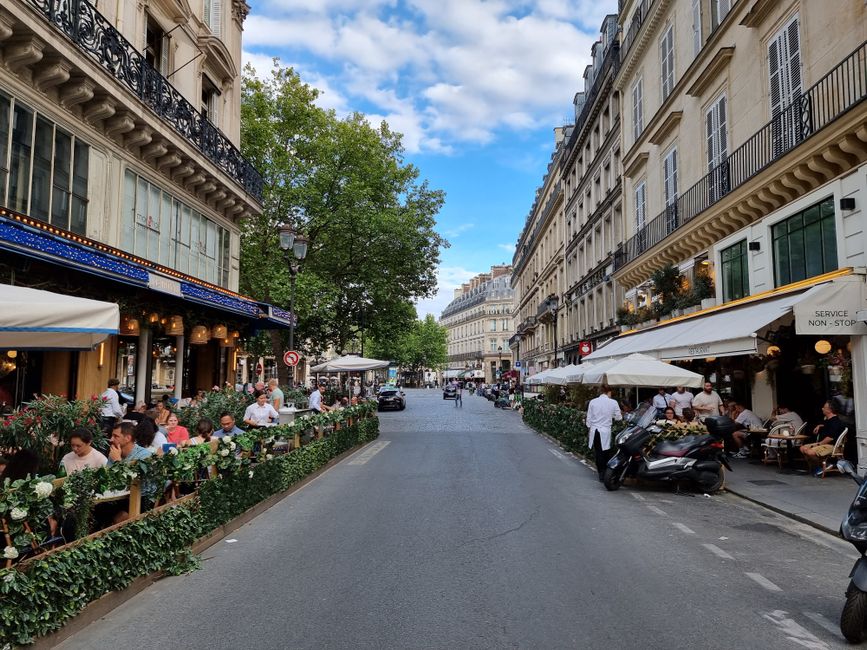

Ready to experience Paris for yourself? Plan Your Paris Trip with Chic Trip - a custom route, coordinated bookings and one accountable planner.
Planning your own Paris trip? Estimate your budget with the free Paris trip cost calculator, find out how many days you need in Paris, check when to book everything in Paris, or build a day-by-day plan with the Paris itinerary planner.
About Chic Trip
Chic Trip is a Paris-based trip planning and booking concierge for American travelers. Founder Frederic Canesso and his Paris team design day-by-day itineraries and coordinate restaurant tables, official timed entries, tours and airport transfers. The planning fee depends on trip length and group size. Restaurant reservations and official tickets are at face price, hotels at public rates, and tours and transfers at clear package prices quoted upfront. Tell us about this trip or read our traveler reviews and feedback.