Fondation Cartier: Glass Walls to Haussmannian Heights
Sightseeing 5 min read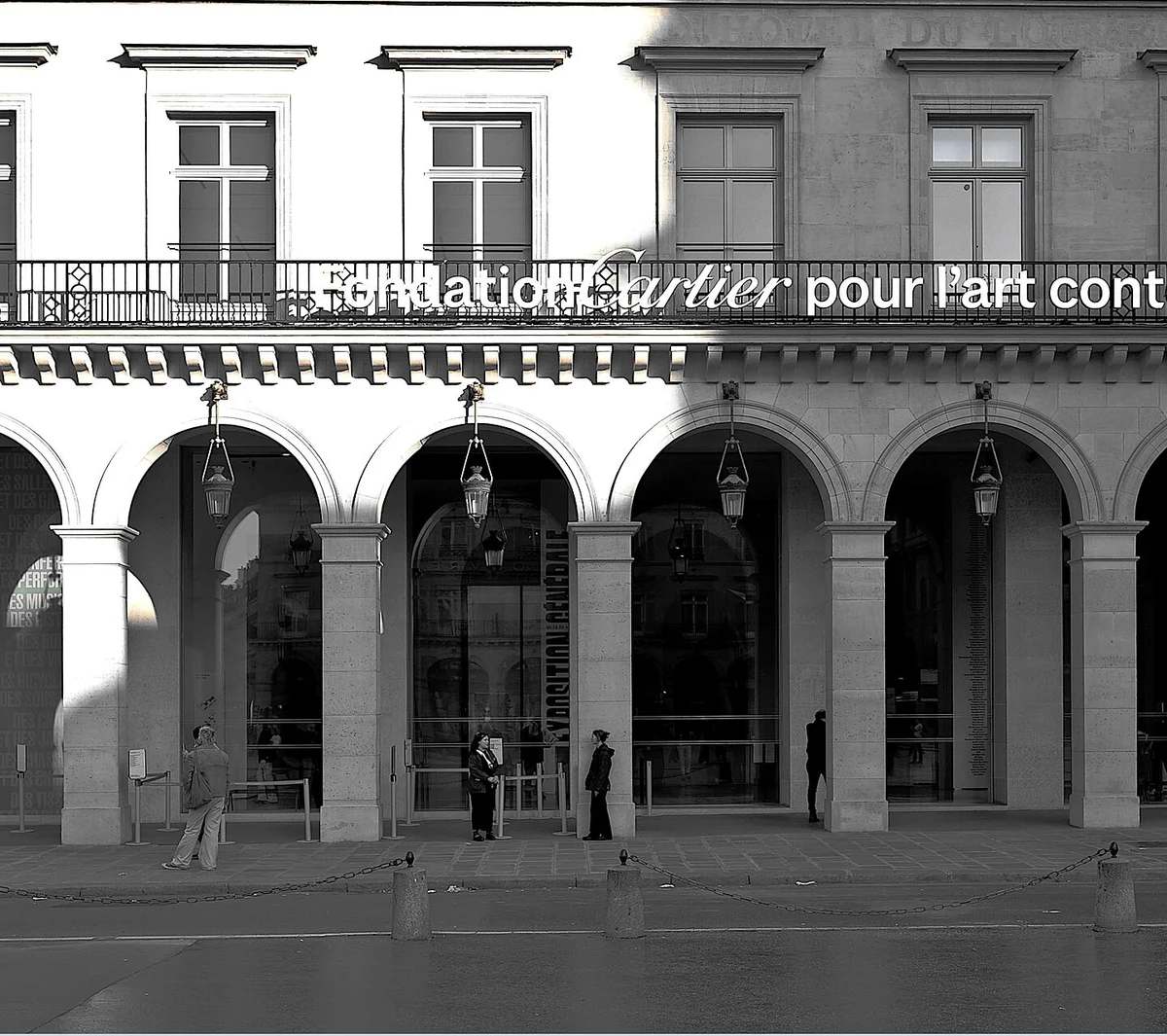
Quick answer
Discover how the Fondation Cartier relocated from Boulevard Raspail to Place du Palais-Royal, positioning contemporary art in Paris's most prestigious cultural quarter.
After 31 years in Jean Nouvel's transparent glass pavilion on Boulevard Raspail, the Fondation Cartier pour l'art contemporain relocated on October 25, 2025 to the Place du Palais-Royal—trading peripheral 14th arrondissement anonymity for positioning directly across from the Louvre. The move represents strategic recentering, placing contemporary art in Paris's most concentrated cultural quarter alongside the Bourse de Commerce, Musée d'Orsay, Musée de l'Orangerie, and Opéra Garnier. Jean Nouvel—architect of the abandoned Boulevard Raspail building—returned to design the new space, radically reimagining the interior of a historic Haussmannian edifice while preserving its architectural memory.
The Building's Commercial Past
The foundation now occupies 2 Place du Palais-Royal in a structure built in 1855 as the Grand Hôtel du Louvre, which later became the Grands Magasins du Louvre before housing the Louvre des Antiquaires from 1978 until closing in 2020. This abandoned antiques market—with its last tenant, a jeweler, departing in 2019—sat empty until the Fondation Cartier proposed installation in 2018, launching rehabilitation work in April 2020.
The location matters strategically. Surrounded by Place du Palais-Royal, Rue Saint-Honoré, and Rue de Rivoli, facing the Louvre and near the Bourse de Commerce and 59 Rivoli, the foundation inserts itself into a neighborhood already vibrant with art life. This contrasts sharply with Boulevard Raspail—a tree-lined but relatively quiet street lacking the tourist density and cultural concentration of the 1st arrondissement.
Nouvel's Architectural Reinvention
Jean Nouvel's 8,500-square-meter project radically rethinks interior volumes while maintaining the Haussmannian exterior. The design creates 6,500 square meters of exhibition space, including 1,200 square meters distributed across five mobile platforms that allow scenographic and design changes during exhibitions. Vertical heights reach 11 meters, providing scale impossible in most Paris venues.
"Installing in a place as impressive, through its location and history, requires inventing something," Nouvel explained. The architecture delivers maximum latitude and audacity for artists, offering "striking force that artists couldn't necessarily show elsewhere". The mobile platforms represent the innovation—modular infrastructure that transforms during exhibitions rather than requiring artists to adapt work to fixed gallery dimensions.
The Strategic Shift
The Fondation Cartier's three-location history traces institutional evolution: laboratory at Jouy-en-Josas (1984-1994), proclamation at Boulevard Raspail (1994-2025), and now mutating infrastructure at Palais-Royal. Each location embodied different engagement: artistic freedom at the suburban estate, disciplinary transversality at the transparent glass building, and new exhibition models at the Haussmannian complex.
The move acknowledges that contemporary art institutions benefit from centrality. When the foundation opened on Boulevard Raspail in 1994, Nouvel's transparent glass-and-steel building shocked visitors—its radical transparency and dematerialization represented architectural utopia. Thirty years later, that location's peripheral position limited audience reach. The Palais-Royal placement puts contemporary art in conversation with centuries of institutional culture rather than isolating it in residential neighborhoods.
L'Exposition Générale: The Inaugural Show
The foundation's reopening features L'Exposition Générale, running through late August 2026, surveying the institution's artistic identity through nearly 600 works by approximately 100 artists. This retrospective demonstrates programming range while establishing the new space's capabilities across the modular platforms and vertical galleries.
The foundation's 40-year history (founded October 20, 1984 by Alain Dominique Perrin, then president of Cartier International) emphasized French and international contemporary artists through multidisciplinary programming mixing visual arts, design, fashion, and performance. The new location promises continued transgressive spirit and avant-garde support that defined earlier chapters.
Leaving Boulevard Raspail Behind
Nouvel's 1994 Boulevard Raspail building—celebrated for transparency, with glass walls creating dialogue between interior galleries and surrounding garden—closes permanently. The final exhibition, Olga de Amaral, ended March 16, 2025, concluding more than 30 years of programming in the building that became iconic for 1990s museum architecture.
That building represented specific moment: post-Pompidou transparency, dematerialization as architectural statement, gardens integrated into exhibition experience. The Palais-Royal project represents opposite strategy—working within historic fabric, adapting Haussmannian volumes, creating flexibility through mobile infrastructure rather than transparent dissolution.
The New Cultural Quarter
The foundation's neighbors include the Louvre, Musée des Arts Décoratifs, Comédie-Française, Bourse de Commerce-Pinault Collection, Musée de l'Orangerie, Jeu de Paume, Opéra Garnier, and Musée d'Orsay. This concentration creates cultural district where institutions compete and collaborate, where audiences move between venues, where contemporary art positions itself among established cultural monuments rather than separate from them.
The proximity to François Pinault's Bourse de Commerce—visible from the foundation's windows—creates another billionaire art collection rivalry, though less explicit than the Arnault-Pinault competition between Fondation Louis Vuitton and Bourse de Commerce. Cartier's foundation predates Pinault's Paris venue by 37 years, but the new proximity invites comparison.
The Fondation Cartier's relocation from transparent glass pavilion to adapted Haussmannian edifice signals institutional maturity: trading architectural novelty for strategic centrality, abandoning peripheral transparency for central density, choosing infrastructure flexibility over utopian dematerialization. Jean Nouvel's interior reinvention respects historic fabric while creating modular spaces that contemporary art demands. Whether the new location delivers programming worthy of its position alongside Paris's greatest cultural institutions remains to be seen, but the ambition—placing 40 years of contemporary art support at the absolute center of Parisian cultural life—represents appropriate evolution for an institution entering middle age.
Keep exploring: castles near Paris that rival Versailles · bring Haussmann style into your home · Plan your Paris trip with a local
Get our free Insider Paris Guide: the neighborhoods, restaurants and hidden corners we send our own clients. No tourist traps, no filler.
Get the free guide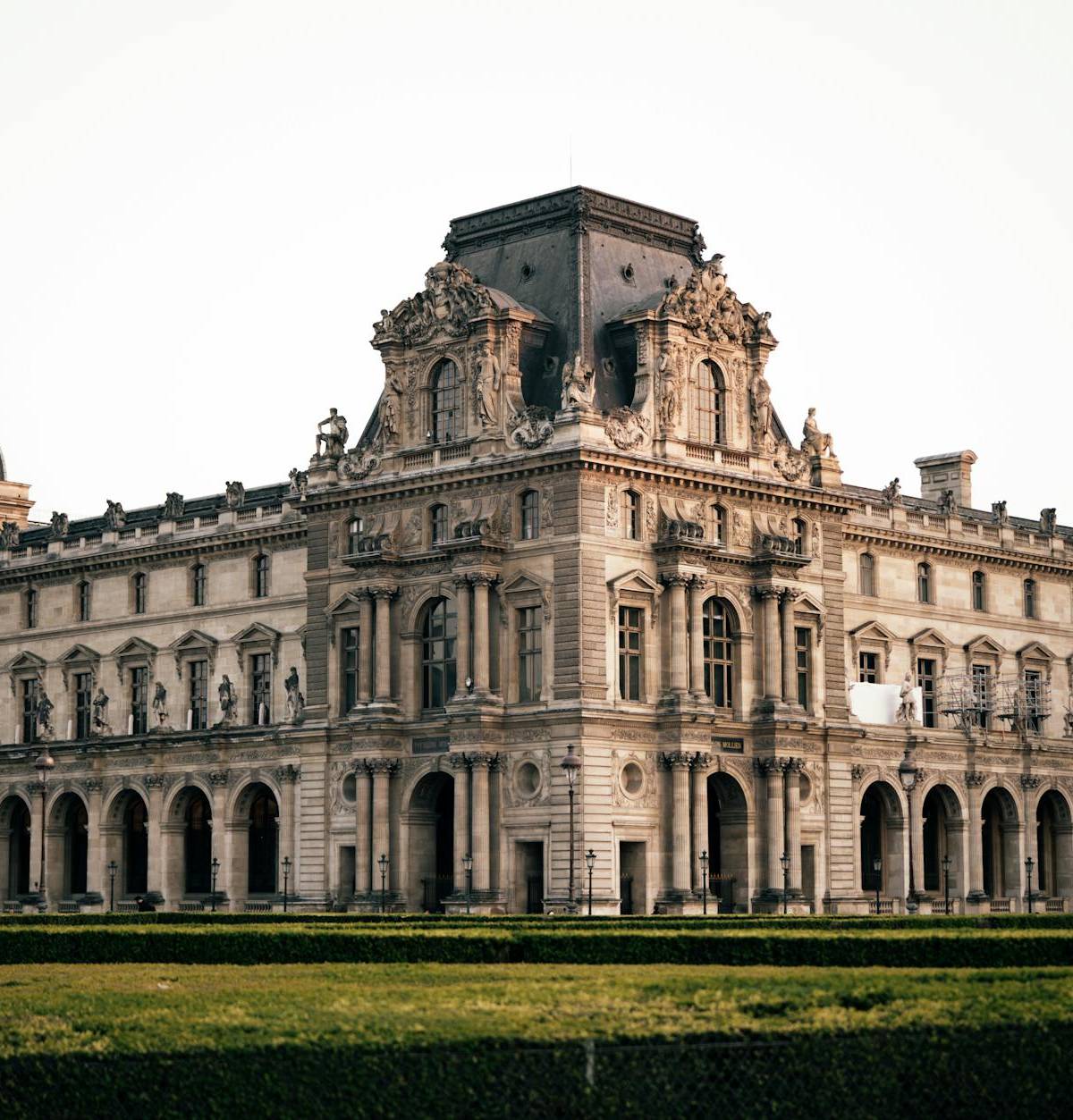
Ready to experience Paris for yourself? Plan Your Paris Trip with Chic Trip - a custom route, coordinated bookings and one accountable planner.
Planning your own Paris trip? Estimate your budget with the free Paris trip cost calculator, find out how many days you need in Paris, check when to book everything in Paris, or build a day-by-day plan with the Paris itinerary planner.
About Chic Trip
A journey designed exclusively for you: a personal itinerary, restaurant recommendations refined with your feedback, approved reservations and practical details in the Chic Trip app. Your written proposal confirms the total, inclusions and booking conditions before you commit. Start with a free call or email; no payment or price acceptance is required to enquire.