Rainy Day Romance: Museums and Passages Perfect for Grey Skies
Sightseeing 13 min read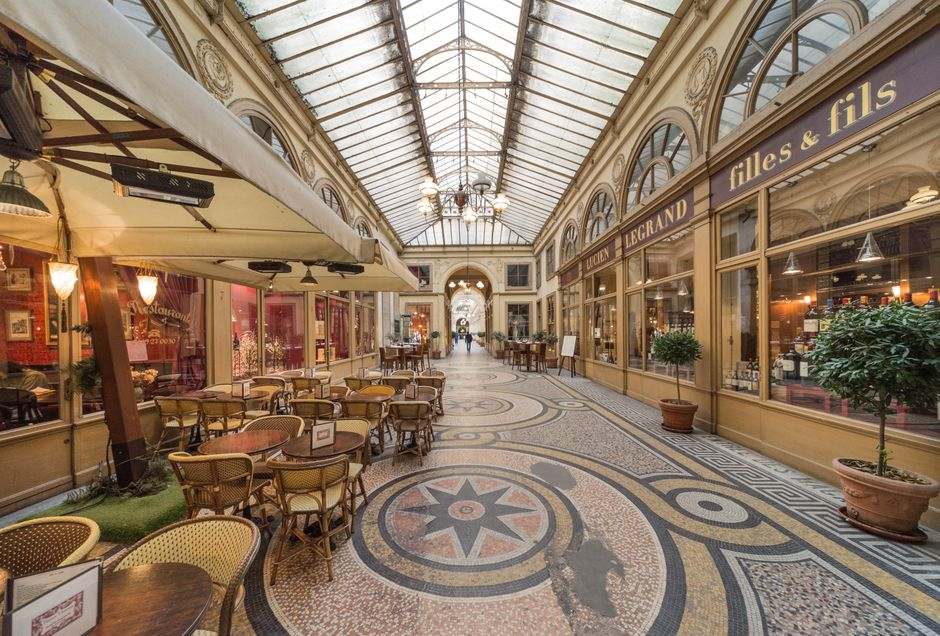
Quick answer
Discover Paris's enchanting covered passages and museums on rainy days. From Passage Verdeau's antique treasures to Jouffroy's heated elegance, craft a romantic, dry itinerary under glass roofs in ...
Here is a fuller, more polished version of the article with smoother flow and a more natural editorial voice.
Paris in the Rain
Rain in Paris is not a problem to solve. It is a different kind of day. The city changes when the sky turns gray. Cobblestones go dark and reflective, café windows steam up from inside, and the Seine settles into the color of pewter. The light shifts from bright and documentary to something softer and more atmospheric. If you know where to go, a rainy day in Paris can feel like one of the best possible versions of the city.
The key is knowing which spaces were built for exactly this kind of weather. Paris has an unusually strong infrastructure for rain, not because of modern planning, but because of 19th-century architecture. The covered passages, the grand museums, the old opera houses, the hotel salons with their deep armchairs and quiet service — all of these were designed to be inhabited when the streets outside became less inviting. They do not feel like contingency plans. They feel like the point.
The Covered Passages
The most distinctive rain architecture in Paris is the network of covered passages that still threads through the 2nd and 9th arrondissements. In the mid-19th century, there were roughly 183 of these glass-roofed arcades cutting between buildings. They offered protection from what pre-Haussmann streets were actually like: mud, sewage, and the constant movement of horse carriages. They were also commercial inventions, designed to slow pedestrian traffic through concentrated rows of shops.
Only 25 survive today, but the remaining passages still do exactly what they were built to do. They connect streets without exposing you to weather, they concentrate interesting shops and restaurants under a single roof, and they preserve a version of Paris that disappeared everywhere else. Walking through them on a rainy afternoon is one of the most satisfying things you can do in the city.
The Passage Trinity
The best way to experience the passages is to walk them as a connected circuit, beginning in the north and moving south. Passage Verdeau, with its entrance at 6 Rue de la Grange-Batelière, is a good starting point. Dating from 1847, it has a particular character: specialist dealers in stamps, coins, antique books, prints, and old postcards. The shops feel deliberately chaotic, with boxes stacked against walls and bins overflowing with ephemera. That apparent disorganization is part of how it works. The best things are often found by accident, tucked between less interesting objects.
Walking south through Verdeau brings you directly into Passage Jouffroy, one of the most historically significant of all the passages. When it opened in 1846, it was the first arcade in Paris to be built entirely from metal and glass, and the first to offer heated floors. That might sound like a minor detail, but in the winters of mid-19th century Paris, warm floors were a genuine luxury. The original tile work, gray, black, and white, remains largely intact after its restoration in 1987.
Jouffroy also has an unusual shape. Midway through, the passage bends sharply and opens into a second section separated by a short staircase. That unexpected geometry gives the walk a sense of discovery. The shops here lean into the eccentric. Pain d'Épices sells wooden music boxes and handcrafted dollhouses. Galerie Fayet stocks antique canes, walking sticks, and vintage umbrellas, turning functional objects into a display of craftsmanship. The overall mood is playful and slightly old-fashioned, which suits the architecture perfectly.
At the southern end of Jouffroy, the Musée Grévin makes the passage even more useful for a rainy day. The wax museum is genuinely entertaining for visitors of any age, and its presence here means you can absorb an extra hour or two without stepping outside. Two hotels also have entrances directly onto the passage, which means it is theoretically possible to spend a long, comfortable day moving between rooms, arcades, and restaurants without ever encountering weather.
Continuing south, you cross Boulevard Montmartre and enter Passage des Panoramas, the oldest surviving passage in Paris. It opened in 1800, and its name comes from two rotundas that once displayed immersive painted panoramas of landscapes. These were essentially what cinema would later become: visual spectacles that transported viewers somewhere else entirely. The passage expanded rapidly over the following decades, adding four additional glass-roofed galleries that connected it to the surrounding streets.
Passage des Panoramas has maintained its identity as a specialist market for stamps and coins, a trade that dates back to its earliest commercial years. But it also holds some of the best places to eat in the passage circuit. Racines, one of the anchor restaurants here, serves French-Italian cooking in an atmosphere that combines old arcade character with genuine culinary ambition. The setting rewards lingering.
Galerie Vivienne and Galerie Colbert
From Panoramas, a short walk south along Rue Vivienne brings you to Galerie Vivienne, which may be the most architecturally beautiful of all the passages. Built in 1826 and commissioned by a notaire named Marchoux, it was designed to impress. The mosaic floor is intricate and well maintained. The steel and glass rotunda fills the space with diffused natural light. The decorative program throughout draws on ancient Greek and Roman motifs: laurel crowns, wheat sheaves, cornucopias, and Mercury's caduceus for trade. The symbolism was deliberate. This was a passage built to celebrate commerce as civilization.
Legrand Filles et Fils, the wine shop and tasting room anchoring one end of the gallery, is one of the best reasons to visit in its own right. It is an excellent place to stop for a glass of wine or a more formal tasting in mid-afternoon, especially when rain is still falling outside. Bistro Vivienne provides straightforward French brasserie food in a Belle Époque setting that remains one of the more atmospheric lunch options in the area.
Directly adjacent is Galerie Colbert, opened the same year as Vivienne and built by developers who recognized a commercial opportunity. The rivalry between the two was intense enough that Vivienne's owner eventually purchased the passage connecting them and rerouted it to favor his own arcade. Colbert lost that commercial battle and has operated as a cultural institution under the Institut de France for some time now. No shops remain, but the Pompeian-style rotunda beneath a glass dome is genuinely beautiful. Le Grand Colbert, the Belle Époque brasserie at its base, is one of the loveliest restaurant rooms in Paris.
Galerie Véro-Dodat
The circuit ends at Galerie Véro-Dodat, entered from Rue du Bouloi or Rue Jean-Jacques-Rousseau in the 1st arrondissement. Of all the passages, this one feels the most formally preserved. The shop fronts are uniform, each with tall arched windows and dark wood paneling. Ornate columns frame the corridor. Ceiling paintings depict scenes from Greek mythology. The black and white marble floor is perfectly maintained. The whole place has a composed, theatrical quality, as if it has been waiting very carefully to be noticed.
The shops here tend toward the specialist. A guitar repair workshop handles rare vintage instruments for professional musicians. Antiquarian booksellers keep first editions behind glass. Contemporary galleries occupy a few of the spaces. Two Christian Louboutin showrooms face the street outside, which brings a different kind of visitor to the far end of the arcade. The contrast between those fashion pilgrims and the more patient browsers inside the passage itself is part of what makes Véro-Dodat interesting.
The full circuit, from Verdeau to Véro-Dodat, covers roughly three kilometers of walking, but the time involved is much greater than that suggests. The passages invite slowness. You stop, browse, reverse, consider, and stop again. A morning start around 10:30 AM, followed by lunch somewhere in Panoramas or Vivienne, and an afternoon arrival at Véro-Dodat around four or five o'clock is a reasonable structure. The transitions between passages involve only brief street crossings, so almost the entire circuit stays dry.
The Right Museums for a Gray Day
Not every museum works as well in rain as it does in sunshine, but some are actually better when the sky outside is gray.
The Musée d'Orsay is the clearest example. Most visitors know it as one of the world's great Impressionist collections, housed inside a former railway station with spectacular architecture. What fewer people consider is that the paintings on the upper floors were made to capture light in a very specific way, and that the diffused, overcast light of a rainy Paris afternoon is closer to the conditions that inspired Monet, Renoir, and Degas than any harsh sunny day could be. The atmospheric gray outside the tall arched windows makes the Impressionist galleries feel exactly right.
The practical advice for visiting is to reverse the usual tourist route. Most visitors start on the ground floor and work upward. Starting on the fifth floor, where the most important Impressionist and Post-Impressionist works are concentrated, means you reach them while you are still fresh and before the worst of the midday crowds. The museum tends to fill sharply between noon and two in the afternoon, so arriving at opening or after three gives you much better conditions.
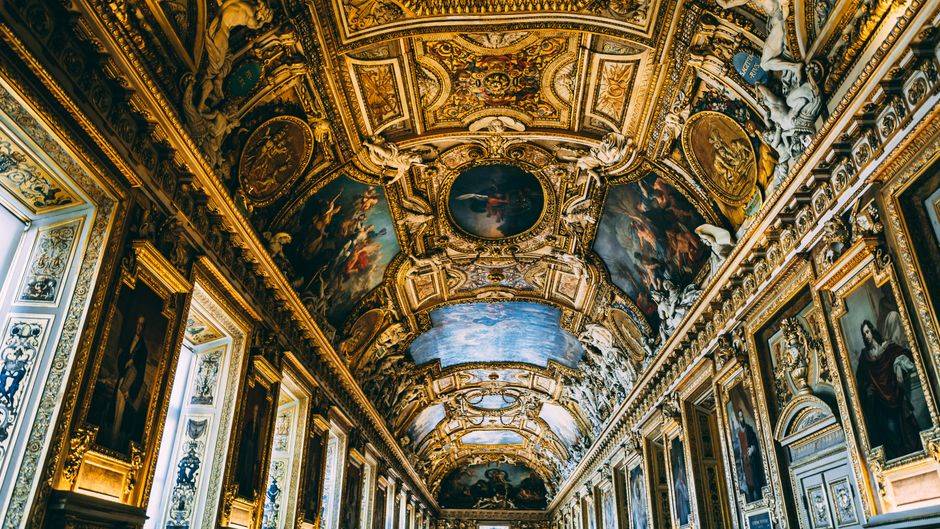
The Palais Garnier, Charles Garnier's extraordinarily ornate opera house near Place de l'Opéra, is another space that benefits from gray weather. In direct sunlight, the gilding and colored marble can feel slightly overwhelming. On a rainy day, with soft light filtering in from outside, the excess becomes something warmer and more intimate. The Grand Staircase, the painted ceilings of the Grand Foyer, and Marc Chagall's ceiling in the main auditorium all read differently when the light is low and cool outside. Self-guided visits are perfectly enjoyable and allow you to move at your own speed. The museum section covers set designs, costumes, and historical context that holds interest even for visitors who rarely attend opera.
Smaller Museums Worth Seeking Out
The Musée de la Vie Romantique, tucked on Rue Chaptal in the 9th, is one of those museums that rainy weather suits almost perfectly. It occupies the former home and studio of the painter Ary Scheffer, who hosted some of the most important artistic and literary figures of the Romantic era here in the 1830s and 1840s. George Sand is especially well represented in the permanent collection.
The museum itself is charming, but what makes it remarkable on a rainy day is the tea room that opens onto a small garden courtyard. Sitting inside, looking out at rain falling on roses and gravel while drinking hot chocolate, feels like the kind of Paris moment that does not appear in standard itineraries. Admission to the permanent collection is free, which makes the experience feel easy and unhurried rather than like something that needs to be maximized. The surrounding neighborhood, Nouvelle Athènes, is worth walking through slowly if the rain lightens even slightly. Its preserved 19th-century streetscape rewards that kind of unhurried attention.
Afternoon Tea as Strategy
Hotel afternoon tea is often dismissed as an expensive indulgence, but as a rainy-day strategy it makes a great deal of sense. The service runs roughly from 2:30 to 6 PM at most of the major hotels, which is exactly the time when rain tends to feel least manageable and when energy starts to fade. Sitting down for two hours with tiered pastries, warm scones, and endlessly refilled tea in a well-designed room is not an indulgence. It is a practical solution to an afternoon that needs structure.
The major palace hotels all offer strong versions: Le Bristol, George V, Le Meurice, and the Ritz each have their own style, but the logic is similar in every case. You are paying for the room as much as the food, and the room earns its place by being genuinely beautiful and extremely comfortable. For travelers who enjoy that kind of deliberate luxury, an afternoon tea on a rainy day is one of the best ways to spend money in Paris.
Hot Chocolate and Other Shelters
Angelina on Rue de Rivoli is one of the most famous addresses in Paris for hot chocolate, and the famous chocolat l'Africain, thick and intensely flavored, is exactly what rainy afternoons require. The interior fills quickly, but takeaway from the exterior cart lets you carry it directly into the covered arcades of Rue de Rivoli adjacent. That combination of an excellent drink and an immediately sheltered walk is hard to beat.
For something quieter and less expensive, Plaq offers hot chocolate of comparable quality without the famous address or the queue. Near Shakespeare and Company, the bookshop itself is another option for a rainy afternoon. The ground floor can feel chaotic, but the upper floor, with its creaky stairs and mismatched chairs, is one of the best places to sit quietly in Paris. If you can claim a seat near a window, the view of the Seine in the rain is exactly what you came here for.
Rain as Atmosphere
The deeper truth about Paris in the rain is that the city was designed for it. Not in the modern sense of drainage and waterproof surfaces, but in the architectural and social sense. The passages, the covered terraces, the long gallery arcades of the department stores, the deep awnings, the heated brasseries with their fogged windows — all of these are forms of shelter that make rain feel manageable without asking you to pretend it is not happening.
Parisians understand this instinctively. When it starts to drizzle, café terraces do not empty immediately. Plastic panels go up, heaters come on, and people stay. It is not denial of the weather. It is a refusal to let it dictate the day entirely. That attitude is worth borrowing. Rain in Paris is not a reason to stay inside scrolling through your phone. It is a reason to navigate differently, to take the passages instead of the boulevards, to visit the museum you were saving for a sunny day, to sit longer at lunch and let the afternoon arrange itself.
Some of the most memorable Paris days arrive like this. The light is lower and more interesting. The streets are less crowded. The atmosphere is more intimate. The city slows down a little and becomes easier to look at. Rainy Paris is not a consolation prize. In many ways, it is the real thing.
Keep exploring: castles near Paris that rival Versailles · planning Paris and Rome together · Plan your Paris trip with a local
Get our free Insider Paris Guide: the neighborhoods, restaurants and hidden corners we send our own clients. No tourist traps, no filler.
Get the free guide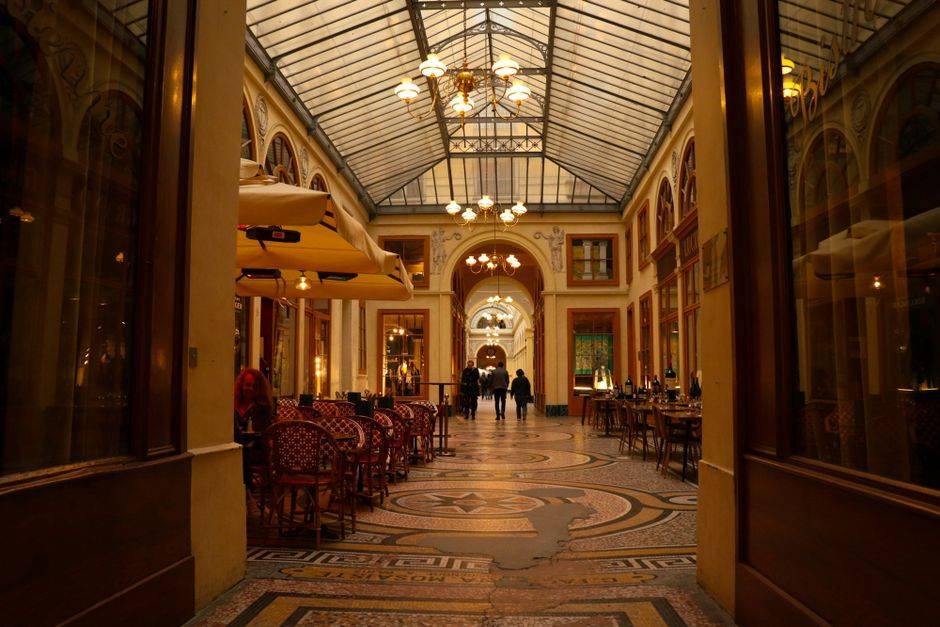
Ready to experience Paris for yourself? Plan Your Paris Trip with Chic Trip - a custom route, coordinated bookings and one accountable planner.
Planning your own Paris trip? Estimate your budget with the free Paris trip cost calculator, find out how many days you need in Paris, check when to book everything in Paris, or build a day-by-day plan with the Paris itinerary planner.
About Chic Trip
A journey designed exclusively for you: a personal itinerary, restaurant recommendations refined with your feedback, approved reservations and practical details in the Chic Trip app. Your written proposal confirms the total, inclusions and booking conditions before you commit. Start with a free call or email; no payment or price acceptance is required to enquire.