The Cinematic City: Iconic Film Locations from Godard to Woody Allen
Culture 10 min read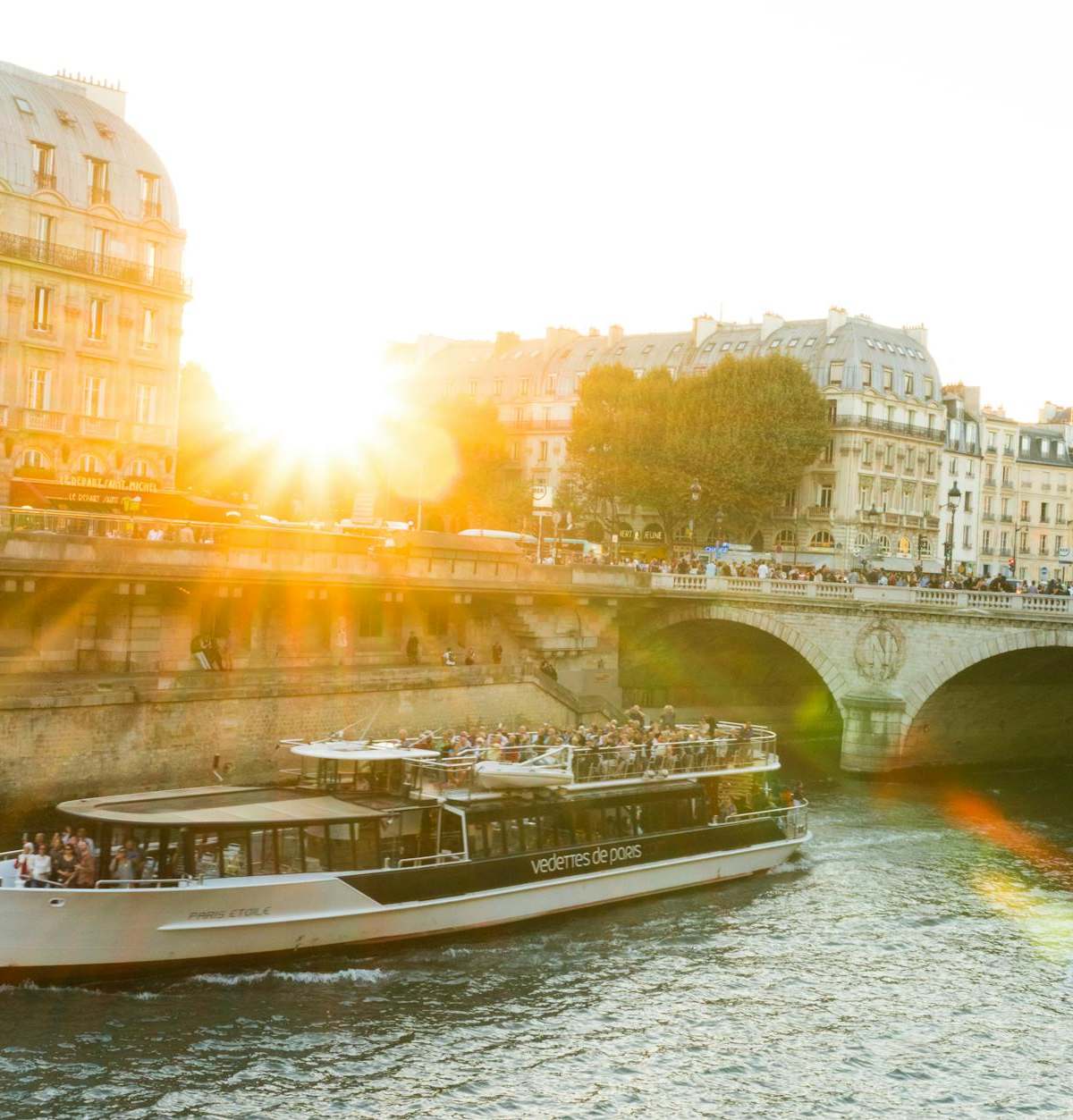
Quick answer
Discover Paris's iconic film locations from Godard's Breathless to Woody Allen's Midnight in Paris. Walk in the footsteps of cinema legends through timeless boulevards and cafés on a luxurious cine...
Paris does not just appear in films. It seems to perform in them. The city’s boulevards, cafés, bridges, and gardens often work like living characters, shaping the mood of a scene as much as the actors do. Sometimes they provide romance, sometimes tension, sometimes a sense of memory or loss. That is part of why Paris has remained one of the most filmed cities in the world: it offers not only beautiful backdrops, but also a visual language that directors can use to tell stories with emotional weight.
From the street-level realism of the French New Wave to the nostalgic dreamscape of Midnight in Paris, filmmakers have returned again and again to the same neighborhoods, monuments, and corners of the city. The locations matter because they are real and still accessible. You can walk where Belmondo ran in Breathless, sit near the café tables that appear in Amélie, or trace the routes of a film through streets that have changed very little since the camera last rolled. That continuity is part of Paris’s cinematic power. The city does not simply host films; it leaves its own imprint on them.
The New Wave Shift
Before 1960, much of French cinema was still rooted in studios, where sets, lighting, and controlled interiors shaped the final image. The French New Wave changed that completely. Filmmakers such as Jean-Luc Godard and François Truffaut took their cameras into real streets, used natural light, and worked with a freer, more improvisational style. Paris became a studio without walls. That shift did more than alter French cinema. It changed the way filmmakers around the world thought about location itself.
The city suddenly mattered in a different way. It was no longer a decorative backdrop to be recreated in controlled conditions. It became part of the storytelling, part of the rhythm, part of the emotion. Narrow streets, traffic, shopfronts, sidewalks, and apartment facades all entered the frame with the same importance as the actors. The city was not being represented from a distance. It was being lived in, shot in, and shaped by the camera in real time.
Breathless and the Street
Jean-Luc Godard’s Breathless is the film that most clearly established this approach. Released in 1960, it follows Michel Poiccard and Patricia Franchini through Paris with a kind of loose, dangerous energy that matched the film’s form. The relationship between the characters is central, of course, but so is the city they move through. Paris in Breathless is not polished or romanticized. It is immediate, physical, and alive.
A number of the film’s key locations remain recognizable today. Rue Campagne-Première in Montparnasse is where Patricia stays, in the former Hôtel de Suède. Godard shot in actual rooms, and the cramped space adds intimacy that a set could never have reproduced. Boulevard Saint-Michel appears in one of the film’s most famous sequences, with Patricia selling newspapers while talking to Michel. Even now, the street retains a similar energy, full of students, cafés, and constant foot traffic.
Rue de Buci also plays an important role. It appears in several scenes and still keeps much of its old layout. The street is more polished now than it was in the 1960s, but the geometry is the same, which means you can still orient yourself in the same visual space that Godard captured. That is one reason the film remains so legible to visitors. The city has evolved, but the structure of the scene is still there.
The film’s final chase and death scene on Rue Campagne-Première remains one of its most famous moments. Godard filmed it quickly and without permits, using a very direct, almost guerrilla style. Belmondo running through the street, the camera tracking beside him, gives the scene a rawness that still feels modern. The location is now part of film memory, but it is also an ordinary Paris street where people still live, work, and pass through every day.
Other locations in the film spread across central Paris, including the Champs-Élysées, Avenue de la Grande-Armée, and stretches near the Seine. What makes the film remarkable is that the route is still traceable. You can walk large parts of it in a single afternoon and feel the city as both contemporary place and cinematic archive.
The New Wave Map
Godard was not alone. Truffaut’s The 400 Blows and later films by Éric Rohmer also relied on the city as a lived environment rather than a backdrop. The New Wave was not only a visual style. It was a way of understanding Paris itself. These films gave attention to neighborhoods, squares, parks, and cafés that felt ordinary at the time but became iconic through cinema.
The Luxembourg Gardens are a good example. They appear in several New Wave films and remain one of the city’s most cinematic spaces. The formal paths, chestnut trees, iron chairs, and open lawns create a setting that naturally supports conversation, reflection, and movement. Even today, it feels like a place where someone might pause in the middle of a larger emotional story. That is exactly why filmmakers keep returning there.
Woody Allen’s Paris
Fifty years later, Woody Allen approached the city from a very different angle. If the New Wave saw Paris with local immediacy, Allen saw it as a dream of artistic memory. Midnight in Paris is less interested in realism than in nostalgia. It treats the city as a bridge between eras, letting its main character drift from contemporary frustration into a fantasy version of 1920s Paris.
That difference matters. Allen was not trying to strip Paris of romance; he was embracing it fully. The opening sequences are openly picturesque, almost like a travel brochure, but the film uses those images deliberately. It is interested in what the city promises emotionally. Contemporary Paris represents comfort, luxury, and surface beauty, while the imagined Paris of the past represents inspiration, freedom, and artistic possibility.
The Present-Day City
The film begins with a montage of Paris at its most recognizable. Monuments, bridges, storefronts, and elegant streets establish the city’s appeal immediately. Gil, the central character, stays at Hôtel Le Bristol on Rue du Faubourg Saint-Honoré, one of the city’s most luxurious addresses. That choice is not accidental. The hotel reflects the world that surrounds him, a world of polished comfort that still leaves him unsatisfied.
Versailles also appears early in the film, reinforcing that contrast between grandeur and emotional distance. The palace is spectacular, but for Gil it is also part of the world he cannot fully inhabit. The setting underlines the film’s main tension: he is in one of the most beautiful cities in the world, yet he feels out of place in the life he is living.
The Midnight Route
The film’s most memorable location is Place Dauphine, the triangular square on the Île de la Cité where the midnight car appears. It is one of the city’s quieter and more intimate spaces, which makes it ideal for the film’s magical turn. The square feels slightly hidden, slightly separate from the busier parts of central Paris, and that gives the time-travel sequence its dreamlike quality.
Other locations deepen that sense of historical layering. 27 Rue de Fleurus, the former home of Gertrude Stein, anchors one of the film’s most important literary references. Shakespeare and Company appears as well, connecting the contemporary narrative to the city’s long relationship with writers, expatriates, and artistic circles. Place Vendôme, with its luxury storefronts, gives a very different emotional tone, representing the polished surface of modern prestige.
The strength of Midnight in Paris lies in how it uses geography to express longing. The film suggests that the most valuable Paris is not necessarily the grandest one. It is the one found in side streets, bookshops, hidden squares, and late-night wandering. That is a romantic idea, of course, but it is also a spatial one. The film builds its emotional argument through the city’s layout.
Other Cinematic Paris
Paris has played many roles beyond New Wave realism and nostalgic romance. It can be whimsical, dangerous, glamorous, or surreal depending on the film.
Amélie turned Montmartre into a highly stylized version of Paris that still feels deeply recognizable. Café des Deux Moulins became one of the city’s most famous screen-linked cafés, while the surrounding streets helped build the film’s intimate neighborhood atmosphere. Montmartre’s hills, staircases, and village-like scale made it ideal for a story about small acts of kindness and private fantasy.
Action films use the city differently. The Bourne Identity turns Paris into a place of movement and urgency, where geography becomes part of the chase. Streets, bridges, and embassies matter because they create real tactical space. Inception uses Pont de Bir-Hakeim for an entirely different purpose, taking advantage of the bridge’s strong geometry and visual clarity. In that case, Paris becomes architectural imagination as much as physical location.
Why Paris Works
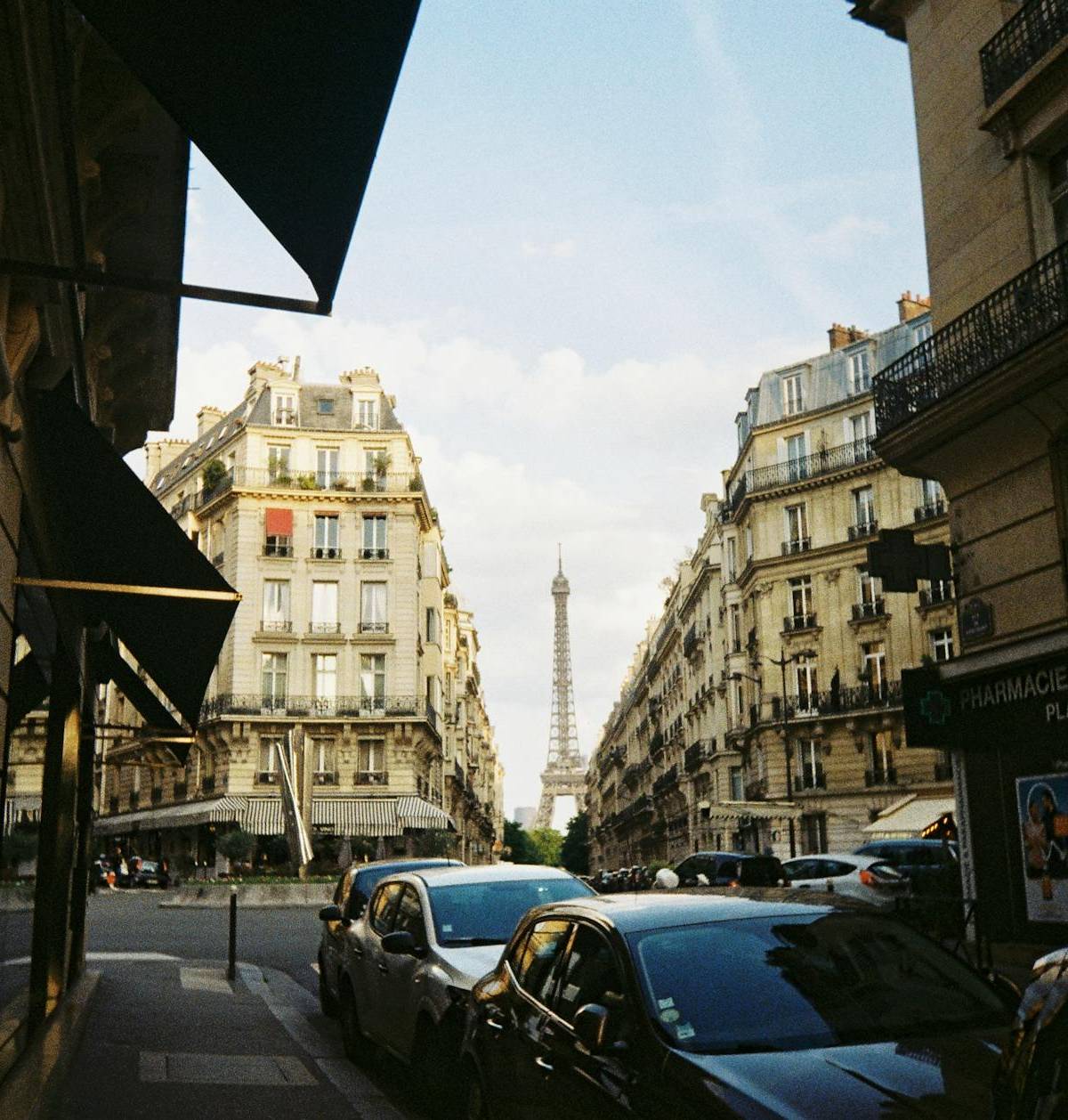
Part of Paris’s cinematic appeal is architectural. The city has a strong visual consistency: limestone facades, slate roofs, regulated heights, and long streets that feel coherent from district to district. That does not mean every neighborhood looks the same. It means they feel like part of one city, which is incredibly useful for filmmakers. A director can move between arrondissements and still keep the image unified.
Light matters too. Paris has a particular quality of daylight, especially in the late afternoon and blue hour, that cinematographers love. The city photographs well at almost any time, but its evening light is especially expressive. The sky lingers, reflections soften the surfaces of buildings and bridges, and the streets seem to hold a certain glow.
There is also a practical reason filmmakers return so often. Paris is dense, walkable, and geographically efficient. A production can move between very different-looking locations without losing too much time in transit. That makes the city unusually versatile for shooting, especially when scenes need variety without logistical complexity.
Film Tourism Today
The rise of film tourism has changed how many of these locations are experienced. Some are now pilgrimage sites. Others remain working neighborhood spaces that happen to have appeared on screen. That distinction matters. Café des Deux Moulins is still a café. Rue Campagne-Première is still a residential street. The Seine quays are still used by Parisians, not just by visitors looking for a movie frame.
This creates an interesting tension. Cinema preserves places, but it can also freeze them in tourist memory. A café or square can become famous for one film, even as its everyday life continues around the filming legacy. For travelers, the best way to approach these places is with some care. The goal should not be to turn real streets into museum pieces, but to understand how film and city continue to shape each other.
A City That Knows How to Perform
Paris films well because it already understands image, history, and atmosphere. It has enough visual unity to hold together across genres, but enough variation to suit romance, comedy, drama, and action. Directors do not need to invent Paris from scratch. They only need to choose which version of it they want to reveal.
That is what makes cinematic Paris so compelling. The city exists twice at once: as a living place and as a memory of itself on screen. Walking through it, you are never entirely in one or the other. You are standing in a real neighborhood while also passing through a version of the city that cinema has already taught you to recognize. That overlap is what keeps Paris endlessly filmable, and endlessly worth exploring.
Keep exploring: Emily in Paris filming locations · 15 hidden gems in Paris · Plan your Paris trip with a local
Get our free Insider Paris Guide: the neighborhoods, restaurants and hidden corners we send our own clients. No tourist traps, no filler.
Get the free guide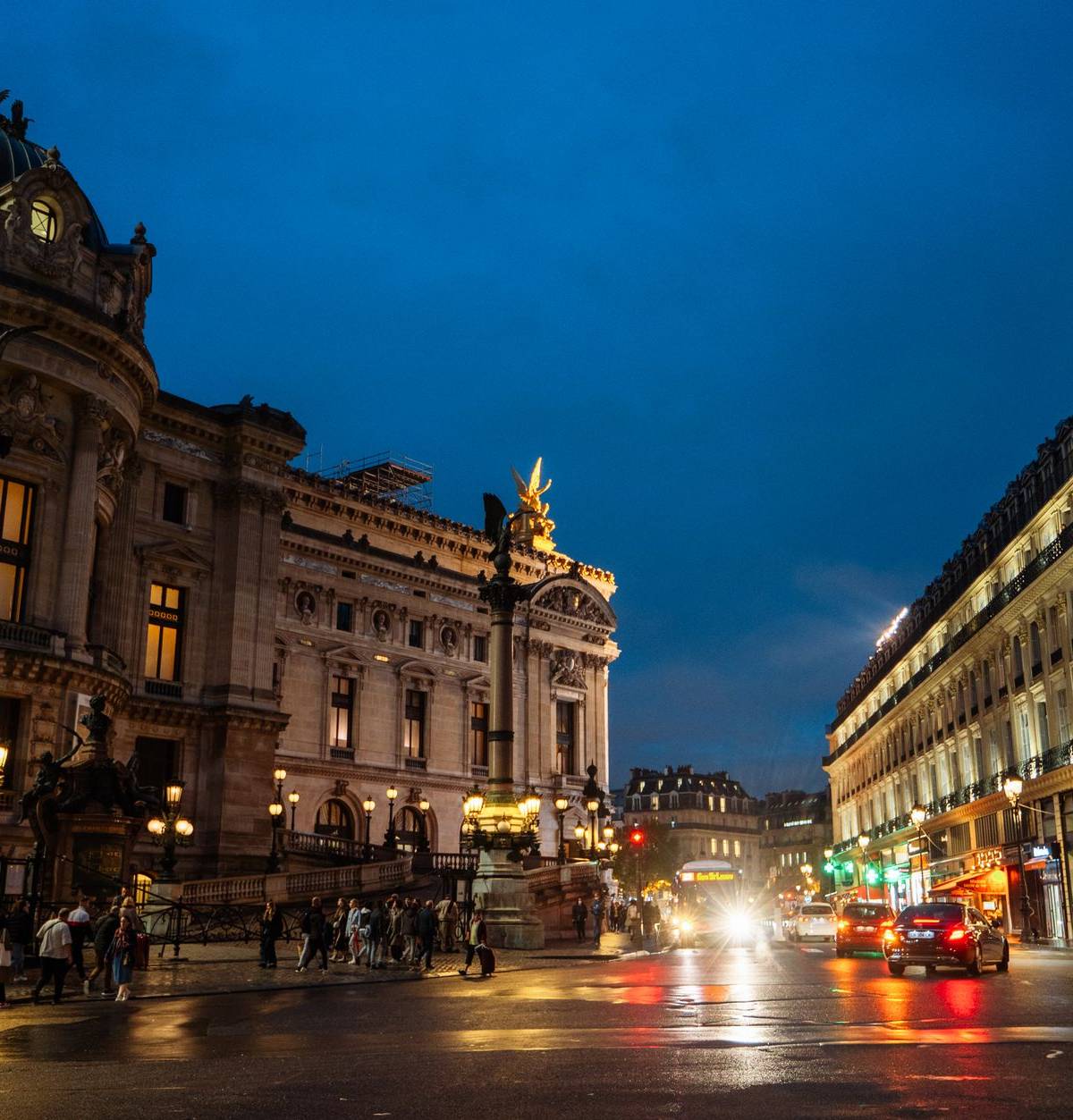
Ready to experience Paris for yourself? Plan Your Paris Trip with Chic Trip - a custom route, coordinated bookings and one accountable planner.
Planning your own Paris trip? Estimate your budget with the free Paris trip cost calculator, find out how many days you need in Paris, check when to book everything in Paris, or build a day-by-day plan with the Paris itinerary planner.
About Chic Trip
A journey designed exclusively for you: a personal itinerary, restaurant recommendations refined with your feedback, approved reservations and practical details in the Chic Trip app. Your written proposal confirms the total, inclusions and booking conditions before you commit. Start with a free call or email; no payment or price acceptance is required to enquire.