We use essential cookies to make our site work. With your consent, we may also use non-essential cookies to improve user experience, personalize content, customize advertisements, and analyze website traffic. For these reasons, we may share your site usage data with our social media, advertising, and analytics partners. By clicking ”Accept,” you agree to our website's cookie use as described in our Cookie Policy. You can change your cookie settings at any time by clicking “Preferences.”
Design My Trip
Skip to main content
HistoryFrance

Napoleon Bonaparte: From Corsican Artillery Officer to Emperor of Europe

Chic Trip Team
May 22, 2026
7 min read
1,388 words

Trace Napoleon Bonaparte's meteoric rise from Corsican artillery officer to Emperor of Europe, exploring his genius, legacy, and iconic sites across France and beyond for discerning travelers.

Portrait of Napoleon Bonaparte as young artillery officer from Corsica

Ambition doesn't explain him. Thousands of French officers possessed ambition during the Revolution; only one transformed himself from provincial artillery captain to master of continental Europe within fifteen years. Napoleon Bonaparte—born on a Mediterranean island that had been French for barely a year, speaking accented French his entire life, standing five-foot-six in an era when that wasn't particularly short—shouldn't have succeeded. He did anyway, through military genius, relentless work ethic, and an understanding that revolutions create vacuums ambitious men can fill. Between 1799 and 1815, he redrew Europe's map, exported revolutionary legal codes, and demonstrated that meritocracy could replace inherited privilege—then proved that meritocratic dictators eventually overreach just like kings. What he left behind wasn't just battlefields but institutions: the Napoleonic Code, the lycée system, centralized administration that still governs France. His legacy is simultaneously democratic modernization and authoritarian excess, which is precisely why he remains impossible to dismiss.

Corsica to Continent: The Outsider's Advantage

Napoleon was born August 15, 1769, in Ajaccio, Corsica, to Carlo Bonaparte, a lawyer of minor nobility, and Letizia Ramolino. The timing mattered: Corsica had become French just months earlier after centuries under Genoese control, and Corsican nationalists led by Pasquale Paoli had fought French annexation bitterly. The Bonaparte family sided with France—a pragmatic choice that secured Carlo positions in the new administration and scholarships for his sons to French military academies.

At nine, Napoleon left Corsica for military school in Brienne, then transferred to the École Royale Militaire in Paris. He graduated in 1785 as a second lieutenant in the artillery—the technical, mathematical branch that attracted middle-class officers rather than aristocrats who preferred cavalry's social prestige. His father died that year, leaving the 16-year-old Napoleon as effective head of a family with eight children and minimal income. The Revolution erupted four years later, and Napoleon initially returned to Corsica hoping to advance Corsican autonomy. When Paoli's nationalists turned against the Bonapartes in 1793, the family fled to mainland France as refugees. Napoleon was 24, effectively stateless, and possessed nothing except his artillery commission. The Revolution's destruction of the ancien régime meant outsiders like him could finally rise on merit rather than pedigree.

Toulon: The Siege That Made a General

In September 1793, royalist forces had surrendered Toulon to the British fleet, giving counter-revolutionaries a fortified Mediterranean port from which to threaten the Republic. Revolutionary armies besieged the city for months without success until Napoleon, then a captain, received command of the siege artillery. He recognized that capturing the forts dominating Toulon's harbor would force British ships to withdraw, rendering the city indefensible. His artillery placements—technically brilliant, aggressively positioned—drove the British fleet out in December 1793.

Detailed shot of a historic cannon barrel with patina.

The victory earned him promotion to brigadier general at age 24. More importantly, it demonstrated his operational principle: identify the decisive point, concentrate overwhelming force there, and exploit success relentlessly. He'd apply this template across two decades of warfare. In October 1795, Paul Barras—the Directory politician—called on Napoleon to suppress a royalist insurrection in Paris. Napoleon positioned artillery throughout the streets and unleashed grapeshot on the rebels, earning the nickname "General Vendémiaire" and promotion to command the Army of the Interior. Revolutionary authorities learned he could be useful; Napoleon learned that political power flowed from military success.

Italy: Where Strategy Became Legend

In March 1796, the Directory appointed Napoleon, age 26, to command the Army of Italy—undersupplied, demoralized, and facing superior Austrian and Piedmontese forces. Within two weeks he'd separated the allied armies through rapid maneuvers and defeated them in detail at battles like Montenotte and Lodi. His speed shocked opponents accustomed to 18th-century warfare's ponderous logistics. Napoleon moved armies quickly, lived off the land through organized requisitions, and struck before enemies could concentrate.

The Italian campaign lasted 15 months and produced 18 pitched battles, all victories. Napoleon extracted massive tribute from conquered territories, sending gold and looted art to Paris while his army's reputation grew with every triumph. He negotiated the Treaty of Campo Formio directly with Austria in 1797, functioning as diplomat and general simultaneously. The Directory, threatened by his popularity and independence, approved his 1798 proposal to invade Egypt—partly to strike at British interests, partly to remove an overly successful general from France.

Egypt: Ambition Meets Reality

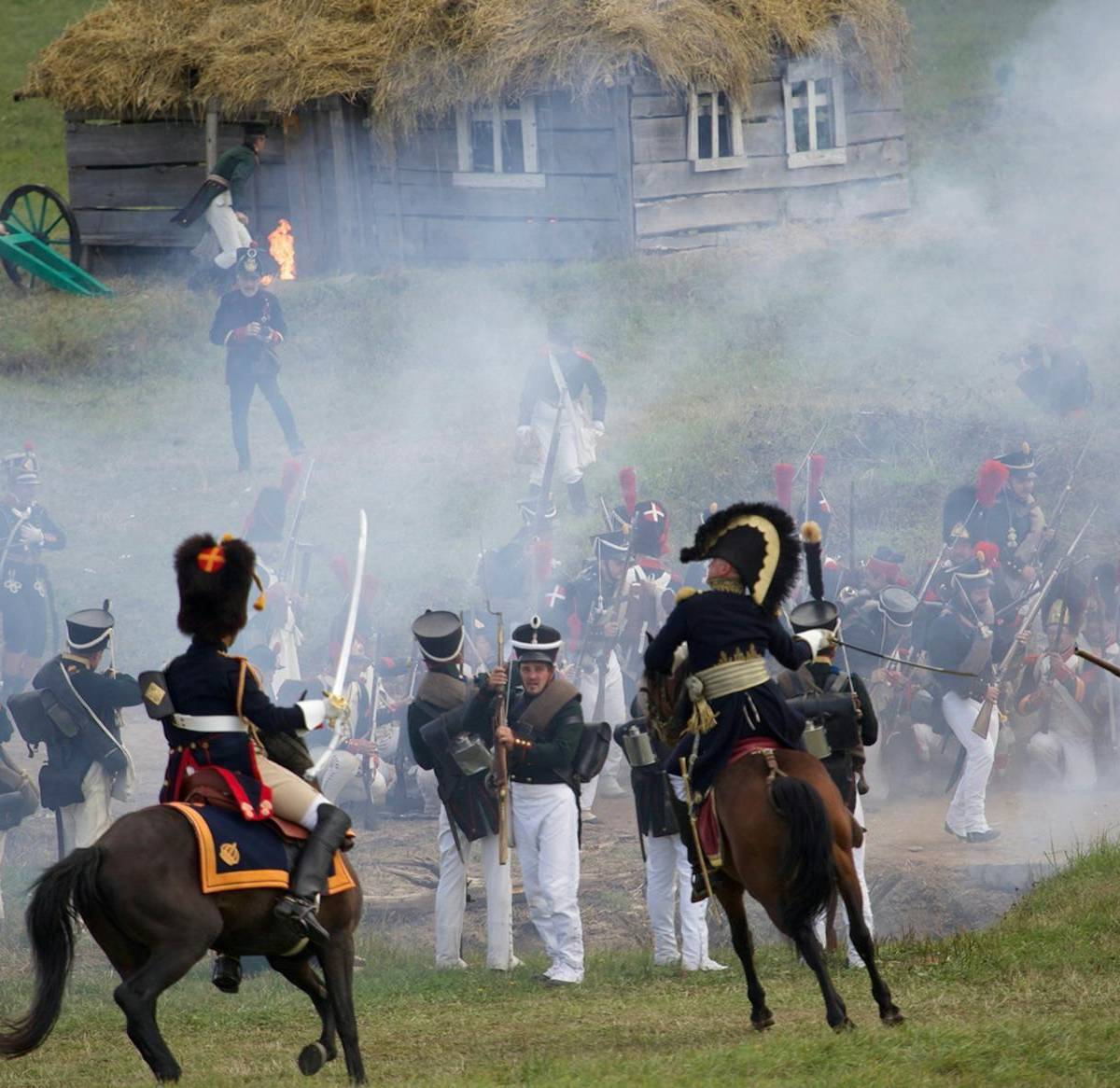
Horse mounted officers and soldiers with rifles and muskets fighting on field in countryside during reenactment of Napoleonic war

Napoleon landed in Egypt in July 1798 with 40,000 troops, ostensibly to threaten British trade routes to India. The campaign mixed triumph and disaster. His army defeated Mamluk forces at the Battle of the Pyramids, but Admiral Horatio Nelson destroyed the French fleet at Aboukir Bay, stranding Napoleon in Egypt. He pushed into Syria in 1799, winning battles at Mount Tabor but failing to capture Acre after a two-month siege. Plague decimated his army; Ottoman forces counterattacked. Napoleon, recognizing military stalemate and learning that political chaos threatened France, abandoned his army in August 1799 and sailed home. It was desertion dressed as strategic necessity, but Paris welcomed him as a hero anyway. France needed stability; Napoleon provided theater.

18 Brumaire: Revolution Ends, Empire Begins

On November 9, 1799—18 Brumaire Year VIII by the revolutionary calendar—Napoleon staged a coup with his brother Lucien and allies in the Directory. Legislative resistance nearly derailed it until troops under Joachim Murat cleared the chamber at bayonet point. Napoleon emerged as First Consul, one of three but unmistakably dominant. He organized a plebiscite asking citizens if they approved; the vote was 99.9% yes, though whether from genuine support or coercion remains debatable.

As First Consul, Napoleon stabilized France after a decade of revolutionary upheaval. He negotiated peace with Austria at Marengo in 1800 and with Britain at Amiens in 1802. Domestically, he centralized administration, established the Banque de France, created the lycée secondary school system, and promulgated the Code Civil—the Napoleonic Code—that standardized French law and would be exported across Europe. He reconciled with the Catholic Church through the Concordat of 1801, recognizing that most French citizens remained religious despite revolutionary attempts to abolish Christianity. In 1804, another plebiscite approved his elevation to Emperor. On December 2, 1804, Pope Pius VII presided over Napoleon's coronation at Notre-Dame, though Napoleon famously crowned himself, taking the crown from the Pope's hands in a gesture rejecting divine right.

The Grand Empire: Conquest as Governance

Four soldiers in historical uniforms stand in formation during a reenactment outdoors.

Between 1805 and 1812, Napoleon dominated Europe through a series of spectacular victories. Austerlitz in December 1805—the "Battle of the Three Emperors"—crushed combined Austrian and Russian armies and remains studied in military academies as near-perfect execution. Jena in 1806 shattered Prussia; Wagram in 1809 forced Austria to accept permanent subordination. Napoleon reorganized Germany, abolishing the Holy Roman Empire and creating the Confederation of the Rhine under French protection. He placed family members on European thrones: his brother Joseph in Spain, his brother-in-law Murat in Naples, his brother Jérôme in Westphalia.

But empire required constant expansion to sustain itself. The Continental System—Napoleon's economic blockade attempting to strangle British trade—demanded enforcement across every European coastline, necessitating occupations that bred resistance. The 1808 Spanish uprising became a festering wound, tying down hundreds of thousands of French troops in guerrilla warfare. In 1812, Napoleon invaded Russia with 600,000 men, the largest army Europe had ever seen. Moscow's occupation and subsequent retreat through winter destroyed the Grande Armée; perhaps 100,000 survived. European powers smelled weakness and formed the Sixth Coalition. Napoleon won battles through 1813 but couldn't replace losses. By April 1814, allied armies occupied Paris. Napoleon abdicated and accepted exile to Elba, a Mediterranean island kingdom.

The Hundred Days: Hubris to St. Helena

In March 1815, Napoleon escaped Elba and landed in southern France with a thousand men. The soldiers sent to arrest him joined him instead; Marshal Ney, who'd promised Louis XVIII he'd bring Napoleon back in an iron cage, embraced him tearfully. Within three weeks Napoleon controlled Paris without firing a shot—the Hundred Days had begun. But Europe united against him. At Waterloo in Belgium on June 18, 1815, the Duke of Wellington's Anglo-Allied army and Blücher's Prussians defeated Napoleon definitively. He abdicated again, surrendered to British authorities, and was exiled to St. Helena, a remote South Atlantic island. He died there May 5, 1821, likely from stomach cancer, though conspiracy theories persist. He was 51. His son never ruled; his nephew would briefly restore the empire decades later. But Napoleon's ghost haunted France—and Europe—for generations. He'd proven that merit could overthrow privilege, then demonstrated that unchecked ambition eventually consumes itself.

Photo Gallery

Detailed shot of a historic cannon barrel with patina.
Horse mounted officers and soldiers with rifles and muskets fighting on field in countryside during reenactment of Napoleonic war
Four soldiers in historical uniforms stand in formation during a reenactment outdoors.

Related Articles

Napoleon Bonaparte: From Corsican Artillery Officer to Emperor of Europe

History 7 min read
Portrait of Napoleon Bonaparte as young artillery officer from Corsica

Trace Napoleon Bonaparte's meteoric rise from Corsican artillery officer to Emperor of Europe, exploring his genius, legacy, and iconic sites across France and beyond for discerning travelers.

Ambition doesn't explain him. Thousands of French officers possessed ambition during the Revolution; only one transformed himself from provincial artillery captain to master of continental Europe within fifteen years. Napoleon Bonaparte—born on a Mediterranean island that had been French for barely a year, speaking accented French his entire life, standing five-foot-six in an era when that wasn't particularly short—shouldn't have succeeded. He did anyway, through military genius, relentless work ethic, and an understanding that revolutions create vacuums ambitious men can fill. Between 1799 and 1815, he redrew Europe's map, exported revolutionary legal codes, and demonstrated that meritocracy could replace inherited privilege—then proved that meritocratic dictators eventually overreach just like kings. What he left behind wasn't just battlefields but institutions: the Napoleonic Code, the lycée system, centralized administration that still governs France. His legacy is simultaneously democratic modernization and authoritarian excess, which is precisely why he remains impossible to dismiss.

Corsica to Continent: The Outsider's Advantage

Napoleon was born August 15, 1769, in Ajaccio, Corsica, to Carlo Bonaparte, a lawyer of minor nobility, and Letizia Ramolino. The timing mattered: Corsica had become French just months earlier after centuries under Genoese control, and Corsican nationalists led by Pasquale Paoli had fought French annexation bitterly. The Bonaparte family sided with France—a pragmatic choice that secured Carlo positions in the new administration and scholarships for his sons to French military academies.

At nine, Napoleon left Corsica for military school in Brienne, then transferred to the École Royale Militaire in Paris. He graduated in 1785 as a second lieutenant in the artillery—the technical, mathematical branch that attracted middle-class officers rather than aristocrats who preferred cavalry's social prestige. His father died that year, leaving the 16-year-old Napoleon as effective head of a family with eight children and minimal income. The Revolution erupted four years later, and Napoleon initially returned to Corsica hoping to advance Corsican autonomy. When Paoli's nationalists turned against the Bonapartes in 1793, the family fled to mainland France as refugees. Napoleon was 24, effectively stateless, and possessed nothing except his artillery commission. The Revolution's destruction of the ancien régime meant outsiders like him could finally rise on merit rather than pedigree.

Toulon: The Siege That Made a General

In September 1793, royalist forces had surrendered Toulon to the British fleet, giving counter-revolutionaries a fortified Mediterranean port from which to threaten the Republic. Revolutionary armies besieged the city for months without success until Napoleon, then a captain, received command of the siege artillery. He recognized that capturing the forts dominating Toulon's harbor would force British ships to withdraw, rendering the city indefensible. His artillery placements—technically brilliant, aggressively positioned—drove the British fleet out in December 1793.

Detailed shot of a historic cannon barrel with patina.

The victory earned him promotion to brigadier general at age 24. More importantly, it demonstrated his operational principle: identify the decisive point, concentrate overwhelming force there, and exploit success relentlessly. He'd apply this template across two decades of warfare. In October 1795, Paul Barras—the Directory politician—called on Napoleon to suppress a royalist insurrection in Paris. Napoleon positioned artillery throughout the streets and unleashed grapeshot on the rebels, earning the nickname "General Vendémiaire" and promotion to command the Army of the Interior. Revolutionary authorities learned he could be useful; Napoleon learned that political power flowed from military success.

Italy: Where Strategy Became Legend

In March 1796, the Directory appointed Napoleon, age 26, to command the Army of Italy—undersupplied, demoralized, and facing superior Austrian and Piedmontese forces. Within two weeks he'd separated the allied armies through rapid maneuvers and defeated them in detail at battles like Montenotte and Lodi. His speed shocked opponents accustomed to 18th-century warfare's ponderous logistics. Napoleon moved armies quickly, lived off the land through organized requisitions, and struck before enemies could concentrate.

The Italian campaign lasted 15 months and produced 18 pitched battles, all victories. Napoleon extracted massive tribute from conquered territories, sending gold and looted art to Paris while his army's reputation grew with every triumph. He negotiated the Treaty of Campo Formio directly with Austria in 1797, functioning as diplomat and general simultaneously. The Directory, threatened by his popularity and independence, approved his 1798 proposal to invade Egypt—partly to strike at British interests, partly to remove an overly successful general from France.

Egypt: Ambition Meets Reality

Horse mounted officers and soldiers with rifles and muskets fighting on field in countryside during reenactment of Napoleonic war

Napoleon landed in Egypt in July 1798 with 40,000 troops, ostensibly to threaten British trade routes to India. The campaign mixed triumph and disaster. His army defeated Mamluk forces at the Battle of the Pyramids, but Admiral Horatio Nelson destroyed the French fleet at Aboukir Bay, stranding Napoleon in Egypt. He pushed into Syria in 1799, winning battles at Mount Tabor but failing to capture Acre after a two-month siege. Plague decimated his army; Ottoman forces counterattacked. Napoleon, recognizing military stalemate and learning that political chaos threatened France, abandoned his army in August 1799 and sailed home. It was desertion dressed as strategic necessity, but Paris welcomed him as a hero anyway. France needed stability; Napoleon provided theater.

18 Brumaire: Revolution Ends, Empire Begins

On November 9, 1799—18 Brumaire Year VIII by the revolutionary calendar—Napoleon staged a coup with his brother Lucien and allies in the Directory. Legislative resistance nearly derailed it until troops under Joachim Murat cleared the chamber at bayonet point. Napoleon emerged as First Consul, one of three but unmistakably dominant. He organized a plebiscite asking citizens if they approved; the vote was 99.9% yes, though whether from genuine support or coercion remains debatable.

As First Consul, Napoleon stabilized France after a decade of revolutionary upheaval. He negotiated peace with Austria at Marengo in 1800 and with Britain at Amiens in 1802. Domestically, he centralized administration, established the Banque de France, created the lycée secondary school system, and promulgated the Code Civil—the Napoleonic Code—that standardized French law and would be exported across Europe. He reconciled with the Catholic Church through the Concordat of 1801, recognizing that most French citizens remained religious despite revolutionary attempts to abolish Christianity. In 1804, another plebiscite approved his elevation to Emperor. On December 2, 1804, Pope Pius VII presided over Napoleon's coronation at Notre-Dame, though Napoleon famously crowned himself, taking the crown from the Pope's hands in a gesture rejecting divine right.

The Grand Empire: Conquest as Governance

Four soldiers in historical uniforms stand in formation during a reenactment outdoors.

Between 1805 and 1812, Napoleon dominated Europe through a series of spectacular victories. Austerlitz in December 1805—the "Battle of the Three Emperors"—crushed combined Austrian and Russian armies and remains studied in military academies as near-perfect execution. Jena in 1806 shattered Prussia; Wagram in 1809 forced Austria to accept permanent subordination. Napoleon reorganized Germany, abolishing the Holy Roman Empire and creating the Confederation of the Rhine under French protection. He placed family members on European thrones: his brother Joseph in Spain, his brother-in-law Murat in Naples, his brother Jérôme in Westphalia.

But empire required constant expansion to sustain itself. The Continental System—Napoleon's economic blockade attempting to strangle British trade—demanded enforcement across every European coastline, necessitating occupations that bred resistance. The 1808 Spanish uprising became a festering wound, tying down hundreds of thousands of French troops in guerrilla warfare. In 1812, Napoleon invaded Russia with 600,000 men, the largest army Europe had ever seen. Moscow's occupation and subsequent retreat through winter destroyed the Grande Armée; perhaps 100,000 survived. European powers smelled weakness and formed the Sixth Coalition. Napoleon won battles through 1813 but couldn't replace losses. By April 1814, allied armies occupied Paris. Napoleon abdicated and accepted exile to Elba, a Mediterranean island kingdom.

The Hundred Days: Hubris to St. Helena

In March 1815, Napoleon escaped Elba and landed in southern France with a thousand men. The soldiers sent to arrest him joined him instead; Marshal Ney, who'd promised Louis XVIII he'd bring Napoleon back in an iron cage, embraced him tearfully. Within three weeks Napoleon controlled Paris without firing a shot—the Hundred Days had begun. But Europe united against him. At Waterloo in Belgium on June 18, 1815, the Duke of Wellington's Anglo-Allied army and Blücher's Prussians defeated Napoleon definitively. He abdicated again, surrendered to British authorities, and was exiled to St. Helena, a remote South Atlantic island. He died there May 5, 1821, likely from stomach cancer, though conspiracy theories persist. He was 51. His son never ruled; his nephew would briefly restore the empire decades later. But Napoleon's ghost haunted France—and Europe—for generations. He'd proven that merit could overthrow privilege, then demonstrated that unchecked ambition eventually consumes itself.

Napoleon Bonaparte Corsica French history European emperors historical travel