The Kings Who Built France
History 7 min read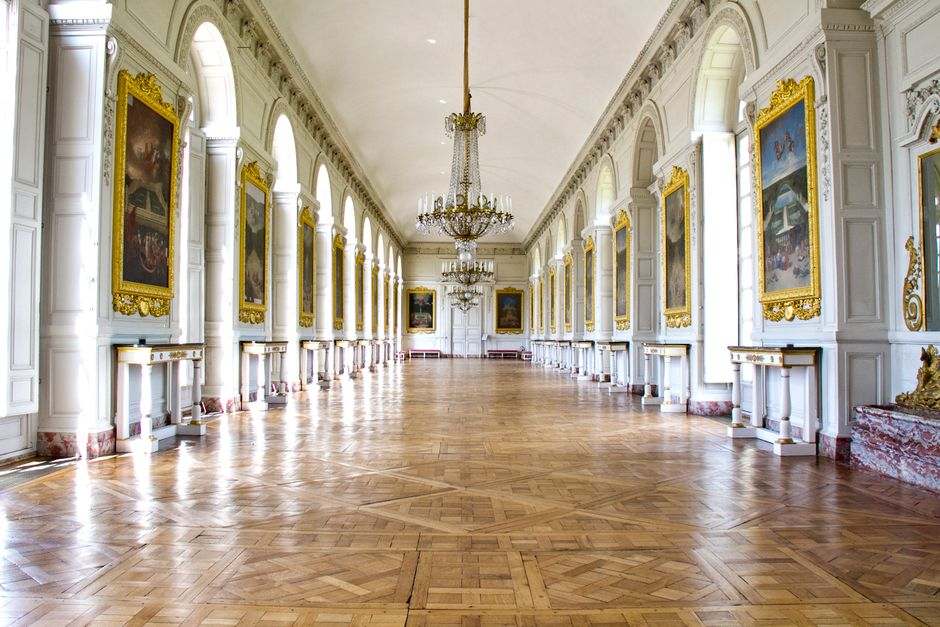
Quick answer
Discover how eight centuries of French monarchs forged a kingdom through ambition, palaces, and power. Explore the Capetian legacy on your luxury journey through France's royal heritage.
Power in France wasn't inherited—it was constructed, stone by stone, decree by decree, through eight centuries of monarchs who understood that crowns required more than bloodlines. From Hugh Capet's 987 coronation establishing a dynasty that would rule for 800 years to Louis XVI's 1793 execution ending it, French kings weaponized architecture, religion, war, and spectacle to transform a fractured medieval territory into Europe's dominant power. They built palaces that bankrupted treasuries, converted religions for political expediency, and declared themselves divinely appointed while their subjects starved. What remains isn't nostalgia but evidence of ambition so vast it reshaped continents—and hubris so profound it eventually devoured itself.
The Capetians: Stability Through Succession
Hugh Capet's 987 election as King of France seemed unremarkable at the time. He controlled only a small domain around Paris and Orléans; powerful dukes in Normandy, Aquitaine, and Burgundy commanded far more territory and resources. But Hugh's descendants possessed something his rivals lacked: an unbroken line of male heirs for nearly 350 years. From 987 to 1328, every Capetian king produced a son who survived to inherit, creating dynastic continuity unmatched in medieval Europe.
This biological accident became political genius. While rival kingdoms fractured through disputed successions and civil wars, France developed institutional stability. Philip II (Philip Augustus) leveraged this legitimacy to expand royal territory dramatically, conquering Normandy from England's King John in 1204 and establishing the first French royal navy. His great-grandson Louis IX—later Saint Louis—undertook domestic reforms that centralized royal authority, standardized coinage, and established the monarchy as France's unquestioned governmental center. The Capetians proved that power required patience. They built incrementally across generations, each king adding territory and authority until the French Crown dominated a realm recognizable as modern France.
Francis I: The Renaissance Prince
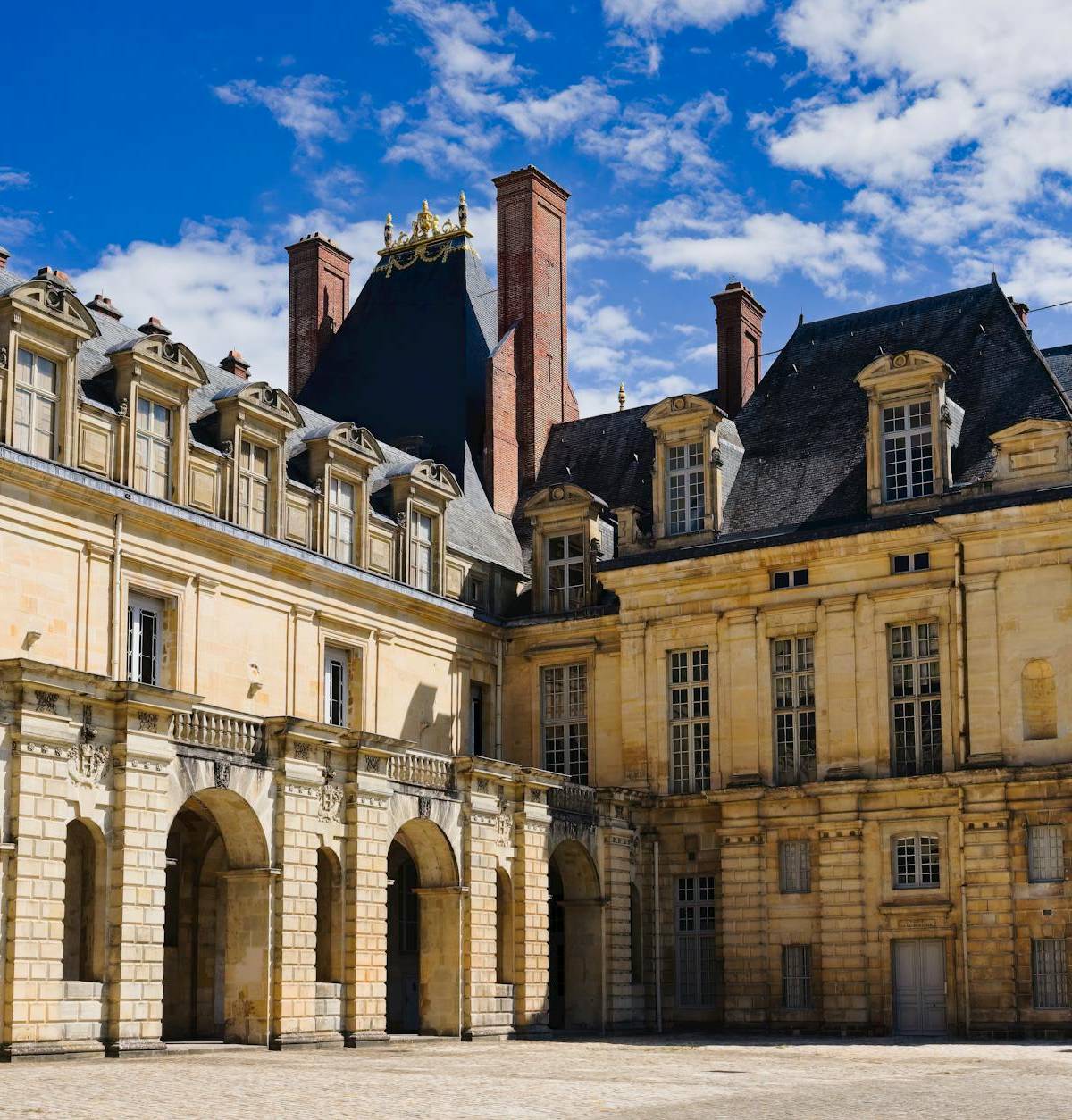
When Francis I ascended the throne in 1515 at age twenty, France got a king who believed culture could be wielded like military might. He'd spent his youth absorbing Italian Renaissance ideals—humanism, classical architecture, patronage of the arts—and immediately set about importing them wholesale. Leonardo da Vinci arrived with the Mona Lisa in his luggage, settling at Château du Clos Lucé where he spent his final years designing everything from hydraulic systems to ideal cities. Francis commissioned châteaux at Chambord and Fontainebleau that replaced Gothic severity with Renaissance elegance: symmetrical façades, classical proportions, and decorative programs celebrating human achievement rather than religious submission.
But Francis understood power required more than beautiful buildings. In 1516, he negotiated the Concordat of Bologna with Pope Leo X, granting the French Crown authority to appoint bishops and abbots throughout France. This gave him control over the Catholic Church's vast wealth and prevented large-scale Reformation movements from destabilizing his realm, even as neighboring kingdoms fractured over Protestant rebellions. When Lutheran ideas began spreading in France during the 1530s, Francis had the institutional power to suppress them through persecution rather than compromise. He'd learned that cultural sophistication and religious control were complementary tools—the velvet glove and iron fist of Renaissance monarchy.
Henri IV: "Paris Is Worth a Mass"
Henri of Navarre's 1572 wedding to Marguerite de Valois was supposed to heal France's religious wars. Instead, it triggered the St. Bartholomew's Day Massacre—Catholics slaughtered thousands of Protestant wedding guests across Paris in what became one of history's most infamous acts of sectarian violence. Henri survived by briefly converting to Catholicism, then escaped and spent the next seventeen years fighting to claim the French throne he'd inherited through a cascade of royal deaths.
When he finally had the military advantage in 1593, France's Catholic majority refused to accept a Protestant king. Henri made a calculation that scandalized purists and secured his kingdom: he converted to Catholicism, allegedly quipping "Paris is worth a Mass". It was pragmatism elevated to principle, acknowledging that political stability mattered more than theological consistency. Five years later, his Edict of Nantes granted limited religious tolerance to Protestants while affirming Catholicism as France's official faith—enough compromise to end decades of civil war without satisfying either side completely.
Henri then rebuilt. He promoted agriculture and manufacturing, commissioned Paris's first planned squares (Place Dauphine, Place des Vosges), and fostered economic growth that crowded out religious fanaticism. His 1610 assassination by a Catholic extremist proved tolerance had limits, but his Bourbon dynasty would rule France for the next two centuries. He'd demonstrated that kings could choose expediency over dogma and still claim divine right—perhaps the most cynical lesson in French royal statecraft.
Louis XIV: The Sun King's Absolute Authority
Louis XIV inherited the throne at age four in 1643, spending his childhood watching nobles rebel during the Fronde civil wars. Rioters once broke into his bedroom; the trauma instilled permanent distrust of Paris and determination to control the aristocracy completely. When Cardinal Mazarin died in 1661, the 23-year-old king shocked his court by announcing he'd rule without a chief minister—absolute personal authority, no intermediaries.
Versailles became the physical manifestation of that authority. Louis transformed his father's hunting lodge into a palace complex housing 10,000 courtiers, creating a system where proximity to the king determined status and advancement. Nobles who once commanded private armies competed for the honor of handing Louis his shirt at the morning lever ceremony. Contact with the Sun King became currency; his greatest insult was telling someone "I never see you". The palace cost astronomical sums—exact figures were deliberately obscured—but Louis understood it as investment in control. By forcing aristocrats to live under his roof, he neutralized their ability to raise regional rebellions.
His reign lasted 72 years, the longest of any European monarch. He waged near-constant wars expanding French territory, revoked the Edict of Nantes and expelled Protestants, and established cultural dominance that made French the language of diplomacy across Europe. When he died in 1715, France was exhausted, bankrupt, and utterly centralized—exactly as he'd intended. He'd proven absolute monarchy could function, at least for one extraordinarily disciplined king willing to work sixteen-hour days. His successors lacked his stamina; the system collapsed.
The Revolution: When Subjects Became Citizens
Louis XVI inherited a kingdom drowning in debt from his predecessors' wars and Versailles's maintenance costs. Well-meaning but indecisive, he attempted reforms but couldn't control the political forces his financial crisis unleashed. When he tried fleeing France in June 1791 to rally foreign support for restoring absolute monarchy, revolutionaries caught him at Varennes and returned him to Paris under guard. Public opinion, which might have accepted constitutional monarchy, turned decisively against him.
His trial before the National Convention in December 1792 was predetermined—nearly every deputy voted guilty of treason, and a slim majority chose execution. On January 21, 1793, Louis mounted the scaffold at Place de la Révolution (formerly Place Louis XV, now Place de la Concorde), the square his grandfather had commissioned. Executioner Charles-Henri Sanson bound his hands and shorn his hair before leading him to the guillotine. The blade fell at 10:22 AM, ending 800 years of continuous monarchy and beginning the Reign of Terror.
Napoleon would crown himself emperor eleven years later in Notre-Dame, famously taking the crown from Pope Pius VII's hands and placing it on his own head—a theatrical rejection of divine right in favor of meritocratic ambition. But Napoleon's empire proved monarchy's fundamental problem: it required exceptional individuals. When he fell in 1815, the restored Bourbon kings governed a France that no longer believed power required crowns. The kings who'd built France had finally built too much—a nation that outgrew them.
Keep exploring: grand monuments of the Napoleonic empire · a romantic Paris guide for couples · Plan your Paris trip with a local
See how Chic Trip plans custom trips across France, coordinates the route and eligible bookings, and keeps every price clear before confirmation.
Plan my France trip
Ready to experience France for yourself? Plan Your France Trip with Chic Trip - a custom route, coordinated bookings and one accountable planner.
About Chic Trip
Chic Trip is a Paris-based trip planning and booking concierge for American travelers. Founder Frederic Canesso and his Paris team design day-by-day itineraries and coordinate restaurant tables, official timed entries, tours and airport transfers. The planning fee depends on trip length and group size. Restaurant reservations and official tickets are at face price, hotels at public rates, and tours and transfers at clear package prices quoted upfront. Tell us about this trip or read our traveler reviews and feedback.