The French Revolution: 1789-1799
History 7 min read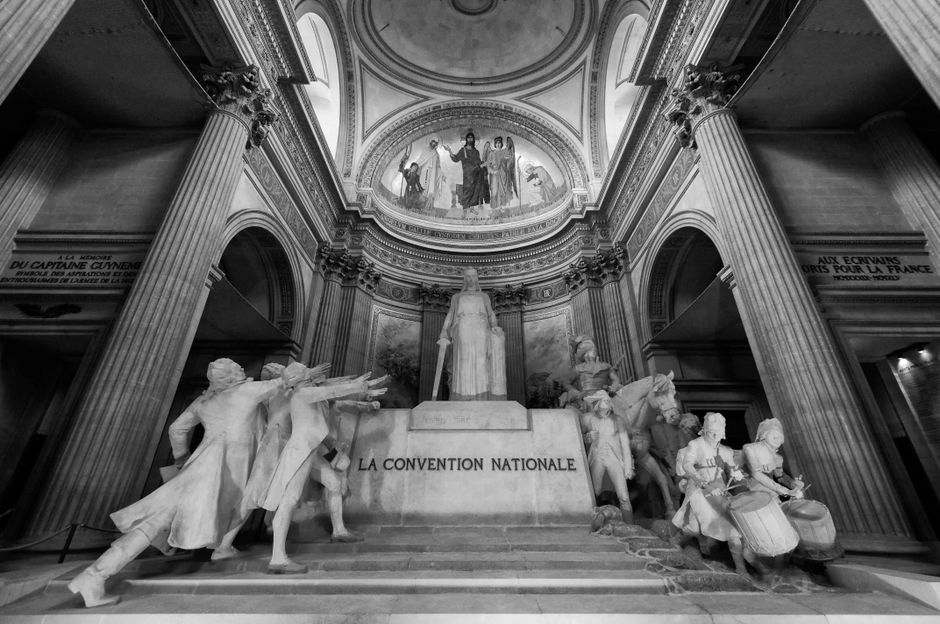
Quick answer
Uncover the dramatic French Revolution through 1789 Paris luxury lens: from bread riots to guillotine, explore Versailles' opulent past and its revolutionary legacy in chic European style.
The bread ran out first. By spring 1789, Parisian bakers faced crowds that began queuing before dawn, desperate women clutching coins that couldn't buy flour because harvests had failed and grain prices had tripled. This is how revolutions actually start—not with philosophical manifestos but with empty stomachs and the sudden realization that the social contract has been voided by those who never had to honor it. What followed between 1789 and 1799 wasn't one revolution but several, each devouring its architects: constitutional monarchists replaced by radical republicans replaced by authoritarian pragmatists, all claiming to represent the people while sending each other to the guillotine. France didn't simply change governments; it attempted to reconstruct reality itself, abolishing Christianity, renaming months, and declaring 1792 as Year One. The experiment produced Napoleon, the Napoleonic Code, and the modern concept of human rights—alongside the Terror, which demonstrated that revolutionary virtue could justify industrial-scale killing.
The Estates-General: Three Centuries of Silence Broken
Louis XVI summoned the Estates-General to Versailles in May 1789 because France's treasury was effectively bankrupt. The monarchy had spent centuries waging wars, building palaces, and maintaining a tax system that exempted nobility and clergy while crushing the Third Estate—the 98% of France who were neither aristocrats nor priests. When previous finance ministers proposed taxing the privileged classes, those classes simply refused. By 1788, the Crown couldn't borrow more money or impose new taxes without consent from representatives it hadn't consulted since 1614.
The Estates-General's structure guaranteed conflict. Each estate—clergy, nobility, and commoners—received one vote, meaning the privileged two could always outvote the Third Estate despite representing a tiny fraction of the population. The Third Estate deputies arrived at Versailles expecting meaningful reform; they encountered procedural obstruction designed to preserve aristocratic privilege. After six weeks of deadlock, they declared themselves a National Assembly on June 17, claiming sole authority to represent France. Three days later, locked out of their meeting hall, they gathered in a nearby tennis court and swore an oath not to disband until France had a written constitution. The Tennis Court Oath transformed elected representatives into revolutionaries through the simple act of refusing to go home.
July 14, 1789: Fortress Becomes Symbol
The Bastille was a medieval fortress that had functioned as a state prison, notorious for holding political prisoners under lettres de cachet—royal warrants that allowed indefinite detention without trial. By 1789 it held exactly seven prisoners: four forgers, two lunatics, and one aristocrat imprisoned at his family's request. But symbols matter more than facts. When rumors spread that royal troops were massing to crush the National Assembly, Parisians needed weapons and heard the Bastille held gunpowder stores.
On July 14, a crowd initially seeking negotiations escalated into assault when the fortress commander opened fire. Five hours of fighting killed nearly 100 attackers before the garrison surrendered. The mob executed the commander and paraded his head through Paris on a pike—the Revolution's first explicitly performative violence. Within days, people were dismantling the fortress stone by stone. An entrepreneur named Pierre-François Palloy organized the demolition and sold Bastille fragments as revolutionary souvenirs, carving miniature fortresses from the stones and shipping them to every French department as physical proof that tyranny had fallen. July 14 became France's national holiday not because the Bastille's capture was militarily significant but because it demonstrated that popular violence could overwhelm royal authority.
October 1789: The Women's March
Bread shortages worsened through summer. On October 5, roughly 7,000 Parisian women—market vendors, laundresses, domestic workers—marched twelve miles to Versailles in pouring rain, armed with pikes, muskets, and kitchen knives. They demanded bread and the king's return to Paris, where he couldn't ignore their hunger. Male National Guardsmen followed reluctantly, led by Marquis de Lafayette, uncertain whether to protect the king or join the insurrection.
The mob broke into the palace before dawn on October 6, killing two guards and nearly reaching Marie Antoinette's bedroom before she fled. Lafayette convinced Louis XVI that refusing would mean death. The royal family returned to Paris that afternoon, accompanied by triumphant crowds carrying the guards' severed heads on pikes. One witness described women shouting "We're bringing back the baker, the baker's wife, and the baker's boy!"—a grim joke revealing how completely the monarchy had been reduced to utility. Louis XVI would spend the next three years a virtual prisoner in the Tuileries Palace, constitutional monarch of a revolution he couldn't control.
The Terror: Revolution Devouring Itself
By 1793, revolution had fractured into competing factions, each accusing others of betraying the people. The Girondins favored moderate republicanism; the Montagnards demanded radical measures; the sans-culottes—urban workers—wanted price controls and violence against aristocrats. External wars with Austria and Prussia combined with internal counter-revolutionary uprisings created existential crisis. Maximilien Robespierre and the Committee of Public Safety responded with the Terror: systematic execution of anyone deemed insufficiently revolutionary.
The Revolutionary Tribunal became a killing machine. Marie Antoinette faced trial in October 1793, accused of depleting the treasury, conspiring with Austria, and—most obscenely—sexually abusing her son. The charges were fabricated or absurd, the verdict predetermined. She mounted the scaffold on October 16 with dignity that impressed even hostile witnesses. Georges Danton, the revolution's early firebrand, went to the guillotine in April 1794 for suggesting mercy was becoming appropriate. Jean-Paul Marat, the radical journalist, was stabbed in his bathtub by Charlotte Corday, who believed killing him would end the Terror. It didn't. Robespierre declared virtue couldn't exist without terror, then fell victim to his own logic when deputies turned on him in July 1794, fearing they'd be next.
Between September 1793 and July 1794, the Revolutionary Tribunal executed roughly 17,000 people—aristocrats, priests, moderate revolutionaries, and ordinary citizens denounced by neighbors or caught in factional warfare. Tens of thousands more died in civil wars, particularly the Vendée uprising where revolutionary armies massacred entire villages. The Revolution had begun with Enlightenment ideals of liberty, equality, and fraternity; it devolved into ideological purity enforced through mass execution. Robespierre's final words before guillotining were supposedly "The Revolution is frozen." He'd helped freeze it himself.
Thermidor: Exhaustion as Governance
Robespierre's execution on July 28, 1794—9 Thermidor Year II by the revolutionary calendar—ended the Terror but not the chaos. The Thermidorian Reaction replaced ideological fanaticism with corruption and instability. The Directory, established in 1795, governed through five directors who couldn't agree on policy and lacked authority to implement it. Inflation destroyed currency; assignats—paper money backed by confiscated Church lands—became worthless. Royalist uprisings plagued the countryside; radical Jacobins plotted urban insurrections.
The Directory survived four years through military victories that distracted from domestic failure. A young Corsican general named Napoleon Bonaparte won spectacular campaigns in Italy, sending looted art and gold back to Paris. His popularity grew as the Directory's legitimacy crumbled. On November 9, 1799—18 Brumaire Year VIII—Napoleon staged a coup, dissolving the Directory and establishing himself as First Consul. Within five years he'd crown himself emperor, ending the Revolution by providing what France desperately wanted: stability, however authoritarian. The Revolution had destroyed the ancien régime but couldn't build a sustainable replacement. It took a military dictator to impose the order revolutionary idealists had promised and failed to deliver.
Keep exploring: grand monuments of the Napoleonic empire · Disneyland Paris vs Parc Asterix · Plan your Paris trip with a local
See how Chic Trip plans custom trips across France, coordinates the route and eligible bookings, and keeps every price clear before confirmation.
Plan my France trip
Ready to experience France for yourself? Plan Your France Trip with Chic Trip - a custom route, coordinated bookings and one accountable planner.
About Chic Trip
A journey designed exclusively for you: a personal itinerary, restaurant recommendations refined with your feedback, approved reservations and practical details in the Chic Trip app. Your written proposal confirms the total, inclusions and booking conditions before you commit. Start with a free call or email; no payment or price acceptance is required to enquire.