Underground Paris: The Catacombs and the Secret Life Beneath the Streets
Sightseeing 9 min read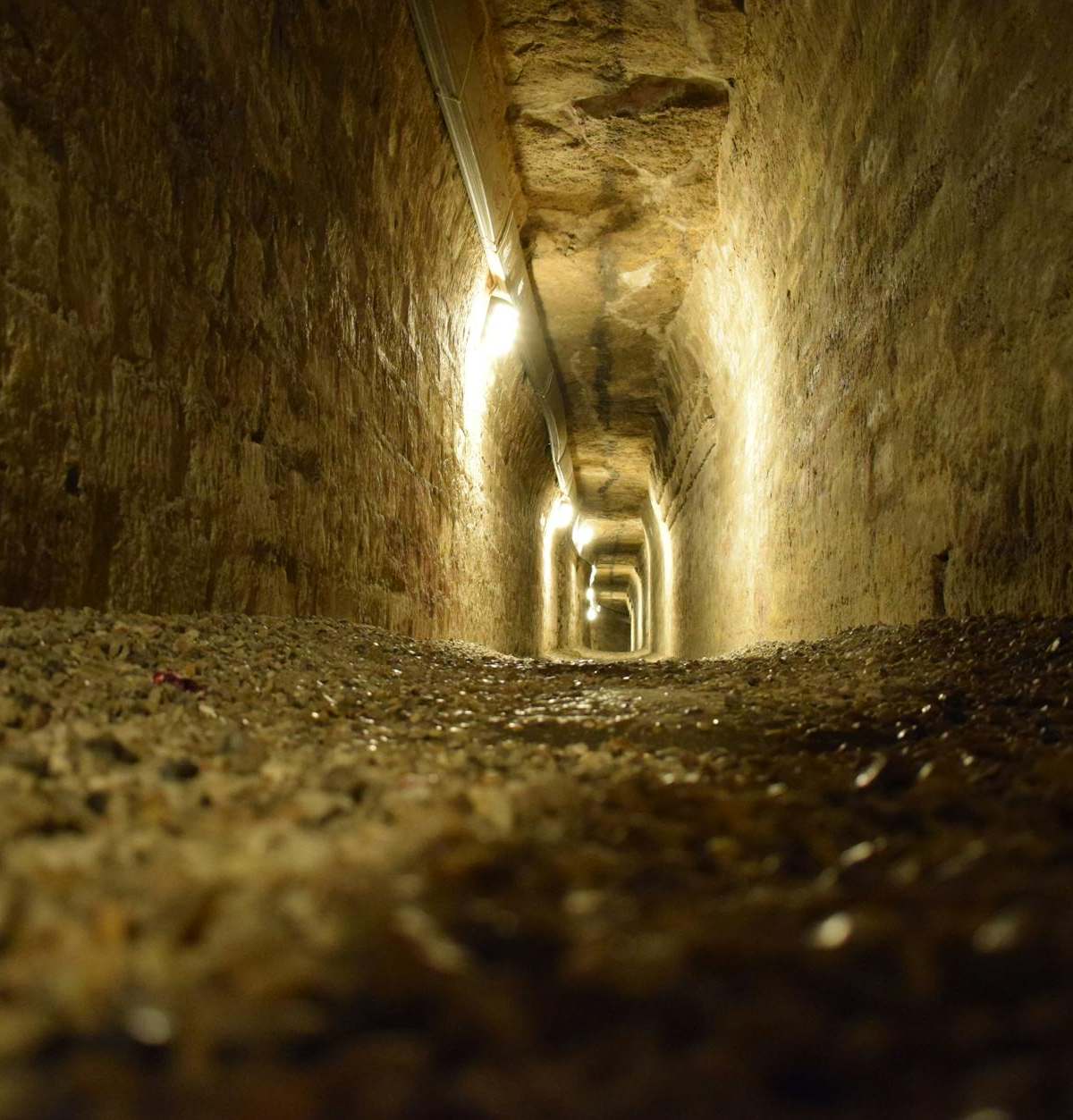
Quick answer
Discover Paris's hidden underworld: six million souls, forgotten quarries, and the shadowy network beneath Europe's most elegant city.
Paris rests on holes. Beneath the boulevards and apartment buildings, beneath the metro tunnels and sewers, lies a network of limestone quarries stretching nearly 300 kilometers under the city's southern half. Most Parisians spend their entire lives walking over voids they'll never see. The catacombs—the ossuary holding six million dead—represent barely a mile of that total. The rest remains: empty galleries, forgotten breweries, chambers where monks once distilled Chartreuse, spaces that cataphiles (the underground's devotees) explore illegally while police try to seal them out. This is Paris's shadow city, carved by centuries of quarrying and now contested between preservation and exploitation.
When the Street Swallowed Itself
On April 17, 1774, Rue d'Enfer—"Hell Street"—lived up to its name. The ground simply opened. A section of road and adjacent houses plunged into darkness as forgotten quarries beneath gave way, creating what witnesses described as "a frightful crash". The collapse stretched 300 meters, revealing the catastrophic problem Paris had been ignoring for centuries: the city sat atop a labyrinth of uncharted galleries where Lutetian limestone had been quarried since Roman times.
The quarrying had started sensibly enough—open pits south of the Seine extracting the yellowish limestone that would eventually give Paris its architectural unity. By the Middle Ages, as the city expanded, quarries went underground, miners digging galleries to reach limestone banks while leaving turned pillars to support the ground above. The problem: nobody kept accurate records. As neighborhoods developed over filled-in quarry sites, memory of what lay beneath vanished.
Rue d'Enfer's collapse forced action. In 1777, Louis XVI established the Inspection Générale des Carrières (IGC), appointing Charles-Axel Guillaumot to map the underground chaos and stabilize it. Guillaumot spent years descending into darkness with surveying equipment, producing elegant cross-hatched maps showing interconnected galleries, shafts, weak points. His crews erected support pillars, built stone walls, filled dangerous voids. It was infrastructure archaeology—discovering what previous generations had built, then preventing it from killing current residents.
But mapping revealed another problem: massive empty spaces that needed purpose. Paris was about to provide one, though not by design.
The City That Ran Out of Room for Its Dead
By 1780, Paris's 200 small cemeteries were catastrophically overcrowded. The Cimetière des Innocents near Les Halles posed the worst crisis—burials stacked so densely that bodies wouldn't decompose properly, creating sanitary nightmares. Cellars of adjacent houses filled with corpse liquor seeping through cemetery walls. The stench made entire neighborhoods uninhabitable.
Someone—history doesn't record who—recognized the solution hiding in Guillaumot's maps. Those empty limestone galleries under the former Rue d'Enfer could become an ossuary. In 1786, the quarries were consecrated for this purpose, and nocturnal bone transfers began. Horse-drawn carts draped in black cloth carried remains from cemeteries across the city, processing through streets at night with priests chanting prayers, delivering their cargo to quarry shafts where bones were dumped into darkness below.
Workers underground distributed and stacked the remains, initially without ceremony. By 1810, however, Héricart de Thury, the IGC's director, decided anonymous piles of bones lacked dignity. He organized them into the displays visible today: walls of femurs and tibias interspersed with rows of skulls, occasionally arranged into decorative patterns—crosses, hearts, geometric designs. Plaques identified which cemetery the remains came from, carved with poetic inscriptions reminding visitors of mortality's inevitability.
The transfers continued through the Revolution and into 1814 as cemeteries closed and Paris consolidated burials into three new large cemeteries: Montparnasse, Père-Lachaise, Passy. Six million Parisians from across centuries now rest anonymously beneath the 14th arrondissement, their bones sorted by size rather than identity, death's ultimate democracy.
Visiting the Empire of Death
The entrance sits at 1 Avenue du Colonel Henri Rol-Tanguy, an unassuming doorway beside Place Denfert-Rochereau. The building itself gives no hint of what lies below. You descend 131 steps down a spiral staircase—about 20 meters into the earth—the temperature dropping until it stabilizes around 14°C regardless of season. Bring layers.
The tunnel initially disappoints. You walk perhaps a kilometer through empty limestone galleries, the walls showing centuries of quarry marks—pick and chisel scars, occasionally dates carved by workers, layers of graffiti from every era since. The lighting is dim, the path uneven, the ceiling low enough in places that tall visitors duck instinctively.
Then you reach it. The plaque above the doorway reads Arrête! C'est ici l'empire de la Mort—"Halt! This is the empire of Death". Beyond: walls of bones stretching into shadow. Skulls arranged in rows, femurs stacked like cordwood, the occasional artistic flourish where someone arranged bones into architectural features—columns topped with skull capitals, barrel vaults framing passages.
The official route runs about 1.5 kilometers through the ossuary, though only portions contain bones. Other galleries remain empty limestone quarries, their walls reinforced with 19th-century masonry where Guillaumot's crews shored up weak sections. The entire visit takes 45 minutes to an hour depending on crowd density and your tolerance for standing in dim tunnels reading commemorative plaques.
Practical considerations: the catacombs limit daily visitors, requiring advance ticket purchase. Lines at the entrance stretch long during tourist season—arrive early or aim for late entry around 7 PM when crowds thin. Wear solid shoes; the floor is uneven, occasionally wet, and attempting this in heels would be catastrophic. Photography is allowed but flash is discouraged. Touching the bones is prohibited. Taking bones as souvenirs—which happens with disturbing regularity—can result in fines of up to €60,000.
The Catacombs reopened on 8 April 2026 following their renovation closure. Book using the official site and read the current access conditions before deciding whether the underground route suits your party.
For a guided visit, choose a currently listed official tour and check its language, duration and included areas. Do not assume that a weekly time slot or restricted-area access described in an older guide is still offered.
The Other 298 Kilometers
That tourist route represents 1.7 kilometers of a 300-kilometer network. The rest remains off-limits, which makes it irresistible to cataphiles who've been exploring Paris-beneath-Paris since the 1960s.
The Grand Réseau Sud—the Great Southern Network—spreads 200 kilometers beneath the 5th, 6th, 14th, and 15th arrondissements south of the Seine. Smaller networks run under the 12th, 13th, and 16th. Some galleries date to Roman quarrying. Others were dug in medieval times to supply stone for Notre-Dame and the Louvre. Later chambers served as beer breweries—the 14th arrondissement's underground breweries alone produced 22 million gallons annually in the late 1800s, taking advantage of the constant cool temperature. One famous underground brewery, Dumesnil, operated until the late 1960s.
In the 17th century, Carthusian monks converted quarries beneath their monastery into distilleries for Chartreuse liqueur. During World War II, the Resistance used the tunnels for meetings and storage. The Germans built bunkers down there; you can still find them if you know where to look.
In the 1960s, young Parisians discovered entry points—sometimes through their own school basements—and began exploring. They studied old maps, navigated by candlelight, drew schematics passed around like treasure maps. Some chambers became legendary: Salle Z beneath Val-de-Grâce hospital stands seven meters tall and has hosted countless parties. Other spaces saw jazz concerts, raves, art installations, entire underground cultural scenes inaccessible to surface Paris.
The authorities noticed. In 1955, Paris officially interdicted unauthorized access. The IGC began sealing entrances and filling unstable galleries with concrete. But cataphiles fight back—reopening blocked passages, creating chatières (cat flaps) through which they squeeze into sealed chambers.
Special police—cataphobes or "cataflics"—patrol the tunnels, though they maintain an understanding with experienced cataphiles. Their targets are tourists who don't know the passages, who get lost or hurt, who leave trash. Serious cataphiles get occasional tolerance if they're respectful and knowledgeable. But get caught and you're fined, and if you're a repeat offender, potentially jailed.
The risk hasn't stopped anyone. Online forums trade entry point locations. Night walks through certain neighborhoods reveal cataphiles emerging from manholes at 3 AM, muddy and exhilarated. They speak of chambers decorated with graffiti art, underground cinemas, spaces where Paris's rules don't apply.
The Geology of Darkness
Understanding underground Paris requires understanding what's down there. The limestone—Lutetian limestone, named after Paris's Roman name Lutetia—formed 45 million years ago from ancient seabeds. Its warm yellow color defines Paris's architectural palette, visible in the Louvre, Haussmann's boulevards, countless apartment buildings.
North of the Seine, gypsum deposits in Montmartre and Ménilmontant were quarried to make plaster of Paris—so renowned for quality that the name became global shorthand for fine plaster. But gypsum is water-soluble, making northern galleries dangerously unstable. After a catastrophic 1778 collapse in Ménilmontant killed seven, authorities dynamited the Montmartre gypsum quarries and filled remaining caves with concrete.
The southern limestone galleries proved more stable, which is why they survive. But "stable" is relative—subsidence remains possible, which is why the IGC continues monitoring, reinforcing, occasionally filling dangerous sections with concrete that cataphiles view as enemy action.
The Future Underground
Climate change might save Paris's underground from concrete oblivion. The constant 14-15°C temperature makes the tunnels ideal for geothermal climate control. Architectural firms are proposing using the network to cool buildings in summer and warm them in winter, dramatically reducing energy consumption.
The catch: it works even if galleries are filled with concrete. So cataphiles' playground might become the city's air conditioning system, fully filled and permanently inaccessible. Paris Underground would fall off the map entirely, reduced from secret world to infrastructure.
For now, the tension persists: preservation versus access, safety versus adventure, the official ossuary attracting tourist crowds while hidden galleries host illicit parties twenty meters below. Place Denfert-Rochereau—named after the colonel who defended Belfort in 1871, built over the former Rue d'Enfer where the ground collapsed in 1774—sits above it all, unaware. Cafés serve espresso. The metro rumbles past. And beneath everything, in darkness unchanged for centuries, six million Parisians rest in their limestone beds while cataphiles navigate passages the city wants sealed forever.
The catacombs require confronting mortality in a culture that works hard to hide death. Understanding the larger underground means recognizing Paris as layered—centuries of history stacked vertically, accessible if you're willing to descend. Knowing when to visit the official ossuary, what the experience actually entails versus romantic expectations, and why those other 298 kilometers matter even if you'll never see them—that's the difference between tourists checking boxes and people engaging with the city's full reality. We build that context into itineraries because Paris's most interesting stories often happen in places you can't easily access. If that interests you, we're here.
Keep exploring: castles near Paris that rival Versailles · a romantic Paris guide for couples · Plan your Paris trip with a local
Get our free Insider Paris Guide: the neighborhoods, restaurants and hidden corners we send our own clients. No tourist traps, no filler.
Get the free guide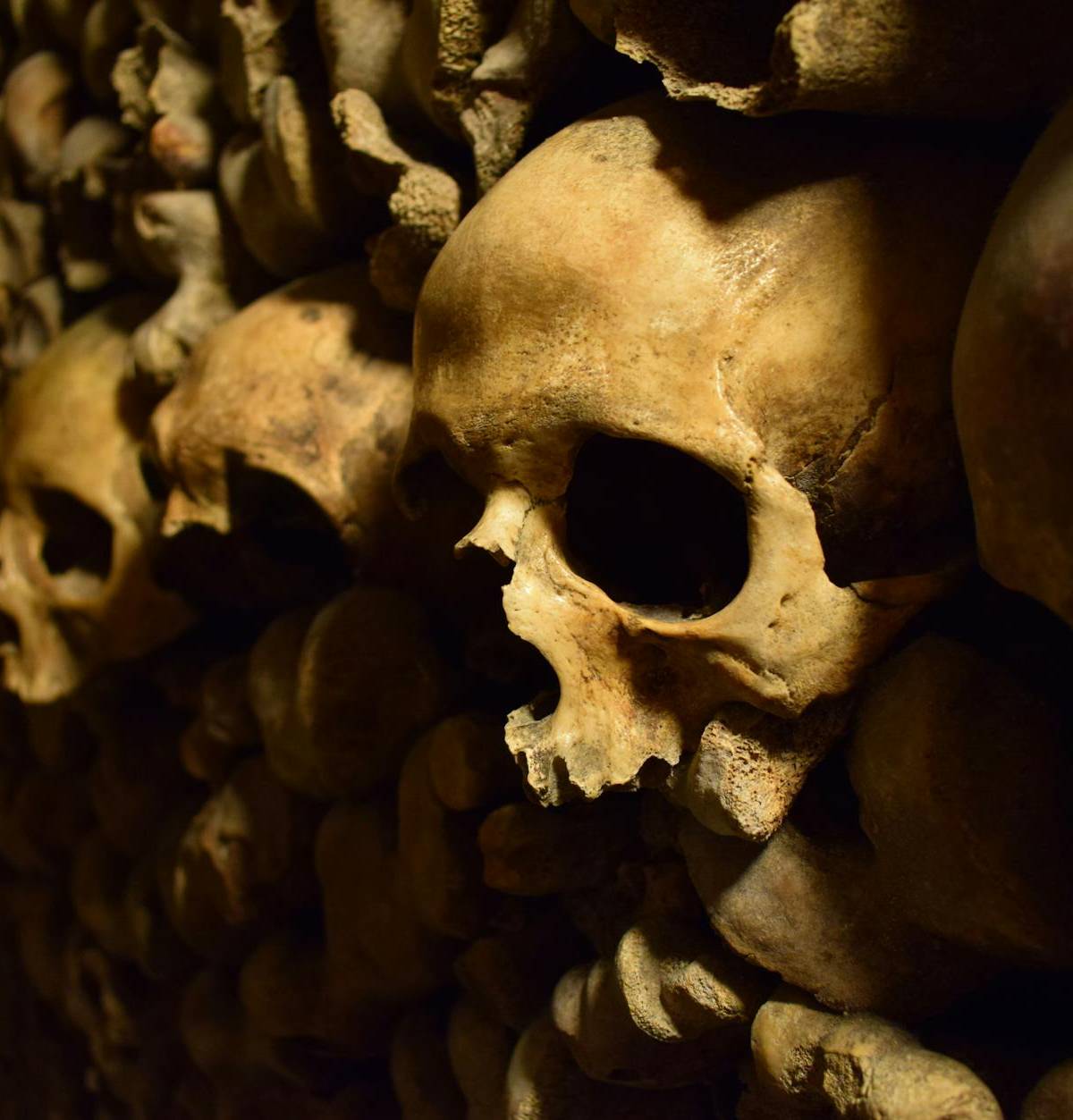
Ready to experience Paris for yourself? Plan Your Paris Trip with Chic Trip - a custom route, coordinated bookings and one accountable planner.
Planning your own Paris trip? Estimate your budget with the free Paris trip cost calculator, find out how many days you need in Paris, check when to book everything in Paris, or build a day-by-day plan with the Paris itinerary planner.
About Chic Trip
A journey designed exclusively for you: a personal itinerary, restaurant recommendations refined with your feedback, approved reservations and practical details in the Chic Trip app. Your written proposal confirms the total, inclusions and booking conditions before you commit. Start with a free call or email; no payment or price acceptance is required to enquire.