The Jazz Age Revival: Retracing the Steps of Josephine Baker and Sydney Bechet
Culture 13 min read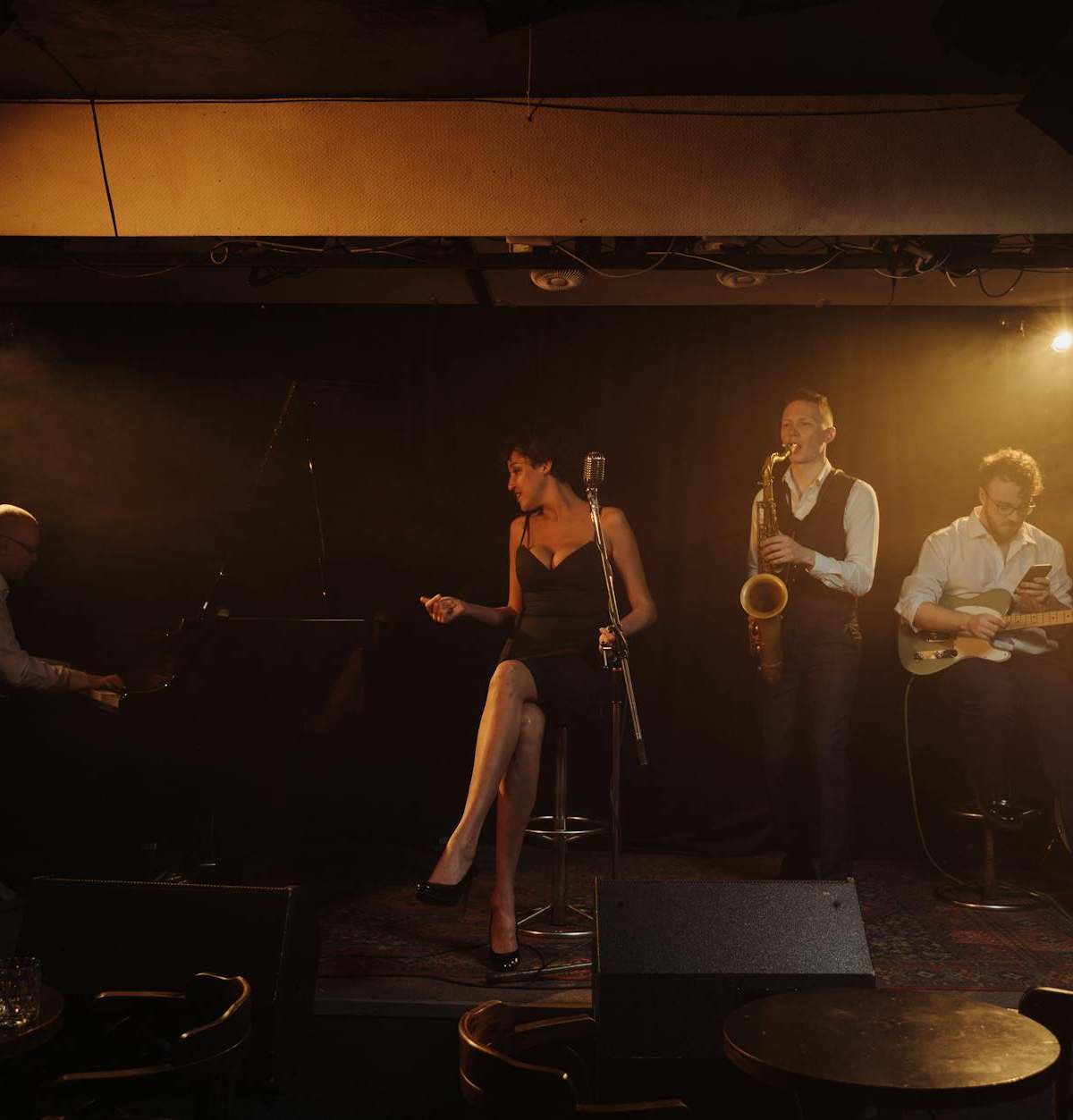
Quick answer
Relive the Jazz Age in Paris: trace Josephine Baker's legendary steps at Théâtre des Champs-Élysées and Sidney Bechet's saxophone haunts in Montmartre clubs for a luxurious cultural odyssey.
In 1925, Josephine Baker walked down the stairs at the Théâtre des Champs-Élysées in a costume made of bananas and changed the city's idea of performance forever. That same year, Sidney Bechet was moving through Montmartre clubs with his soprano saxophone, playing music that American audiences had not quite known what to do with, to rooms full of French listeners who understood immediately what they were hearing. For a concentrated, almost mythic period between the wars, Paris became the place where Black American artists could work on their own terms, judged on talent rather than diminished by the racism that defined their lives back home.
That history is not distant. It is embedded in specific streets, specific buildings, and specific venues that still exist. Some are almost unchanged. Others carry the memory only in their walls. A few are still filling their rooms with music every night of the week. Walking through Paris with this history in mind changes how the city looks. The theater on Avenue Montaigne is not just a concert hall. The cellar on Rue de la Huchette is not just a bar. They are places where something real happened, and where that reality has not entirely faded.
Josephine Baker and the Stage That Made Her
The Théâtre des Champs-Élysées is where Baker arrived in Paris's imagination. The theater itself already had history when she performed there. It had hosted the premiere of Stravinsky's Rite of Spring in 1913, a night that famously ended in riot. But what happened in 1925, when La Revue Nègre brought Baker and her company to the stage, was something different. She was nineteen years old, recently arrived from St. Louis via New York, and her performance combined dance, comedy, and a kind of physical freedom that the city had not seen presented quite that way.
Paris divided immediately. Some critics reached for dismissive language, calling her performance primitive or savage, which said far more about them than about her. Others recognized something more significant. Picasso saw genius. Jean Cocteau famously described her as the most beautiful panther he had ever seen. The audience, whatever their initial reaction, could not stop talking about her. Baker had arrived.
The theater at 15 Avenue Montaigne still stands and still operates. The marble-clad interior has not changed dramatically. The same sweeping staircases, the same deep burgundy seats where writers and artists once gathered to watch Baker define what modern performance could look like. Sitting in that space today still carries weight, especially if you understand what the stage witnessed a century ago.
The programming now spans ballet, opera, and occasional jazz concerts. When jazz is on the schedule, the venue handles it properly, in the full main hall rather than pushed into a smaller side room. That matters. The scale of the space is part of the experience, and Baker's memory is best honored in the room she actually inhabited rather than in a compromise arrangement.
The Folies Bergère
After her breakthrough at the Théâtre des Champs-Élysées, Baker moved to the Folies Bergère, where she became the highest-paid entertainer in Europe. That is not a small claim. It means that in a city full of famous performers, a young Black woman from Missouri had climbed further than anyone around her. Her act there became one of the most discussed performances of the decade, remembered not only for the banana skirt but for the pet cheetah, Chiquita, who developed a habit of escaping into the orchestra pit mid-performance.
The Folies Bergère at 32 Rue Richer still operates as a theater. The Belle Époque interior is intact: gilt molding overhead, red velvet throughout, mirrors on the walls that multiply the room endlessly. But the current programming leans toward spectacle in a more generic sense. It is less culturally sharp than it was in Baker's era, which is perhaps inevitable. The venues that once created the edge of cultural possibility rarely stay there permanently. They become monuments to what they once were.
That is not a reason to skip it. The building itself justifies a visit, and the bar on the ground floor opens outside of show times. Stopping in for a drink, absorbing the atmosphere of the room, and moving on is a perfectly valid way to experience the Folies Bergère without committing to a full evening and a significant ticket price. The history is in the architecture as much as in any current performance.
The Montmartre Baker Knew
Baker later opened her own nightclub in Montmartre, a place where she controlled the environment and could serve food to the American expatriates who missed home. It closed long ago, and the neighborhood has changed significantly since the 1920s. Montmartre today is dense with souvenir shops and tourist crowds, particularly around the Sacré-Cœur and Place du Tertre.
But the neighborhood has not been entirely hollowed out. There are still hours and angles from which the older city becomes visible. Rue Lepic at twilight, when the light is low and the after-work crowd is beginning to move through, still feels like a working neighborhood rather than a set. Place du Tertre in the early morning or after the portrait artists have left for the day can feel briefly quiet and almost private. The bones of Baker's Montmartre are still there if you look for them at the right time.
The Cimetière de Montmartre is one of the area's most underused spaces. Baker herself is buried in Monaco, but many of her contemporaries and colleagues are here. The cemetery is calm, beautifully maintained, and almost entirely free of the crowds that gather just minutes away. It is one of the better places in the neighborhood to spend a thoughtful half hour.
Sidney Bechet and the City That Heard Him
If Baker was the visual spectacle of that era, Bechet was its musical conscience. He arrived in Paris with the same company that brought Baker, but his path was different. Where Baker became a star of stage and image, Bechet became a working musician who sat in at clubs, played through cigarette smoke and late-night crowds, and found in French audiences an understanding that American critics had not reliably offered him.
His soprano saxophone had a sound that was instantly recognizable and difficult to categorize. He had built something out of blues and ragtime that was entirely his own, and European listeners responded to it with a directness that was relatively rare back home. The French cultural establishment could be condescending about many things, but about jazz it was often genuinely curious and serious. Bechet walked into that curiosity and made it his.
Le Boeuf sur le Toit was one of the places that defined his Paris years. The original club at 34 Rue du Colisée attracted almost everyone significant in the Parisian arts world during the 1920s. Cocteau was a regular. Picasso came. Maurice Chevalier passed through. Bechet played there often, his saxophone setting itself apart from the room around it in a way that people still describe in similar terms decades later.
The original club is gone. A restaurant of the same name now operates nearby at 14 Rue Boissy d'Anglas, preserving some of the Art Deco atmosphere and the name, though the musical legacy has largely moved on. It is worth visiting for dinner or a drink, less as a jazz destination and more as a material connection to a world that no longer exists in that form. It functions best as a starting point for exploring the area rather than a final destination.
Caveau de la Huchette
This is the venue where Bechet's history feels most physically present. The Caveau de la Huchette at 5 Rue de la Huchette in the Latin Quarter opened as a jazz club in 1946, shortly after Bechet returned to Paris following the war. He did not play the opening, but he became a regular there through the 1950s, and his presence shaped the culture of the room in ways that persisted long after his death in 1959.
The space itself is medieval, which is part of what makes it so unusual. Stone vaults, low ceilings, a floor designed for dancing rather than sitting. When music plays in that room, the acoustics wrap the sound around you in a way that feels different from any modern venue. The sound does not go up into a large space and dissipate. It stays close. That closeness is part of why jazz works so well here.
The club still operates seven nights a week, with live music beginning around 9:30 PM most evenings. The crowd is often heavily tourist-facing, which is worth acknowledging honestly. But the music itself is generally strong. When the band is playing well, the room does what it has always done, and the fact that it is packed with visitors from elsewhere does not diminish that. The stones absorb everything equally.
Sunday afternoon matinees at three o'clock are worth singling out. The room is quieter, the audience is more composed, and the light coming down the entrance stairs at that hour gives the place a gentler mood. It is a different experience from a late-night session, and for some visitors it is actually the better one.
New Morning
The New Morning at 7-9 Rue des Petites Écuries opened in 1981, which means it has no direct connection to Bechet or to the jazz Paris of the 1920s. But it has become one of the most important jazz venues in Europe, and it carries that earlier tradition forward in the way it treats the music: seriously, consistently, without apologizing for the commitment.
The physical space is deliberately simple. Concrete floors. Minimal decoration. A sound system that is genuinely good. The focus is entirely on what is happening onstage, which is the right priority for a venue of this kind. Programming spans a wide range, from traditional jazz to Afrobeat and funk, but the jazz lineage is always present in the schedule. The venue has hosted Chet Baker, Herbie Hancock, and many others whose connection to the music goes deep.
Booking early is essential for well-known acts. They sell out, sometimes well in advance. But the lesser-known names on the schedule are often more interesting to watch than the bigger acts, not because they are better technically, but because they are still working to establish something. That hunger produces a different quality of performance. It is the kind of thing Paris has always been good at recognizing.
Rue des Lombards
A short stretch of road in Les Halles has become the contemporary center of Paris jazz in a way that feels almost planned, though it developed organically over decades. Two clubs in particular define the street.
Sunset-Sunside at 60 Rue des Lombards is actually two venues in one building: acoustic jazz downstairs, electric and fusion programming upstairs. The double format means the club can serve different audiences on the same night without compromising either program. It has been running since 1983 and operates seven nights a week with two sets most evenings. The musicians who pass through range from local players working out new ideas to international acts on European tours.
The early sets at 7:30 PM are notably different from the later shows. They tend to be less expensive and sometimes more adventurous in their programming. If you care about jazz as music rather than as atmosphere, arriving early and staying through the first set is often the most rewarding approach.
Duc des Lombards, just down the street at 42 Rue des Lombards, is a different experience. Smaller, more intimate, with the kind of sightlines that put you close enough to watch the saxophonist's hands on the keys. The programming here leans toward the traditional end of jazz: hard bop, bebop, the styles that formed the core of the music's foundational vocabulary. Bechet himself helped establish some of that vocabulary, which makes the club feel like a continuation of something rather than a departure from it.
Monday nights tend to feature jam sessions, where established musicians share the stage with younger players. The format is unpredictable by nature, which is part of its appeal. You might witness something brilliant or something still in development. Either way, you are watching music in its working state rather than its finished form.
What Paris Gave and Still Gives
It is worth pausing to think about what Baker and Bechet actually found here, because it was something specific and serious. America in the 1920s did not offer Black artists the freedom to be judged solely on their work. The conditions of their professional lives were shaped by segregation, exclusion, and constant compromise. Paris was not perfect. It had its own condescensions and misunderstandings. But it offered something closer to a genuine audience, and that made an enormous difference.
Baker stayed for decades, eventually became a French citizen, and served in the French resistance during the war. Bechet settled permanently in France in the late 1940s and spent the last decade of his life there, recording prolifically and performing regularly until he died in Paris in 1959. These were not short visits. They were choices made by people who understood what the city could offer compared to what it could not.
That chapter of Paris history is recoverable in these venues. Not completely, and not without imagination, but genuinely. The theater on Avenue Montaigne is still there. The cellar on Rue de la Huchette is still playing music. The clubs on Rue des Lombards are still open every week. The city that received Baker and Bechet with a seriousness they deserved is still, in pockets, capable of receiving music the same way.
Finding the Right Night
Knowing where to go is only part of what makes jazz in Paris work as an experience. Timing matters as much as the venue. A great club on a weak programming night is just a room. The same club on the right night, with the right band in the right mood, is something else entirely.
That is why checking schedules in advance is essential. Most of the serious venues post their programming several weeks out, and the better nights fill up. It also helps to think about what kind of experience you want. The Caveau de la Huchette is for atmosphere and history and dancing. New Morning is for concentrated listening. Duc des Lombards is for intimacy. Sunset-Sunside is for variety and reliability.
Paris still takes jazz seriously when many cities have lost interest in it. That seriousness is part of Baker and Bechet's legacy. They helped establish the city's relationship with the music at a moment when it mattered most, and that relationship has not entirely dissolved a century later. If you know where to listen, the echoes are still there.
Keep exploring: Emily in Paris filming locations · planning Paris and Rome together · Plan your Paris trip with a local
Get our free Insider Paris Guide: the neighborhoods, restaurants and hidden corners we send our own clients. No tourist traps, no filler.
Get the free guide
Ready to experience Paris for yourself? Plan Your Paris Trip with Chic Trip - a custom route, coordinated bookings and one accountable planner.
Planning your own Paris trip? Estimate your budget with the free Paris trip cost calculator, find out how many days you need in Paris, check when to book everything in Paris, or build a day-by-day plan with the Paris itinerary planner.
About Chic Trip
A journey designed exclusively for you: a personal itinerary, restaurant recommendations refined with your feedback, approved reservations and practical details in the Chic Trip app. Your written proposal confirms the total, inclusions and booking conditions before you commit. Start with a free call or email; no payment or price acceptance is required to enquire.