Statue of Liberty in Paris: Yes, There Are 5 — Map & How to See Each One
Geography 10 min read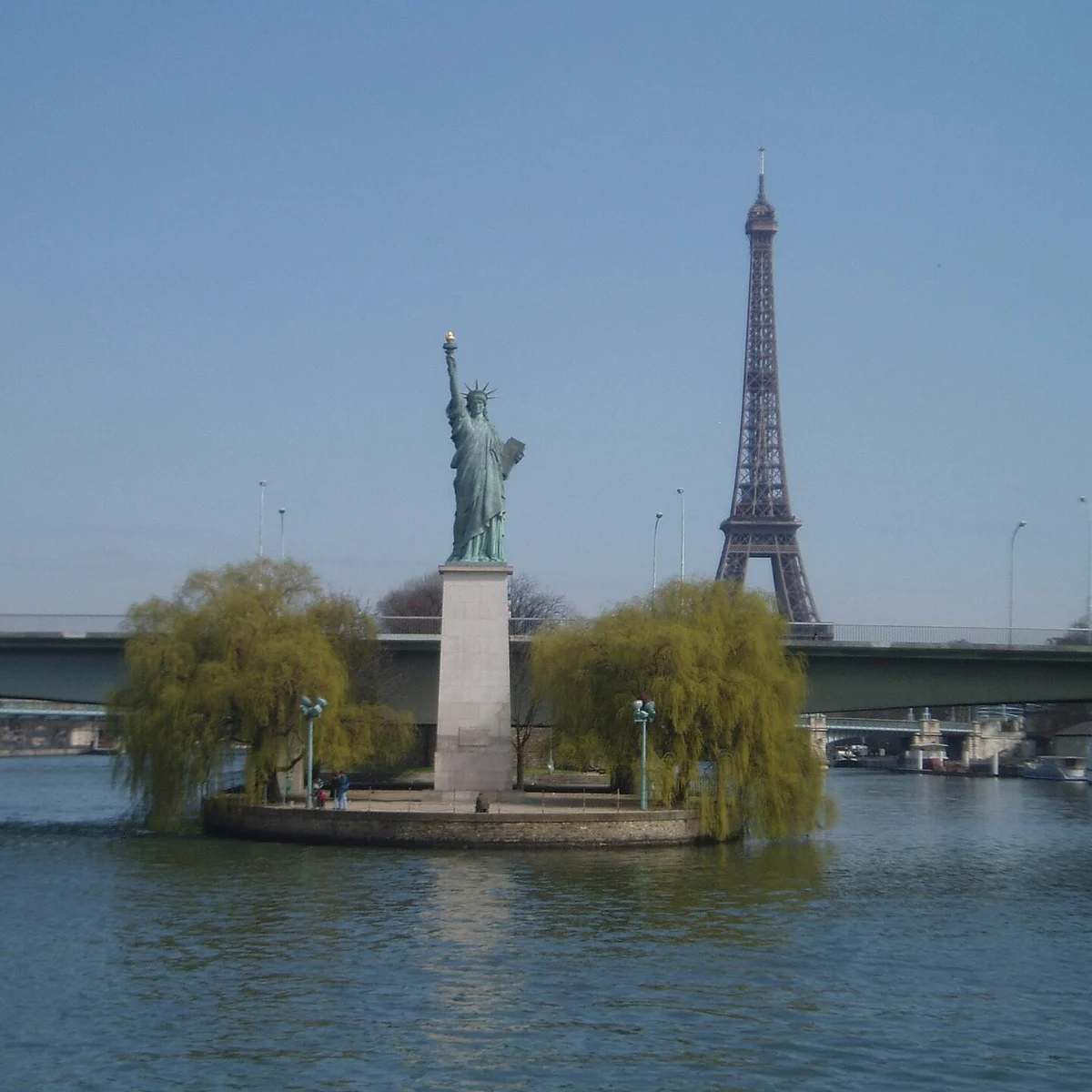
Quick answer
Paris has five Statues of Liberty. Here is exactly where each one stands — from the Île aux Cygnes near the Eiffel Tower to a tiny one hidden inside another sculpture — and how to see them all in a single afternoon.
Paris has five Statues of Liberty. You will find them on the Île aux Cygnes near the Eiffel Tower (the famous one), in the Jardin du Luxembourg, inside the Musée d'Orsay, at the Musée des Arts et Métiers, and hidden inside a sculpture on Place Michel Debré. Here is exactly where each one stands, with addresses, métro stops and the best moment to photograph each, plus a one-day walking route that connects all five.
Everyone knows the colossal figure in New York Harbor, but few realize she was born in Paris. Frédéric Auguste Bartholdi sculpted her here, Gustave Eiffel engineered her iron skeleton, and she rose above the rooftops of a 17th arrondissement workshop before sailing to America in 1885. Today you can trace her whole story without leaving the city, through five smaller sisters scattered between the Seine and two museums.
Île aux Cygnes: the famous one, near the Eiffel Tower
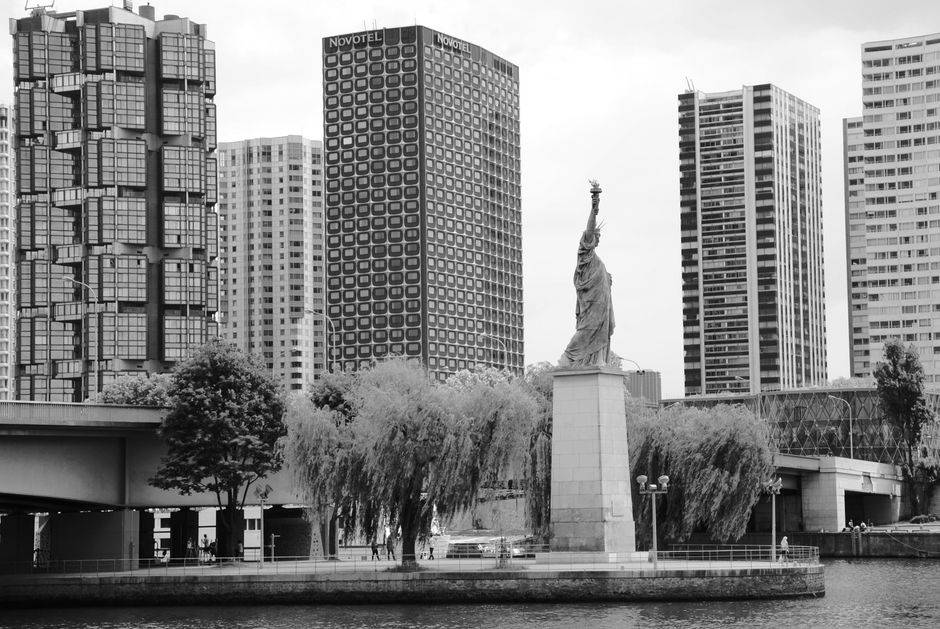
The most famous Parisian replica stands at the downstream tip of the Île aux Cygnes, a narrow man-made island in the Seine. This 11.5 meter bronze, about a quarter of the size of the New York original, was a gift from the American community in Paris, unveiled in 1889 to celebrate the centennial of the French Revolution.
Originally she faced east toward the Élysée Palace, so as not to turn her back on the French president. Bartholdi hated the arrangement: it meant she turned her back on her big sister in New York. In 1937, for the Universal Exposition, she was finally rotated to face west toward the Atlantic, the orientation Bartholdi had always wanted.
A detail most visitors miss: the tablet in her left hand carries two dates, IV JUILLET 1776 and XIV JUILLET 1789. American independence and the storming of the Bastille, side by side. The New York statue carries only the first.
Address: Île aux Cygnes, at the Pont de Grenelle, 75015.
Métro: Bir-Hakeim (line 6) or Javel (line 10), then walk onto the Pont de Grenelle and take the stairs down to the island.
Best photo: late afternoon to sunset. She faces west, so the low sun lights her face. Shoot from the Pont de Grenelle for the close-up, or from the Pont Mirabeau just downstream to frame her with the Eiffel Tower behind her. Seine cruises also pass right beneath her torch.
Musée d'Orsay: the original model
Inside the Musée d'Orsay, itself a former train station built for the 1900 World's Fair, stands a bronze model signed by Bartholdi. It spent more than a century outdoors in the Jardin du Luxembourg, from 1906 to 2012, until pollution damage and the theft of its torch convinced the Senate to move it indoors for protection.
She now stands in the museum's central nave among the 19th century sculptures, which means you can study Bartholdi's drapery, face and torch from a meter away, something none of her outdoor sisters allows.
Address: Musée d'Orsay, 1 Rue de la Légion d'Honneur, 75007, entrance facing the Seine.
Métro: Solférino (line 12) or RER C Musée d'Orsay.
Best photo: right at opening, while the central nave is still empty. The museum is closed on Mondays.
Jardin du Luxembourg: the replacement
When the historic bronze moved to the Musée d'Orsay in 2012, the French Senate, which owns and manages the garden, installed a new bronze cast in the exact same spot so the garden would not lose its Liberty. She stands on the quieter western side, near the rue Guynemer entrance, watching over the joggers, the chess players and the students from the nearby Sorbonne.
She is easy to miss among the garden's hundred or so statues, which is part of her charm: most people walk past a Statue of Liberty without noticing her, in one of the most visited parks in Paris.
Address: Jardin du Luxembourg, western side near the rue Guynemer entrance, 75006.
Métro: Notre-Dame-des-Champs (line 12), Saint-Sulpice (line 4) or RER B Luxembourg.
Best photo: early morning, just after the gates open, when the garden still belongs to the joggers. The garden closes at dusk.
Musée des Arts et Métiers: the technical origins
This museum, dedicated to industrial design and invention, holds two Statues of Liberty. Inside, in the former priory church that serves as the museum's most spectacular hall, stands the plaster model at one sixteenth scale that Bartholdi used to finalize the design. This is the mother of all the statues: the definitive shape from which the New York colossus was mathematically enlarged. Outside on the forecourt, a bronze cast made from this plaster model in 2010 welcomes visitors, no ticket needed.
Even your arrival plays along: the Arts et Métiers platform on métro line 11 is clad entirely in riveted copper, redesigned in 1994 by the comic book artist François Schuiten as a tribute to Jules Verne's Nautilus. You step out of a science fiction submarine straight into the museum of invention.
Address: 60 Rue Réaumur, 75003.
Métro: Arts et Métiers (lines 3 and 11).
Best photo: the forecourt bronze works at any hour and costs nothing; the plaster model inside requires a museum ticket. Closed on Mondays.
The hidden Centaur: the secret statue
The smallest and strangest Liberty in Paris hides in plain sight on Place Michel Debré in the 6th arrondissement, at the old Croix-Rouge crossroads where rue de Sèvres meets rue du Cherche-Midi. The Centaur, a massive bronze by the sculptor César created as an homage to Picasso, dominates the little square. Look closely at the centaur's torso and you will spot a tiny Statue of Liberty worked into the metal. An artist's wink, a miniature homage concealed inside a completely different work of art.
If the sculptor's name rings a bell, it should: César is the artist behind the small statuette handed out every year at France's national film awards, which are simply called the Césars after him.
Finding her is exactly the kind of small victory that makes a Paris walk memorable, like the other hidden corners of Paris most visitors walk straight past.
Address: Place Michel Debré, 75006.
Métro: Sèvres-Babylone (lines 10 and 12) or Saint-Sulpice (line 4).
Best photo: any time. It is a street sculpture, free and always open. Get close for the detail shot of the tiny Liberty on the torso.
Visiting all five in one day
The five statues connect into one satisfying day with a couple of métro hops. Do it any day except Monday, when both museums are closed.
Morning. Start at the Musée des Arts et Métiers at opening: the plaster model inside, the bronze on the forecourt, and the copper Nautilus station on your way in or out. Then cross the river to the Musée d'Orsay for the Bartholdi bronze in the nave, about 20 minutes by métro and RER, or a 15 minute taxi.
Midday. From Orsay, walk 15 minutes south through Saint-Germain-des-Prés to Place Michel Debré and find the tiny Liberty on the Centaur. Continue ten more minutes to the Jardin du Luxembourg for statue number four, and lunch nearby or a picnic in the garden.
Golden hour. Save the best for last. Ride line 6 to Bir-Hakeim, about 25 minutes, and walk the Pont de Grenelle down onto the Île aux Cygnes an hour before sunset, when the light comes from exactly the direction she faces. It is the one Paris photograph most visitors never get: Liberty in the foreground, the Eiffel Tower rising behind her.
Timing the trip itself? Our best time to visit Paris guide scores every month for light, crowds and prices. And if you would rather have days like this one designed and booked for you, restaurant tables included, that is literally what we do: our Paris concierge service plans the whole trip with you and books everything at face price. For a first taste, grab our free Insider Paris Guide, the neighborhoods and addresses we send our own clients.
Statue of Liberty in Paris: quick answers
How many Statues of Liberty are there in Paris?
Five, spread across the city: the famous bronze on the Île aux Cygnes near the Eiffel Tower, one in the Jardin du Luxembourg, one inside the Musée d'Orsay, the original plaster model at the Musée des Arts et Métiers (plus the bronze cast on its forecourt), and a tiny hidden one embedded in César's Centaur sculpture in the 6th arrondissement.
Where is the main Statue of Liberty in Paris?
On the Île aux Cygnes, a narrow man-made island in the Seine at the Pont de Grenelle. The 11.5 meter bronze faces west toward her big sister in New York. Closest métro: Bir-Hakeim or Javel.
Which Statue of Liberty is closest to the Eiffel Tower?
The Île aux Cygnes statue: from the tower, walk about twenty minutes downstream along the Seine, cross at the Pont de Grenelle and follow the tree-lined island to its tip. Seine cruises also pass right beneath her torch.
Can you see the Paris Statues of Liberty for free?
Three of the five are free: Île aux Cygnes, the Jardin du Luxembourg, and the bronze outside the Musée des Arts et Métiers. The Musée d'Orsay statue and the original plaster model inside Arts et Métiers require a museum ticket.
Why does Paris have Statues of Liberty?
Because she was born here: Frédéric Auguste Bartholdi sculpted her in Paris with Gustave Eiffel's engineering before she sailed to New York in 1885. The Île aux Cygnes replica was a thank-you gift from the American community in Paris in 1889.
Keep exploring: grand monuments of the Napoleonic empire · 15 hidden gems most tourists miss · Plan your Paris trip with a local
Get our free Insider Paris Guide: the neighborhoods, restaurants and hidden corners we send our own clients. No tourist traps, no filler.
Get the free guideKeep exploring on foot
The Bartholdi bronze at the Musée d'Orsay sits right on the route of our free self-guided walk Along the Seine, Bridge by Bridge, which follows the river at water level from Pont Alexandre III to the tip of Île Saint-Louis. Walk it in the late afternoon and you will end just in time to ride line 6 out to the Île aux Cygnes for golden hour.
Quick answers
Does France have a Statue of Liberty? Yes — Paris alone has five, including the famous quarter-scale replica on Île aux Cygnes facing west toward her big sister in New York.
How many Statues of Liberty are there in Paris? Five: Île aux Cygnes, the Luxembourg Gardens, the Musée d'Orsay, the Flame of Liberty at Pont de l'Alma, and the Arts et Métiers museum.
Which one is worth visiting? Île aux Cygnes is the classic photo, and the walk along the narrow island is one of Paris's quietest strolls. Pair it with our free Paris itinerary planner to slot it into your week.
Ready to experience Paris for yourself? Plan Your Paris Trip with Chic Trip - a custom route, coordinated bookings and one accountable planner.
Planning your own Paris trip? Estimate your budget with the free Paris trip cost calculator, find out how many days you need in Paris, check when to book everything in Paris, or build a day-by-day plan with the Paris itinerary planner.
About Chic Trip
A journey designed exclusively for you: a personal itinerary, restaurant recommendations refined with your feedback, approved reservations and practical details in the Chic Trip app. Your written proposal confirms the total, inclusions and booking conditions before you commit. Start with a free call or email; no payment or price acceptance is required to enquire.