The French Artists Who Revolutionized Art
History 7 min read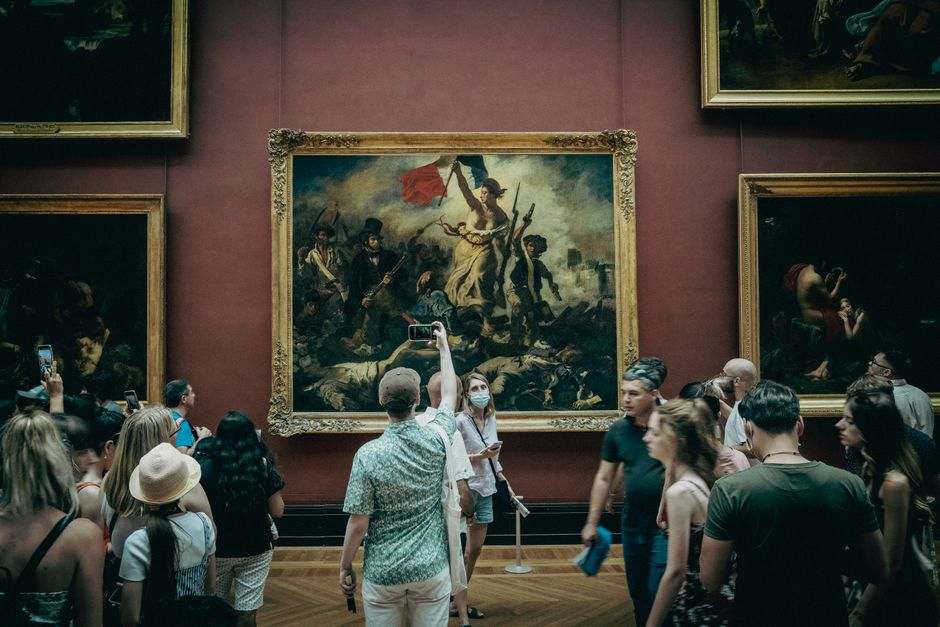
Quick answer
Discover how French artists dismantled conventions and reshaped European visual culture across four centuries, from David to Matisse.
Paint doesn't lie about power. Walk through four centuries of French art and you're witnessing how artists dismantled academic conventions, redefined what subjects deserved canvas, and exported aesthetic revolutions that reshaped European visual culture. From Jacques-Louis David painting revolutionary martyrs to legitimize regicide, through Impressionists capturing light with scientific precision that outraged Salon juries, to Matisse liberating color from representational duty—French artists continuously demolished established rules while insisting they honored tradition. France didn't just produce talented painters; it created institutional structures—Salons, academies, state patronage—that made artistic rebellion both possible and necessary. The result was unprecedented concentration of genius: movements born in Parisian studios became international languages for depicting modern experience. What makes French art historically dominant isn't perfection but relentless innovation defended with intellectual rigor that forced the world to accept radical visions as inevitable progress.
David: Revolution Painted as Classical Virtue
Jacques-Louis David (1748-1825) transformed painting into political weapon. His 1784 Serment des Horaces (Oath of the Horatii) depicted Roman brothers pledging to fight for the Republic, prioritizing civic duty over family bonds through composition emphasizing geometric severity and moral clarity. The painting became Neoclassicism's manifesto—rejection of Rococo's aristocratic frivolity in favor of Greco-Roman virtue, rationality, and republican ideals.
When revolution erupted in 1789, David committed completely. He joined the National Convention, voted for Louis XVI's execution, and painted revolutionary martyrs with the same classical gravitas he'd applied to ancient subjects. La Mort de Marat (1793) depicted the assassinated Jacobin leader in his bathtub, rendered with Caravaggio-esque lighting that transformed political murder into secular martyrdom. David understood that visual propaganda required artistic excellence—bad painting wouldn't legitimize revolution, but masterworks could sanctify regicide.
Napoleon's rise gave David new patron. He became First Painter to the Emperor, producing Napoléon franchissant les Alpes (1801) and the coronation scene at Notre-Dame, glorifying Bonaparte's regime with techniques developed serving the Republic. When the Bourbons returned in 1815, David fled to Brussels, dying in exile having served Revolution, Terror, Empire, and discovered that political art made you hostage to political fortune. But his Neoclassical style—emphasizing drawing over color, moral content over decoration—dominated French academic training for decades, creating orthodoxy future revolutionaries would rebel against.
Delacroix: Romanticism Against Classical Order
Eugène Delacroix (1798-1863) rejected David's rational composure for emotional intensity, violent movement, and color deployed for psychological impact rather than decorative effect. His 1824 Massacre de Scio depicted Ottoman atrocities against Greek civilians with brushwork emphasizing suffering's chaos rather than heroic poses. Critics attacked it as unfinished; Delacroix insisted capturing emotion required abandoning classical finish.
La Liberté guidant le peuple (1830) became Romanticism's icon—bare-breasted Liberty leading revolutionaries over barricades, tricolor flag raised, dead bodies underfoot. The composition mixed allegory with journalistic immediacy, depicting the July Revolution's street fighting while mythologizing it simultaneously. Delacroix's technique—visible brushstrokes, dramatic color contrasts, dynamic diagonals—privileged passion over reason, proving painting could convey subjective experience rather than universal ideals. He'd learned from studying Rubens and Venetian colorists that visual impact came from color relationships, not linear precision. The battle between Davidian classicism and Delacroix's Romanticism defined French painting for decades, with younger artists forced to choose camps.
Impressionism: Light Captured Through Science
In 1869, Claude Monet and Auguste Renoir painted at La Grenouillère, a bourgeois leisure spot on the Seine, creating works now considered Impressionism's birth. They abandoned studio painting for plein air work, capturing light's changing effects through rapid brushstrokes and unmixed colors applied directly to canvas. The technique produced paintings that seemed unfinished to academic eyes—forms dissolved into colored patches, details sacrificed for atmospheric effects.
The first Impressionist exhibition in 1874 scandalized critics. Monet's Impression, soleil levant gave the movement its name, intended as insult—these weren't finished paintings but mere "impressions". But the Impressionists understood something academics didn't: photography had made representational accuracy obsolete. Painting's new purpose was capturing perception itself—how light altered color, how movement blurred forms, how atmosphere transformed solid objects into shimmer and reflection.
Edgar Degas complicated the movement by applying Impressionist techniques to modern Parisian life—ballet dancers, laundresses, racehorses—composed with photographic cropping that felt spontaneous but required meticulous planning. Auguste Renoir focused on figures, painting scenes of bourgeois leisure with technique that dissolved flesh into colored light, making human bodies atmospheric as landscapes. By the 1880s, Impressionism had triumphed—the Salon rejected them, but collectors paid premium prices. They'd proven that representing reality required abandoning conventional representation.
Cézanne: Structure Beneath Sensation
Paul Cézanne (1839-1906) exhibited with Impressionists but pursued different goals. Where Monet dissolved forms into light, Cézanne sought underlying geometric structures—cylinders, cones, spheres—that composed visible reality. His still lifes depicted fruit and crockery through multiple perspectives simultaneously, as if circling the subject while painting. Mountains and trees became arrangements of colored planes that revealed nature's architecture rather than its appearance.
Critics dismissed his work as incompetent—the perspectives didn't align, the brushwork seemed crude. But younger artists recognized revolution. Cézanne had discovered that representing three-dimensional space on two-dimensional canvas required rejecting Renaissance perspective's illusion. His late works approached abstraction, prioritizing formal relationships over representation. When he died in 1906, a retrospective at the Salon d'Automne demonstrated his influence—virtually every avant-garde artist considered him the "father of modern art," the bridge between Impressionism and Cubism.
Rodin: Sculpture Liberated from Stone
Auguste Rodin (1840-1917) revolutionized sculpture as radically as Impressionists transformed painting. His 1877 L'Âge d'airain was so realistic authorities accused him of casting from live models rather than sculpting—he'd violated academic convention by depicting an ordinary young man instead of idealized classical figure. Rodin defended himself by creating oversized works proving his technique, then spent decades proving sculpture could express psychological states through form.
Le Penseur became his most famous work—a nude male figure hunched in contemplation, muscles tensed, body expressing thought's physical intensity. Rodin's innovation was fragmentation: hands without bodies (La Cathédrale, Main de Dieu), bodies without heads, assemblages where disparate parts created new meanings. He modeled in clay, capturing gesture's spontaneity, then had assistants reproduce works in bronze or marble through mechanical processes that shocked traditionalists.
His workshop functioned like Renaissance studios—assistants executed his designs at various scales, creating multiple versions through mold-making techniques he perfected. This "factory" approach offended those believing sculpture required direct stone-carving, but Rodin understood that modernity required industrial methods. When he died in 1917, he'd transformed sculpture from static monument to psychological exploration, proving three-dimensional form could capture emotion as powerfully as painted canvas.
Matisse: Color as Structure
Henri Matisse (1869-1954) met Pablo Picasso in 1906 at Gertrude Stein's Paris salon—Matisse leading the Fauvist movement emphasizing violent color, Picasso barely known. Matisse's 1906 Le Bonheur de Vivre scandalized critics with its non-naturalistic color and flattened perspective. Picasso responded with Les Demoiselles d'Avignon, initiating Cubism and a decades-long rivalry where each artist pushed the other toward greater innovation.
Matisse believed color could create space without perspective, that arrangement of hues could structure composition as effectively as drawn forms. His interiors featured patterns competing for attention—wallpaper against fabric against carpet—creating visual complexity through color relationships alone. While Picasso fragmented forms through Cubist analysis, Matisse simplified toward essential chromatic harmonies. They exchanged paintings in 1907—each claiming to choose the other's best work but actually selecting what they considered least threatening. The rivalry drove both toward masterworks neither might have achieved without competitive pressure. When Matisse died in 1954, Picasso mourned losing his greatest opponent, the only artist whose opinion mattered as much as his own.
Keep exploring: grand monuments of the Napoleonic empire · the five Statues of Liberty in Paris · Plan your Paris trip with a local
See how Chic Trip plans custom trips across France, coordinates the route and eligible bookings, and keeps every price clear before confirmation.
Plan my France trip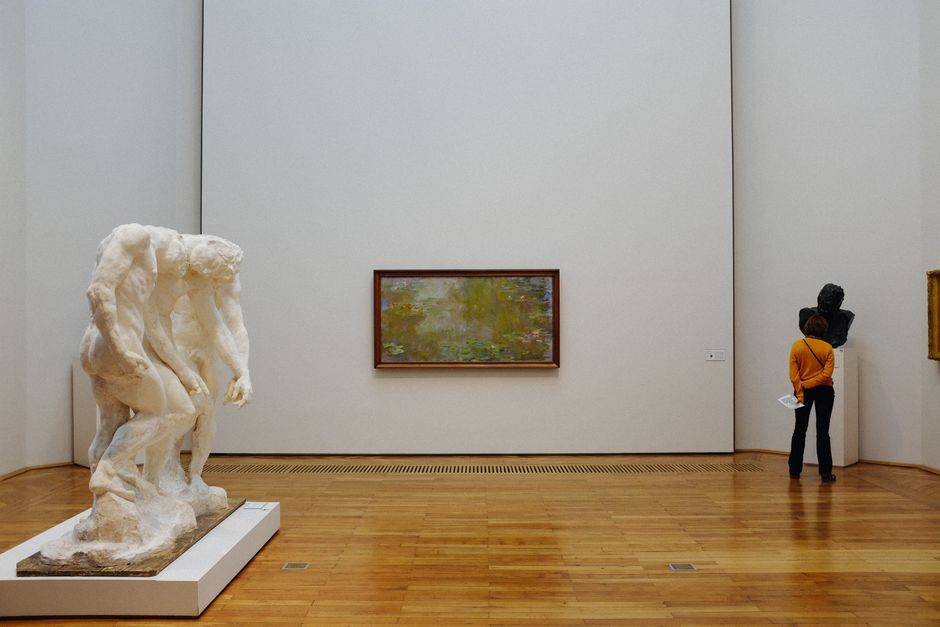
Ready to experience France for yourself? Plan Your France Trip with Chic Trip - a custom route, coordinated bookings and one accountable planner.
About Chic Trip
A journey designed exclusively for you: a personal itinerary, restaurant recommendations refined with your feedback, approved reservations and practical details in the Chic Trip app. Your written proposal confirms the total, inclusions and booking conditions before you commit. Start with a free call or email; no payment or price acceptance is required to enquire.