Christianity in France: Fifteen Centuries of Faith and Fracture
History 7 min read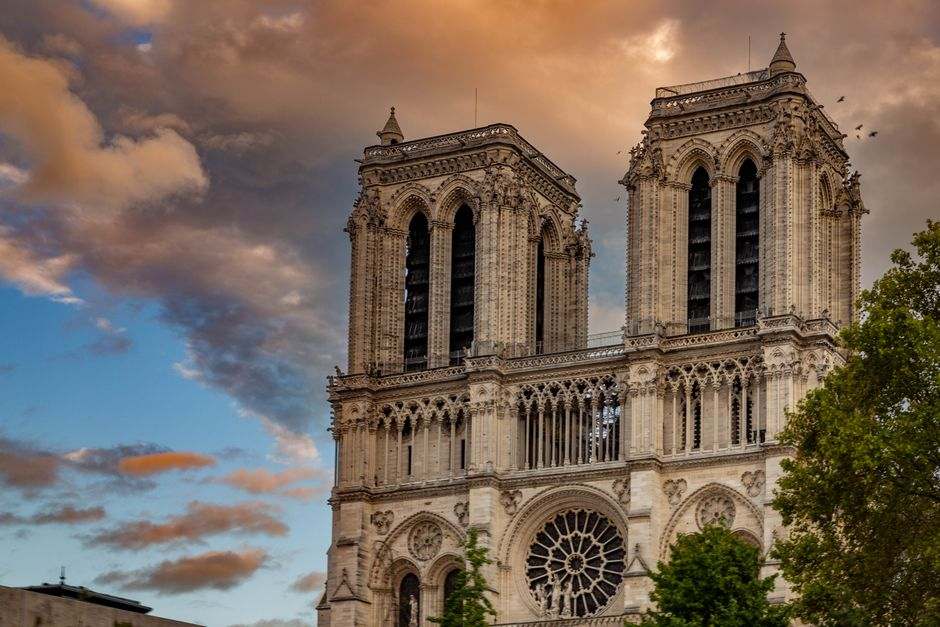
Quick answer
Discover fifteen centuries of Christianity's profound impact on France, from brutal martyrdoms in Lyon to soaring cathedrals shaping a nation's soul—perfect for cultured travelers seeking spiritual...
Blood sanctified it first. The Christians of Lyon and Vienne faced Roman persecution in 177 AD, tortured in amphitheaters while crowds cheered, their bodies fed to animals or burned—martyrdom that planted Christianity in Gallic soil through spectacular suffering. What began as clandestine worship in private homes along Mediterranean trade routes became, within three centuries, the kingdom's official religion, structuring every aspect of French life from governance to art to the calendar itself. For fifteen hundred years, Christianity didn't just influence France—it constructed French identity, built its most enduring monuments, justified its wars, and eventually provoked revolutions that attempted to erase it. Kings converted to secure crowns, peasants revolted citing scripture, philosophers deployed reason against doctrine, and through it all cathedrals kept rising, stone testimonies to faith that outlasted the regimes that commissioned them.
177 AD: Martyrs in the Amphitheater
The earliest documented Christian communities in France emerged in the Rhône Valley—Lyon and Vienne—where Mediterranean trade brought not just goods but ideas. These Christians worshipped secretly in domus ecclesiae, private homes adapted for baptism and Eucharist, aware that practicing their faith risked execution under Roman law. In 177, persecution erupted. The historian Eusebius of Caesarea documented how Lyon's Christians faced torture designed to force apostasy: elderly Bishop Pothinus died from beatings, the slave girl Blandina endured days of torment but refused to recant, and bodies were displayed publicly as warnings.
The martyrdoms accomplished what persecution intended to prevent—they advertised Christianity's existence and demonstrated adherents willing to die for beliefs Romans considered treasonous superstition. The Rhône Valley remained Christianity's French foothold for centuries, gradually spreading north as Roman administration weakened and Germanic tribes invaded. By the late fifth century, Gaul's religious landscape was fractured: Romanized populations increasingly Christian, Germanic invaders often Arian heretics or pagans, and rural areas clinging to pre-Christian gods despite official disapproval.
Clovis: The Baptism That Made France Catholic
Around 496—sources disagree on the exact year—Clovis, king of the Franks, was baptized by Bishop Remigius of Reims alongside 3,000 of his warriors. The conversion story, recorded by Gregory of Tours decades later, involved a battlefield miracle: facing defeat against the Alemanni, Clovis invoked Christ and won, prompting his embrace of Christianity at his wife Clothilde's urging. Whether the details are historically accurate matters less than the political consequences—Clovis became the only orthodox Catholic ruler among Germanic kings who followed Arianism.
This gave him legitimacy among Gallo-Roman populations and support from the Church's institutional machinery. The Eastern Roman Emperor granted him the honorific title "Consul of the Romans," recognizing his role protecting orthodoxy in the West. Clovis's conversion facilitated fusion between Frankish conquerors and Gallo-Roman subjects under shared religious identity, laying foundations for what would eventually become France. From this baptism forward, French kings claimed divine sanction for their rule, anointed at Reims with oil supposedly delivered by a dove during Clovis's ceremony. Christianity became inseparable from French monarchy.
Medieval Cathedrals: Theology in Stone
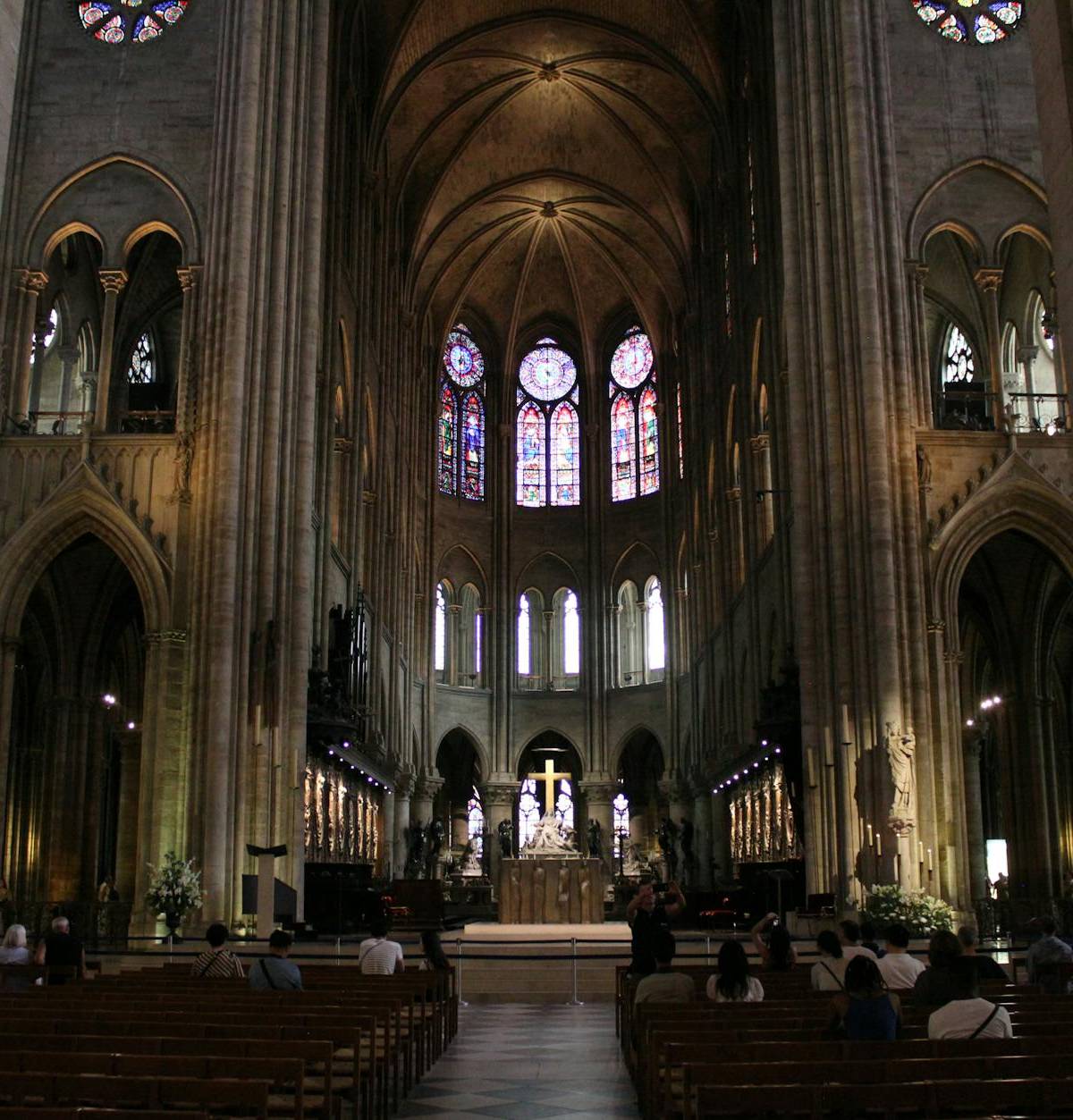
In 1163, Bishop Maurice de Sully ordered demolition of Paris's existing cathedral complex to build Notre-Dame—at 120 meters long with five naves, it would be France's largest cathedral. Construction consumed nearly two centuries, successive bishops and kings adding innovations as architectural styles evolved from Romanesque severity to Gothic radiance. The project represented more than piety; it was political statement. When Louis IX acquired Christ's crown of thorns in 1239 and deposited it at Notre-Dame, the cathedral became reliquary for Christianity's most precious artifacts.
Competition drove construction. When Louis IX commissioned Sainte-Chapelle nearby to house his relics—creating the "rayonnant Gothic" style with unprecedented window-to-wall ratios—Notre-Dame immediately underwent renovations despite being barely finished, adding larger windows to match. These cathedrals weren't merely churches but civic infrastructure: hospitals, schools, courts, and social welfare operated under Church auspices. Medieval French identity was inseparable from Catholicism; to be French meant being Catholic, attending Mass, observing feast days that structured the agricultural calendar, and understanding one's place in a divinely ordained hierarchy stretching from peasant to Pope.
The Wars of Religion: When Faith Became Civil War
Martin Luther's 1517 challenge to Catholic doctrine reached France by the 1520s, finding converts among nobility and urban merchants who resented Church wealth and questioned its theology. By 1562, France's Protestant minority—Huguenots—constituted perhaps 10% of the population but included powerful nobles commanding private armies. The massacre at Wassy in March 1562, where Catholic forces killed Huguenot worshippers, ignited the first of eight civil wars that would consume France for 36 years.
The St. Bartholomew's Day Massacre in August 1572 epitomized the brutality. Following the wedding of Protestant Henri of Navarre to Catholic Marguerite de Valois—intended to reconcile factions—Catholic forces slaughtered thousands of Protestant nobles and civilians across Paris. Henri survived by temporarily converting to Catholicism. When he inherited the throne in 1589, Catholic France refused to accept a Protestant king. His solution was pragmatic apostasy: he converted to Catholicism in 1593, allegedly quipping "Paris is worth a Mass," then promulgated the Edict of Nantes in 1598, granting limited Protestant rights while affirming Catholic dominance. The wars demonstrated that France couldn't sustain religious pluralism peacefully; coexistence required constant royal enforcement against mutual hatred.
Revolution: Dechristianization and Terror
Revolutionary authorities didn't merely separate Church from state—they attempted to erase Christianity from French consciousness. The Civil Constitution of the Clergy in 1790 subordinated priests to state authority, requiring oaths of loyalty many refused. Church property was confiscated and sold, monasteries dissolved, clergy who refused oaths persecuted or executed. The Revolutionary Calendar abolished Christian temporal markers, renaming months and restarting time at Year One (1792). Notre-Dame was temporarily converted to a "Temple of Reason," hosting festivals celebrating rational philosophy instead of divine worship.
But revolutionary dechristianization foundered on popular attachment. Rural France particularly resisted, sparking counter-revolutionary uprisings like the Vendée rebellion where revolutionary armies massacred entire villages for harboring priests. Napoleon's 1801 Concordat with Pope Pius VII ended the chaos by recognizing Catholicism as "the religion of the great majority of French citizens" while maintaining state control over Church appointments. The Revolution proved Christianity was too embedded in French identity to abolish by decree, but it permanently ended the Church's political monopoly.
1905: The Separation That Redefined Secularism
On December 9, 1905, the Third Republic promulgated the law separating Churches—plural, the distinction mattered—from the State. The legislation was radical: it ended state salaries for clergy, transferred Church property to secular associations, and prohibited religious symbols in government buildings. France became the world's most thoroughly secular nation, pushing laïcité (secularism) further than any other country.
The separation emerged from decades of conflict between Republican governments and a Catholic Church that had supported monarchy and opposed Republican values. By removing religion from public institutions while guaranteeing private worship, the 1905 law attempted to resolve France's endless religious-political conflicts through strict compartmentalization. It succeeded in establishing the framework that still governs French secularism: religion as private matter, public space as neutral ground. Christianity in France survived fifteen centuries of doctrinal warfare, revolutionary persecution, and legal marginalization—transformed from state religion to private choice, still visible in every cathedral but no longer structuring French identity as it had since Clovis's baptism.
Keep exploring: grand monuments of the Napoleonic empire · a romantic Paris guide for couples · Plan your Paris trip with a local
See how Chic Trip plans custom trips across France, coordinates the route and eligible bookings, and keeps every price clear before confirmation.
Plan my France trip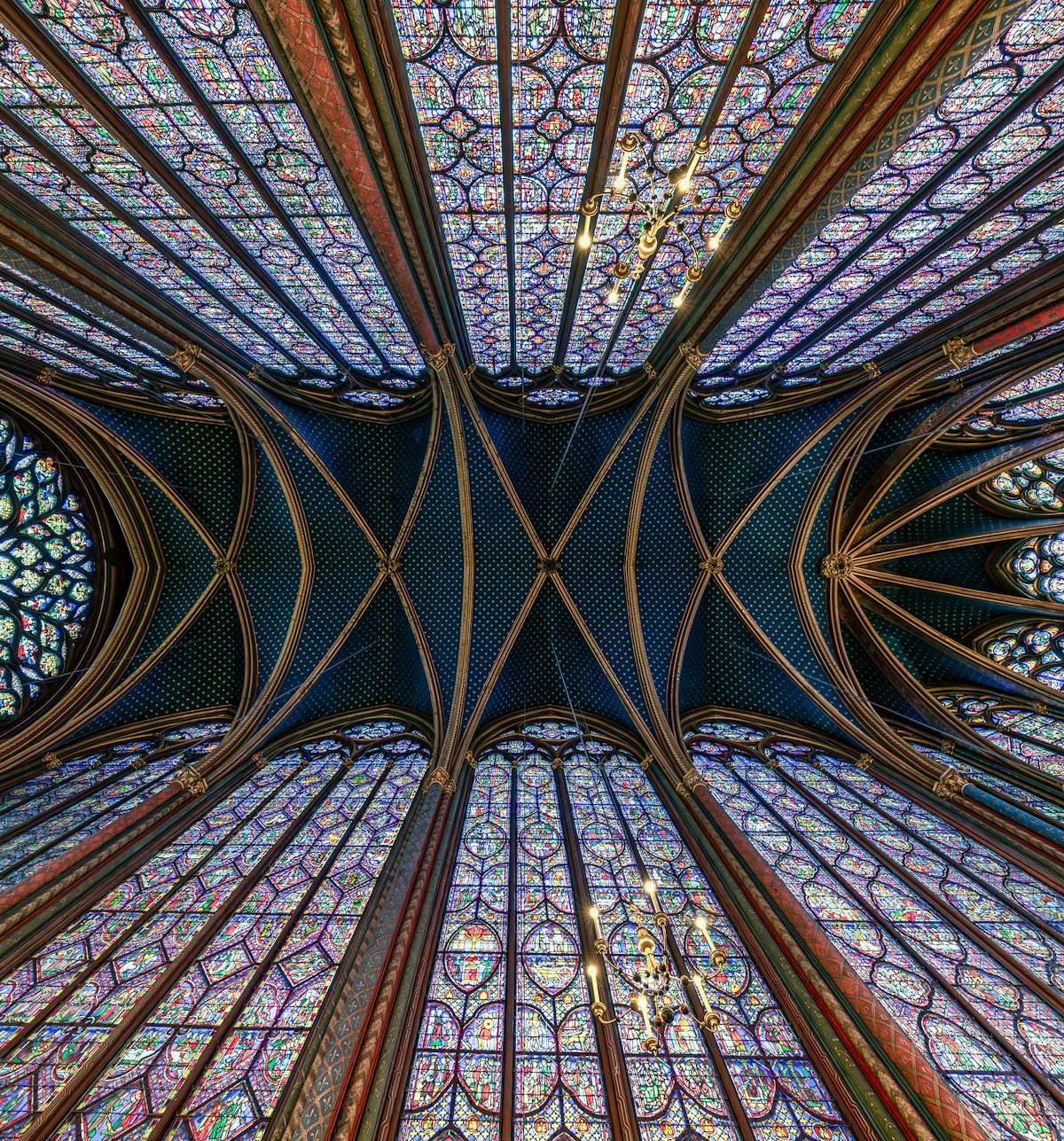
Ready to experience France for yourself? Plan Your France Trip with Chic Trip - a custom route, coordinated bookings and one accountable planner.
About Chic Trip
A journey designed exclusively for you: a personal itinerary, restaurant recommendations refined with your feedback, approved reservations and practical details in the Chic Trip app. Your written proposal confirms the total, inclusions and booking conditions before you commit. Start with a free call or email; no payment or price acceptance is required to enquire.