Revolutionary Roads: A Walk Through the Tumultuous History of the Bastille
History 11 min read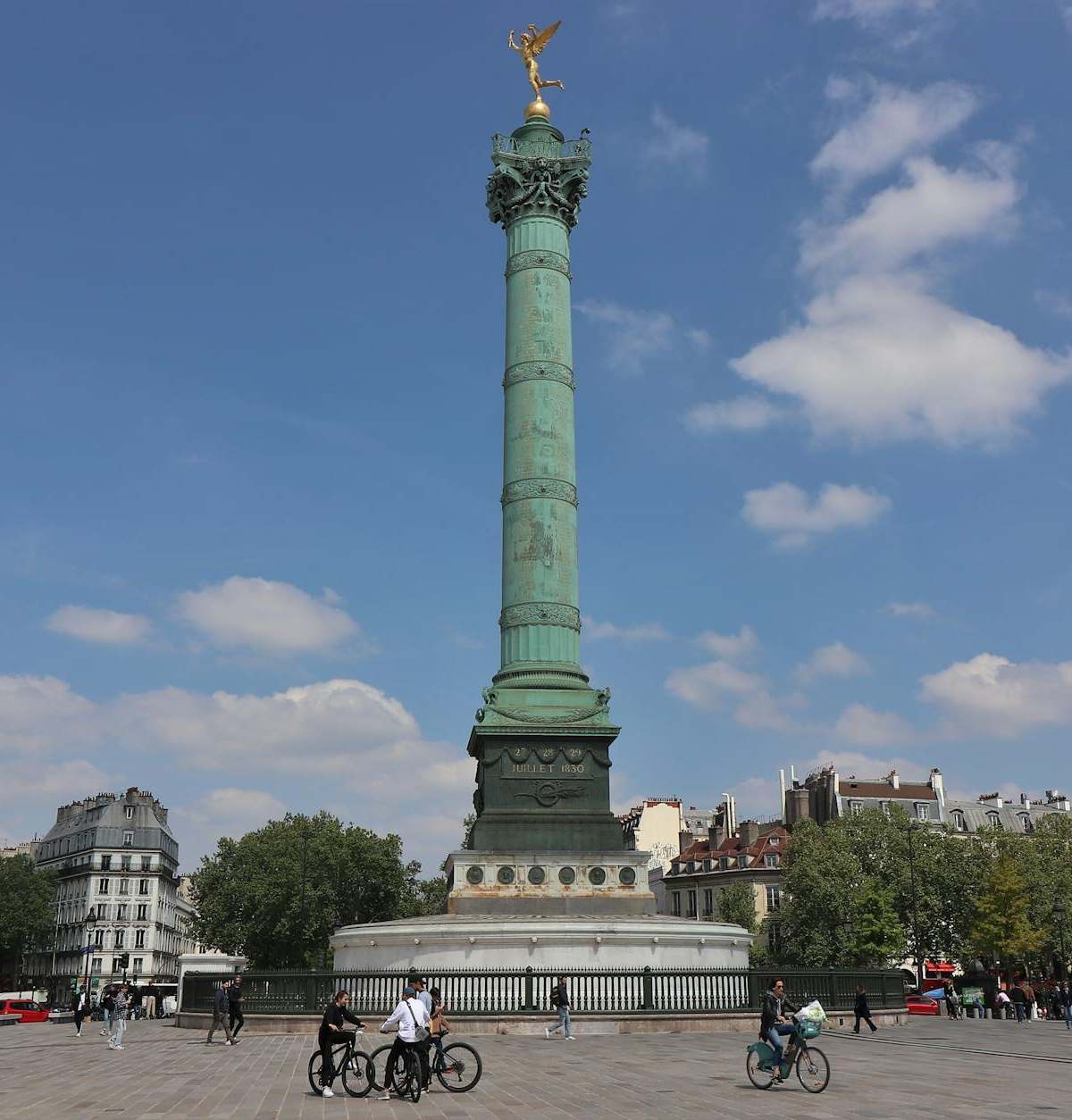
Quick answer
Trace the dramatic fall of the Bastille on a sophisticated walking tour through Paris, where revolutionary history unfolds amid modern elegance at Place de la Bastille.
Nothing remains of the prison itself. They demolished it stone by stone starting July 16, 1789—two days after the mob stormed it—and by November the fortress that had stood for four centuries was rubble sold as souvenirs to revolutionary tourists. Today, a bronze plaque and a line of paving stones mark where the western wall stood at 5 Place de la Bastille. Traffic circles around the July Column commemorating a different revolution forty years later. The Opéra Bastille occupies the footprint where towers once rose. But the absence itself tells the story: this is where the ancien régime ended, where ordinary Parisians discovered they could topple symbols of royal power through collective action, where the idea that governments derived authority from consent rather than divine right became tangible and bloody and irreversible.
The Fortress Before the Fall
The Bastille Saint-Antoine began as military architecture in 1370, part of Charles V's fortifications protecting Paris's eastern approach. Eight towers connected by walls 24 meters high, surrounded by a moat, guarded the Saint-Antoine gate—the main entrance for travelers arriving from eastern France. As Paris expanded and military threats receded, the fortress lost strategic value but gained a new purpose: by 1659 it functioned primarily as state prison.
This wasn't a dungeon for common criminals but a place where the king imprisoned enemies without trial through lettres de cachet—sealed orders that bypassed all judicial process. Voltaire spent time here. The Marquis de Sade. The Man in the Iron Mask, according to legend. Mostly it held aristocrats who'd offended the king, writers whose pamphlets questioned authority, Protestants during religious persecution. Conditions varied wildly depending on prisoner status—some lived comfortably with servants and wine, others rotted in darkness.
By 1789, the Bastille's actual function had diminished dramatically. It held only seven prisoners on July 14: four forgers, two madmen, and one aristocrat imprisoned at his family's request. The building was already scheduled for demolition as part of urban improvements. But symbols operate independent of reality. To Parisians, the Bastille represented royal despotism—arbitrary arrest, imprisonment without trial, the ancien régime's casual cruelty toward anyone who challenged it.
The Morning of July 14, 1789
Context matters. The Estates-General had convened in May after years of financial crisis, with the Third Estate—representing commoners—demanding political voice. On June 20, members took the Tennis Court Oath, vowing to create a written constitution limiting royal power. King Louis XVI, pressured by conservative nobles, began moving troops toward Paris. By early July, tensions were breaking.
On July 12, news reached Paris that Jacques Necker—the popular finance minister representing reform—had been dismissed. Crowds interpreted this as prelude to violent suppression. Fighting erupted at Place Vendôme between royal forces and mutinous Gardes Françaises who'd sided with the Revolution. Royal troops withdrew from central Paris, creating a power vacuum.
On July 13, crowds began arming themselves, looting royal armories and gunsmiths. They seized 28,000 muskets from Les Invalides but found little gunpowder. Everyone knew the Bastille held substantial munitions stores. That's what initially drew the crowd—not symbolic liberation but practical need for gunpowder to defend against expected royal attack.
The morning of July 14, a crowd gathered outside the fortress—estimates range from several hundred to several thousand, primarily workers, artisans, small shopkeepers, the kinds of people Parisians would soon call sans-culottes. They wanted two things: the gunpowder stored inside, and removal of the cannons mounted on towers that could fire down Rue Saint-Antoine into the dense working-class Faubourg beyond.
Bernard-René Jordan de Launay, the fortress governor, faced an impossible situation with a skeleton garrison of 82 invalides (retired soldiers) and 32 Swiss Guards. He'd reinforced defenses after receiving warnings about unrest, but his position was indefensible against a determined crowd. Yet orders from Versailles were clear: hold the fortress.
Four Hours That Changed Everything
Negotiations happened first. A delegation entered around 10 AM, requesting the cannons be removed and powder released. Launay stalled, serving them lunch while deliberating. The crowd outside grew larger, angrier, convinced delay meant betrayal. Around 1:30 PM, someone—accounts differ on who—cut the chains on the outer drawbridge. The crowd surged into the outer courtyard.
Launay, interpreting this as attack, ordered his garrison to fire. The crowd had muskets but the fortress had strategic position. Four hours of fighting followed—musket volleys from towers, return fire from surrounding buildings, cannons finally turned against the fortress walls. Ninety-four attackers died, with many more wounded. Inside, one defender was killed.
Around 5 PM, with the crowd swelling to include mutinous Gardes Françaises bringing artillery, Launay recognized he couldn't hold out. He threatened to blow up the powder magazine, killing everyone, but his garrison refused. He surrendered, lowering the drawbridge.
What happened next established a pattern that would repeat throughout the Revolution: revolutionary violence justified as popular justice. The crowd seized Launay as he tried to leave. They marched him toward Hôtel de Ville through streets packed with thousands. He was beaten, stabbed, finally shot. Someone cut off his head with a pocketknife and mounted it on a pike. The fortress commander Jacques de Losme met the same fate. Other defenders were murdered despite promises of safe conduct.
The crowd freed the seven prisoners—though apparently the madmen weren't particularly grateful and one prisoner complained about having his afternoon disrupted. Then they began demolishing the building.
The Aftermath: Symbol and Reality
News spread fast. By July 16, demolition contractor Pierre-François Palloy had received contract to raze the fortress. He hired 800 workers who attacked the stone walls with picks and hammers. Palloy, understanding symbolism's commercial value, carved miniature Bastilles from the rubble and sold them as souvenirs across France. He sent one to each of the 83 newly formed departments. Stones went to building projects or were distributed to revolutionaries as relics.
By November 1789, nothing remained but rubble. Today, that outline of paving stones at number 5 is literally all that's physically left of the medieval fortress.
But the event's meaning expanded far beyond demolishing one building. July 14 became the Revolution's founding myth—proof that ordinary people could challenge tyranny and win. Never mind that Louis XVI arguably wasn't planning immediate suppression, that the fortress was already scheduled for removal, that only seven irrelevant prisoners were freed. Symbols don't require accuracy; they require emotional resonance. The Bastille provided that perfectly.
The July Column standing in Place de la Bastille today doesn't commemorate 1789 at all but rather the July Revolution of 1830 and Revolution of 1848—later uprisings that drew legitimacy from invoking that original storming. The column is 52 meters of bronze topped by the Génie de la Liberté, a gilded winged figure holding broken chains and a torch. It honors the 504 victims of July 1830 whose names are engraved on the shaft, and revolutionaries of 1848 buried in the vault beneath.
The Faubourg: Where Revolution Lived
Walk east from Place de la Bastille along Rue du Faubourg Saint-Antoine and you're following one of Paris's oldest streets, a route that's been here since the 12th century. This was never elegant Paris. The Faubourg Saint-Antoine was where craftspeople lived—furniture makers, metalworkers, weavers, the skilled laborers who built and furnished the grand houses elsewhere.
In 1657, royal letters patent exempted Faubourg artisans from guild regulations that elsewhere required years of apprenticeship and masterwork certifications. This created an entrepreneurial ecosystem where innovation happened faster than in guild-controlled workshops. By the 18th century, the neighborhood produced Paris's finest furniture. But it also created dense concentrations of working poor, the population that would repeatedly provide revolutionary crowds.
On July 14, 1789, many in the Bastille crowd came from these streets. The fortress's cannons aimed directly down their neighborhood, a visible threat to their homes. When those cannons fell silent, they'd eliminated a symbol of royal power that literally loomed over their daily lives.
The Faubourg's revolutionary tradition continued long after 1789. In June 1832, the insurrection that Victor Hugo dramatized in Les Misérables centered here—barricades in narrow streets, fighting house by house. In June 1848, after the conservative government dissolved national workshops that employed desperate workers, the Faubourg erupted again. This time the army responded with artillery, shelling the neighborhood from the Bastille area before infantry stormed the barricades from Popincourt. Many died. The workers capitulated on June 26, 1848.
Baron Haussmann, commissioned by Napoleon III to modernize Paris in the 1850s-60s, had counterinsurgency explicitly in mind when designing his boulevards. Wide streets meant cavalry charges and artillery could suppress riots easily. He proposed covering the Canal Saint-Martin to create Boulevard Richard-Lenoir, providing direct military access to the Faubourg from central Paris. The Reuilly barracks were strategically positioned to control this historically rebellious neighborhood.
Walking the Revolutionary Geography Today
Start at Place de la Bastille. Find the paving stones marking the fortress outline at number 5. They're easy to miss—just bronze plaques and different-colored pavement. Stand there and imagine towers rising 24 meters above you, moat surrounding you, cannons pointed down Rue Saint-Antoine.
The July Column dominates the center. You can't enter it anymore, but the inscribed names and the Génie de la Liberté on top are visible from the square. Note how subsequent revolutions claimed this space—1830, 1848—using 1789's mythology to legitimize their own uprisings.
The Opéra Bastille on the square's eastern edge opened in 1989 for the Revolution's bicentennial. It's aggressively modern, deliberately avoiding historical pastiche. Whether it succeeds aesthetically is debatable, but the intention was clear: the Revolution belonged to the future, not the past.
Walk east on Rue du Faubourg Saint-Antoine into the neighborhood that provided revolutionary crowds. Number 184 holds the Hôpital des Quinze-Vingts, founded by Louis IX in the 13th century for blind crusaders. The street still houses furniture workshops, though rising rents have pushed many out. Duck into the passages and cours—the covered walkways and interior courtyards—that branch off the main street. These haven't changed dramatically since the 19th century: cramped, industrial, intimate.
Passage du Chantier at number 12, Cour de l'Etoile d'Or at number 75, Cour Damoye at number 28—these passages preserve the neighborhood's artisanal character. Workshops still operate, though now they're mixing furniture restoration with contemporary design studios. The scale remains human: small businesses, family operations, the texture of working-class Paris that gentrification hasn't entirely erased.
Continue to Place de la Nation at the street's eastern terminus. The square has its own revolutionary history—during the Terror, a guillotine operated here, executing 1,306 people between June 13 and July 27, 1794. Two enormous bronze sculptures depicting Liberty and the Republic stand as later republican symbolism layered over revolutionary horror.
The Memory Industry
Paris commemorates July 14 as Bastille Day, the national holiday. Fireworks at the Eiffel Tower, military parades down the Champs-Élysées, parties in every square. It's become celebration divorced from the violence that initiated it—those 94 deaths storming the fortress, Launay's severed head on a pike, the thousands who'd die in subsequent revolutionary violence.
Walking tours regularly trace revolutionary Paris, pointing out sites and telling stories. These range from academic to theatrical, some emphasizing historical complexity, others selling simplified narratives about liberty triumphing over tyranny. The mythology is powerful enough that accuracy often matters less than emotional impact.
The absence of physical remains paradoxically strengthens the site's symbolic power. You can't tour the Bastille because it doesn't exist, which means imagination fills the space. That line of paving stones becomes whatever you need it to be—symbol of liberation or mob violence, the people's triumph or descent into chaos. The Revolution's contested legacy means the Bastille remains contested, still arguing with itself across two centuries.
Revolutionary history demands reckoning with violence justified by principles that genuinely changed the world. The Bastille's fall initiated the process that established citizen rights, limited governmental power, and created the democratic frameworks—however imperfect—that still structure politics today. It also initiated the Terror, the wars, the dictatorships that followed. Both are true simultaneously. Walking these streets requires holding that tension: this is where profound change began, and where it immediately became complicated, bloody, and human. That nuance is what separates tourism from actual engagement with history. We build that complexity into itineraries because Paris deserves better than simplified myths, and understanding requires confronting uncomfortable truths alongside inspirational ones. If that interests you, we're here.
Keep exploring: grand monuments of the Napoleonic empire · 15 hidden gems most tourists miss · Plan your Paris trip with a local
Get our free Insider Paris Guide: the neighborhoods, restaurants and hidden corners we send our own clients. No tourist traps, no filler.
Get the free guide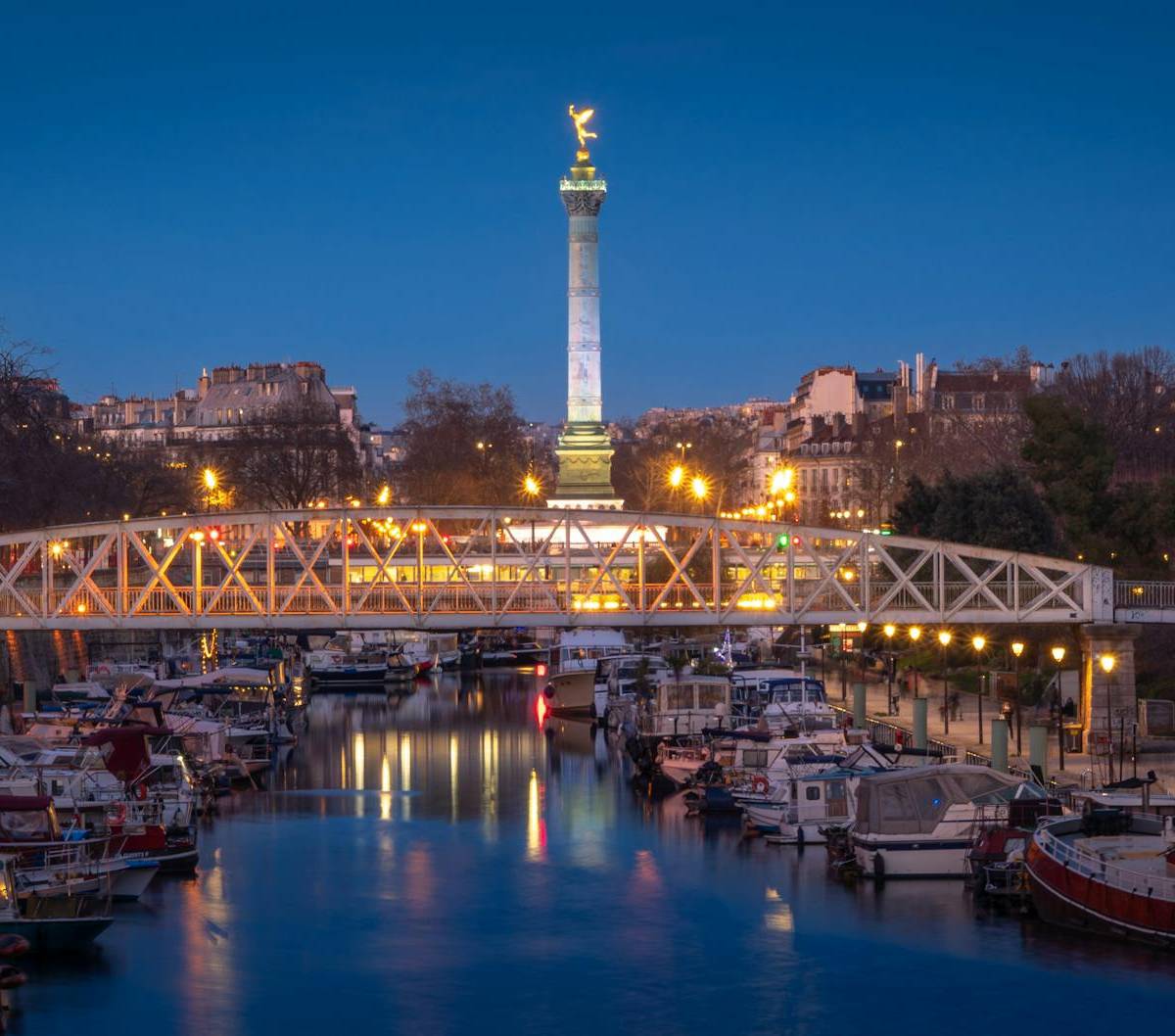
Ready to experience Paris for yourself? Plan Your Paris Trip with Chic Trip - a custom route, coordinated bookings and one accountable planner.
Planning your own Paris trip? Estimate your budget with the free Paris trip cost calculator, find out how many days you need in Paris, check when to book everything in Paris, or build a day-by-day plan with the Paris itinerary planner.
About Chic Trip
A journey designed exclusively for you: a personal itinerary, restaurant recommendations refined with your feedback, approved reservations and practical details in the Chic Trip app. Your written proposal confirms the total, inclusions and booking conditions before you commit. Start with a free call or email; no payment or price acceptance is required to enquire.