Paris on a Budget: The American Traveler's Practical Guide
Itinerary and planning 9 min read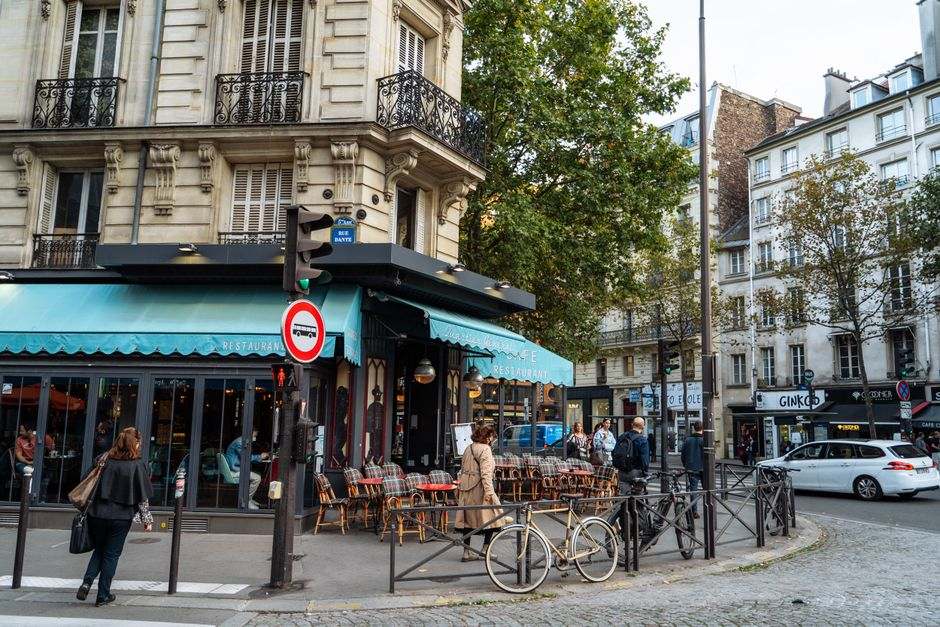
Quick answer
Paris can be surprisingly affordable for American travelers who know where to eat, when to go, and how to move around the city like a local.
Paris has a reputation for being extravagant, and if you let it, the city will absolutely drain your bank account. But that version of Paris, the one built on three-star restaurants, grand hotel suites, and designer shopping bags, is optional. The real Paris, the one Parisians actually live in, runs on neighborhood bakeries, free museum days, and a metro system so efficient it makes you forget taxis exist. For American travelers willing to plan ahead and make a few smart trade-offs, two weeks in Paris on a genuinely reasonable budget is not just possible, it is deeply enjoyable. Here is exactly how to do it.
When to Go: Timing Your Trip to Spend Less
The single highest-impact budget decision you will make is your travel window. Paris in July and August is expensive and crowded, with hotel rates peaking and queues at major attractions stretching around the block. Transatlantic flights during peak summer from New York or Los Angeles routinely exceed $900 round-trip in economy. Shoulder season is your target. Late January through early March delivers the lowest airfares of the year, often $400 to $600 round-trip from the East Coast, and hotel rates drop by 30 to 40 percent compared to summer. Yes, it is cold, but Paris is extraordinarily walkable even in winter, the museums are uncrowded, and the city feels genuinely local rather than tourist-saturated. November is another strong option, offering mild weather, autumn light that photographers obsess over, and pre-holiday pricing before rates climb for December. If spring is non-negotiable for you, target the first two weeks of April rather than May, when rates are still reasonable and the chestnut trees are beginning to bloom along the boulevards.
Getting There and Flying Smart
Set fare alerts on Google Flights for Charles de Gaulle (CDG) at least three months before your intended travel date. Use the calendar view to spot the cheapest departure days, which are typically Tuesday, Wednesday, and Saturday for transatlantic routes. Flying into Orly (ORY) instead of CDG occasionally yields cheaper fares, though CDG offers more direct connections from American cities. Norwegian, Level, and French Bee operate budget transatlantic services from select US cities and are worth checking, though bag fees add up quickly, so price the total cost including one checked bag before assuming the fare is a deal. Book directly with the airline once you find your price, avoiding third-party booking fees. Arriving midweek rather than on a Friday or Sunday can also shave meaningful money off your ticket.
Where to Stay Without Paying Grand Hotel Prices
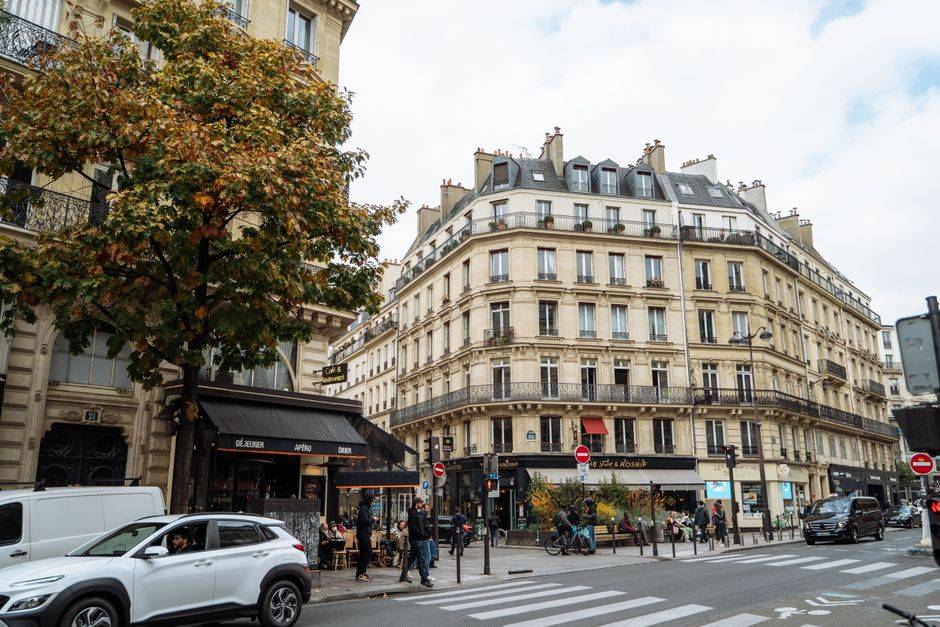
Paris has a tiered accommodation market, and the sweet spot for budget-conscious American travelers sits firmly in the two-star and three-star hotel category in the 11th, 12th, and 20th arrondissements. These neighborhoods, on the eastern side of the city, are safe, authentic, and well-served by metro. Expect to pay between $90 and $140 per night for a clean, well-located double room in these areas, compared to $250 and up in the 1st, 4th, or 8th arrondissements. Apartments booked through platforms like Vrbo work well for stays of five nights or longer, particularly if you are traveling with a partner or in a small group, because access to a kitchen cuts your food spending dramatically. Look for apartments in the 10th, 11th, or 13th arrondissements. Hostels remain a legitimate option for solo travelers, with private rooms at well-regarded Paris hostels running $60 to $85 per night. Generator Paris and St Christopher's Inns are both reliable, centrally located, and social without being chaotic.
Mastering the Paris Metro and Transport System
Choose public transport for longer journeys and walk between nearby sights. For occasional journeys, load Metro-Train-RER tickets onto a Navigo Easy card or a compatible phone. The 2026 full fare is €2.55 per journey, excluding airport stations. Bus-Tram tickets are separate. Each traveler needs their own ticket medium; a bank card alone does not open the metro gates. Navigo Semaine covers a fixed Monday-to-Sunday week, not seven days from purchase. The all-zone fare is €32.40 in 2026, loaded onto a compatible phone or Navigo Découverte rather than Navigo Easy. Compare it with your actual journeys; Orlyval is excluded. Check service hours and disruptions for your route. Taxis can be worthwhile with luggage, limited mobility or late arrivals; they are not automatically a poor choice.
Free and Nearly Free Attractions Worth Your Time
Paris is remarkably generous with free access when you know where to look. The permanent collections at the Musee d'Art Moderne de la Ville de Paris, the Musee Carnavalet, the Petit Palais, and the Maison de Victor Hugo are all free, year-round, with no reservations required. These are not consolation prizes, they are genuinely excellent museums that most American tourists skip entirely in favor of queuing at the Louvre. Free-admission days vary by museum, season, age and residency, and they change. Check each official museum website for your exact date and reserve a timed slot whenever one is required. The Centre Pompidou's main building is closed for renovation, so use its official off-site program instead. Beyond museums, Sacre-Coeur is free to enter, the view from Montmartre costs nothing, Pere Lachaise Cemetery is free and genuinely fascinating to walk through, and the Palais Royal gardens are one of the most beautiful public spaces in Europe with no admission fee whatsoever. The banks of the Seine, the Canal Saint-Martin, the Jardin du Luxembourg, and the Tuileries Garden are all free and give you hours of authentic Parisian experience at zero cost.
Eating Well for Less: Where Budget-Conscious Americans Actually Eat
The most important rule of eating affordably in Paris is this: order the formule at lunch, not dinner. Most French restaurants, even good ones, offer a set lunch menu called the formule or menu du jour, typically two courses for 13 to 17 euros or three courses for 16 to 22 euros, including a glass of wine in many cases. The same restaurant at dinner costs twice as much or more. This is not a secret among Parisians, it is simply how French dining culture works, and it means you can eat genuinely well at a neighborhood bistro without spending $50 per person. Boulangeries are the foundation of budget eating in Paris. A fresh baguette costs 1.10 to 1.30 euros, a croissant around 1.20 euros, and a substantial sandwich jambon-beurre (ham and butter on a baguette) runs 3.50 to 5 euros. This is not eating on the cheap, this is eating the way Parisians eat every single day. Marche d'Aligre in the 12th arrondissement, Marche des Enfants Rouges in the Marais, and the street markets throughout the 13th arrondissement sell excellent, fresh, affordable food. Stock up for picnics in the Luxembourg gardens or along the Seine, a quintessentially Parisian activity that costs roughly 10 euros per person including cheese, fruit, bread, and a bottle of Burgundy from a nearby cave a vins. For sit-down meals beyond the lunch formule, explore the immigrant food corridors of Paris: the 13th arrondissement for Vietnamese and Chinese food, Belleville for North African and Levantine cooking, and La Chapelle for incredible, inexpensive Indian and Bangladeshi restaurants. A full meal in these neighborhoods rarely exceeds 12 to 15 euros per person.
Avoiding the Tourist Tax: What Not to Spend Money On
Several Paris tourist traps will quietly empty your wallet while delivering questionable value. Skip the Seine river dinner cruises, which cost 80 to 120 euros per person and serve mediocre food. Walk along the Seine instead, stop at a wine bar near Pont Marie, and you will have a far more memorable evening. Avoid buying bottled water at cafes and restaurants, tap water in Paris is excellent and legally required to be served free of charge at any restaurant upon request, just ask for une carafe d'eau. Do not buy souvenirs near the Eiffel Tower or the Louvre, where prices are inflated by 200 to 300 percent. Head instead to the Marche aux Puces de Saint-Ouen flea market on weekends for genuinely interesting vintage finds at negotiable prices. Be aware that coffee consumed standing at a zinc bar costs significantly less than the same coffee served to you at a terrace table, this is a tiered pricing system that is perfectly normal and openly practiced throughout France.
Smart Money Moves Before and During Your Trip
Before you leave home, sort out your currency situation. Carrying cash in euros is still essential in Paris, as many smaller bistros, boulangeries, and markets either prefer or require it. Use a no-foreign-transaction-fee credit card for all larger purchases. Charles Schwab Bank's debit card reimburses all ATM fees worldwide and pulls money at the true interbank exchange rate, making it the single best tool for withdrawing euros in Paris. Avoid airport currency exchange booths, hotel front desks, and any exchange office advertising zero commission, as these typically offer rates 5 to 8 percent below the market rate. Withdraw euros from ATMs affiliated with major French banks such as BNP Paribas, Credit Agricole, or Societe Generale. Download the TooGoodToGo app before you arrive: it lets you purchase surplus food from Paris restaurants, cafes, and bakeries at 50 to 75 percent off. It is legitimately excellent and used heavily by young Parisians. Similarly, the Too Good To Go marketplace often features high-end pastry shops and specialty grocers, meaning you can sometimes collect a surprise bag from a notable patisserie for 4 to 5 euros.
Building a Realistic Daily Budget
With smart planning, a comfortable daily budget for one American traveler in Paris looks like this: accommodation in a well-located budget hotel or hostel private room runs $90 to $110, a Navigo weekly pass amortized daily is about $5, a boulangerie breakfast costs $3 to $5, a formule lunch at a neighborhood bistro runs $16 to $20, a picnic or inexpensive ethnic restaurant dinner costs $10 to $15, and one paid attraction or a glass of wine at a wine bar adds $10 to $20. Total: roughly $134 to $175 per day, all-in, for a traveler who is eating well, moving freely around the city, and genuinely experiencing Paris rather than rushing from one expensive landmark to the next. That is a significantly more affordable proposition than most Americans assume, and it buys you a Paris trip that feels luxurious in all the ways that actually matter.
Keep exploring: the five Statues of Liberty in Paris · the 10 best restaurants in Paris · Plan your Paris trip with a local
Get our free Insider Paris Guide: the neighborhoods, restaurants and hidden corners we send our own clients. No tourist traps, no filler.
Get the free guide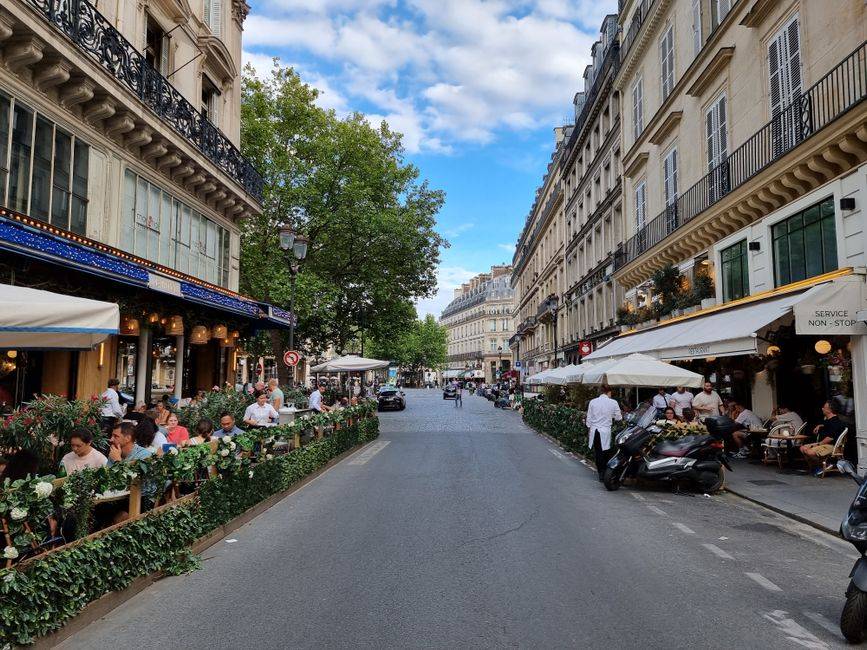
Ready to experience Paris for yourself? Plan Your Paris Trip with Chic Trip - a custom route, coordinated bookings and one accountable planner.
Planning your own Paris trip? Estimate your budget with the free Paris trip cost calculator, find out how many days you need in Paris, check when to book everything in Paris, or build a day-by-day plan with the Paris itinerary planner.
About Chic Trip
A journey designed exclusively for you: a personal itinerary, restaurant recommendations refined with your feedback, approved reservations and practical details in the Chic Trip app. Your written proposal confirms the total, inclusions and booking conditions before you commit. Start with a free call or email; no payment or price acceptance is required to enquire.