2 Days in Paris: The Smartest Weekend Itinerary for Americans
Itinerary and planning 10 min read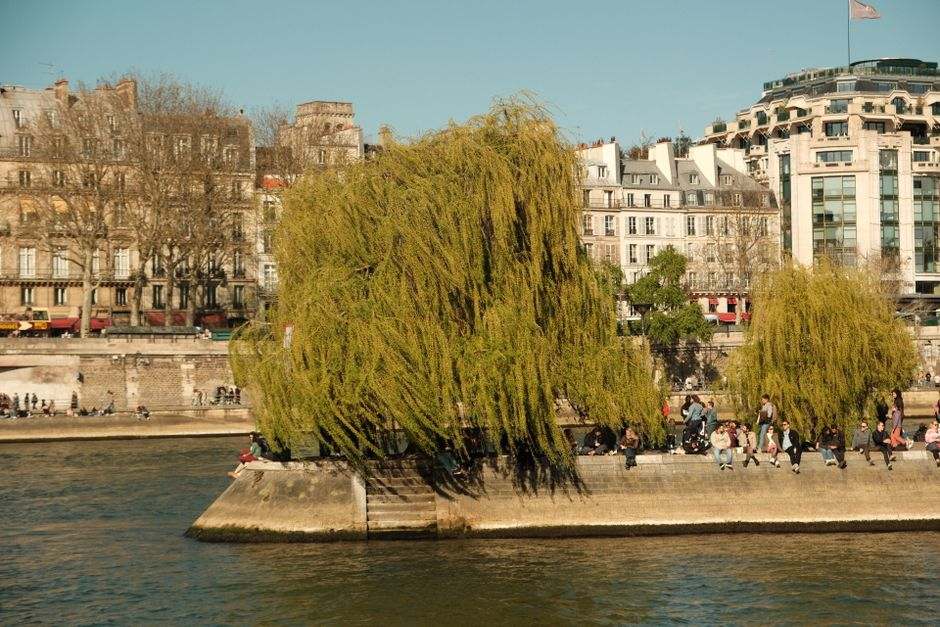
Quick answer
Two days in Paris is tight but absolutely doable if you cut the tourist noise and focus on the neighborhoods, meals, and moments that actually matter.
Two days in Paris sounds like a setup for disappointment, but it isn't, provided you stop trying to do everything. Most first-time American visitors arrive with a list long enough for two weeks, spend half their time in line, eat one forgettable meal near a landmark, and leave feeling vaguely cheated. The fix is ruthless prioritization: choose a handful of neighborhoods, commit to walking them properly, eat where locals actually eat, and accept that the Louvre is not happening this trip. Here is exactly how to spend 48 hours in Paris without wasting a minute of it.
Before You Arrive: The Decisions That Shape the Whole Trip
Where you stay determines how your days feel. For a two-day trip, position yourself in the 6th arrondissement (Saint-Germain-des-Prés) or the 7th. Both put you within walking distance of the Seine, the Musée d'Orsay, the Luxembourg Gardens, and some of the best café culture in the city. Avoid hotels near the Opéra or the 8th arrondissement Champs-Élysées corridor unless price forces you there, as those neighborhoods are built for tourists and you will feel it in every interaction. Book a hotel with a real breakfast included or within one block of a good bakery, because how you start the morning sets the tone for everything.
Set your phone to Paris time the moment you board the plane, skip the in-flight movie, sleep as much as you can, and arrive ready to stay awake until at least 9 p.m. local time. The single biggest threat to a 48-hour Paris trip is losing Day One to jet lag. Eat a proper lunch when you land, walk outside in natural light, and push through. You can sleep when you are home.
Day One Morning: The Left Bank on Foot
Start at the Luxembourg Gardens no later than 8:30 a.m. The garden opens early, the light is extraordinary before 10, and you will have the fountains and iron chairs largely to yourself. Bring a coffee from the nearest café on Rue de Médicis and spend 30 minutes simply sitting. This is not wasted time, it is the fastest way to shift mentally out of American pace and into the rhythm that makes Paris enjoyable.
From Luxembourg, walk north toward Saint-Germain-des-Prés. Stop at Café de Flore or Les Deux Magots for a croissant and a café crème, not because they are the city's most exciting cafés (they aren't), but because understanding what a genuinely good croissant tastes like calibrates you for the rest of the trip. Order simply, sit at a table rather than the bar if the weather allows, and do not rush.
By 10 a.m., cross the Seine at Pont des Arts and spend 45 minutes on the Île de la Cité. Notre-Dame Cathedral has reopened with free admission. Check its official visiting and reservation information. Continue to the back of the island, cross the small bridge to Île Saint-Louis, and walk the entire length of Rue Saint-Louis en l'Île. Pick up a scoop of ice cream from Berthillon if it is open. This detour takes less than an hour and gives you a version of Paris that feels nothing like a tourist itinerary.
Day One Midday: The Marais Without the Crowds
Cross back to the Right Bank and enter the Marais through Rue du Pont Louis-Philippe. The Marais is the neighborhood that most rewards slow walking, and it is best experienced before the weekend shopping crowds arrive around noon. Head to Place des Vosges, Paris's oldest planned square, and walk all four covered arcades. Grab a window seat at one of the cafés underneath the arches for a light lunch, a croque monsieur or a simple salad works perfectly here, and watch the square do its thing.
After lunch, decide between two options based on your interests. If you care about art, the Musée Picasso is excellent, the ticket lines are manageable compared to the Louvre or Musée d'Orsay, and two hours there is genuinely satisfying. If you prefer streets to museums, spend that same two hours walking deeper into the Marais toward Rue des Rosiers, the historic Jewish quarter, where you can pick up a falafel from L'As du Fallafel for an afternoon snack that is, without exaggeration, one of the better things you will eat in Paris. Either choice is the right one. Do not try to do both.
Day One Afternoon: The Musée d'Orsay
Pre-book timed entry tickets for the Musée d'Orsay for late afternoon, ideally a 4 p.m. entry slot. This is the one museum that belongs on every two-day Paris itinerary, full stop. The Impressionist collection on the top floor, including rooms dedicated to Monet, Renoir, Degas, and Van Gogh, is among the greatest concentrations of those paintings anywhere in the world. Give yourself 90 minutes inside, go straight to the top floor first, and work your way down. Do not get distracted by the ground floor sculpture hall on the way in or you will run out of time for the paintings that matter most.
The building itself, a converted Beaux-Arts train station with an enormous vaulted ceiling and enormous clock faces, is worth experiencing even before you reach a single painting. Budget one genuine moment of standing in the central hall and looking up before you start moving through the galleries.
Day One Evening: Dinner in Saint-Germain
Return to the Left Bank for dinner. Reserve a table in advance at a traditional French bistro in Saint-Germain or the 7th, as the best places fill up by 7 p.m. on weekends. Look for restaurants with a handwritten menu on a chalkboard, a short wine list, and no English translations on the menu, those are the reliable signals that you are eating where the neighborhood actually eats. Order the prix fixe if one is offered, start with something classic like soupe à l'oignon or pâté de campagne, and have the duck or the steak frites as a main. French wine by the carafe is cheaper than you expect and better than you fear.
After dinner, walk along the Seine from Pont de la Concorde toward Pont Neuf. The city lights reflecting on the water at 9 or 10 p.m. are one of those Paris experiences that photographs cannot fully capture. Give yourself 20 minutes just walking. This is how Day One ends properly.
Day Two Morning: Montmartre Before Anyone Else Wakes Up
Set an alarm. You want to be at the top of Montmartre, standing in front of the Sacré-Coeur Basilica, by 8 a.m. at the absolute latest. Montmartre later in the day becomes a caricature of itself, packed with souvenir sellers, portrait artists targeting tourists, and impossible foot traffic. In the early morning, it is a genuine neighborhood. The boulangeries are pulling fresh bread, the streets are quiet, and the view from the steps of Sacré-Coeur over the entire city is as good as any view Paris offers.
Walk through the Place du Tertre after the basilica, which is the famous square where artists set up, and continue into the residential streets to the north and west of the main tourist zone. Rue Lepic, Rue des Abbesses, and the streets around the Lamarck-Caulaincourt metro stop show you a Montmartre that still functions as a real neighborhood. Have your second morning coffee at a café on Rue des Abbesses and take the metro from there rather than walking back down the hill.
Day Two Midday: The Palais Royal and the 1st Arrondissement
Take the metro to Palais Royal, Musée du Louvre station, and spend your midday hours in this part of the city. You will not go inside the Louvre on a two-day trip, and you should make peace with that immediately. What you can do is walk through the Louvre's courtyard, see the glass pyramid from the outside, and then cross through the archway into the Palais Royal gardens, which are one of Paris's most undervisited and genuinely lovely public spaces. The arcaded galleries surrounding the garden contain independent bookshops, antique dealers, and low-key cafés where you can have lunch without competing with tour groups.
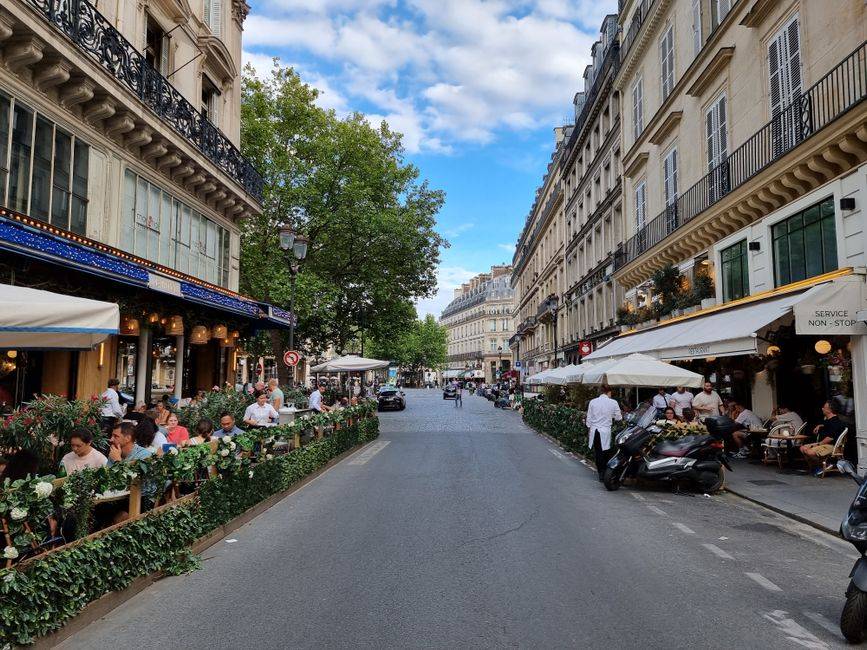
For lunch, head one block east to the area around Rue Montorgueil, a pedestrian market street that is excellent on weekends. Pick up cheese, charcuterie, a baguette, and fruit from the market stalls and eat informally, or sit down at one of the brasseries lining the street. Rue Montorgueil is the kind of place that makes you understand why Parisians think the rest of the world's food culture is somewhat beside the point.
Day Two Afternoon: The Eiffel Tower, Done Right
You are going to see the Eiffel Tower, and you should, but the approach matters enormously. Do not queue to go up unless you have pre-booked tickets for the summit months in advance, those lines routinely exceed two hours. Instead, cross the Seine to the Champ de Mars, the large park stretching southeast from the tower's base, and experience the Eiffel Tower the way Parisians do, from a blanket on the grass with something from a nearby wine shop or market. The tower from below and from a slight distance is architecturally more interesting than the view from the top anyway.
If you want an elevated view of Paris without the Eiffel Tower wait, the towers of Notre-Dame have reopened with separate timed tickets. The Arc de Triomphe is another option for city views. Check availability and stair requirements rather than assuming either visit is queue-free. It requires a short climb and a modest ticket price, and the view is genuinely spectacular, particularly in late afternoon light.
Day Two Evening: A Final Dinner and the City at Night
For your last evening, resist the instinct to go somewhere ambitious or expensive. Paris's best final-night dinners are often in wine bars that serve small plates, places where you can order freely, drink well, and linger without a fixed structure. The 11th arrondissement around Oberkampf and Parmentier has a high concentration of exactly this kind of place, natural wine bars with rotating charcuterie and cheese boards alongside more substantial plates. The neighborhood feels lived-in and young and slightly rough around the edges in the best possible way.
End the night with a walk somewhere you have not yet been, even a short one. Paris rewards wandering at 10 or 11 p.m. in a way that almost no other city does. The streets are safe, they are beautiful, and there is almost always something worth pausing for, a lit-up building, an unexpected courtyard door left open, a couple arguing beautifully in French outside a restaurant. These are the moments that make a 48-hour trip feel like it lasted longer than it did, and they are available to anyone willing to stay on their feet a little past the point of comfort.
Two days in Paris is not enough. It never will be. But handled with intention and a willingness to leave things out, it is enough to understand exactly why you need to come back.
Keep exploring: the 10 best restaurants in Paris · 15 hidden gems most tourists miss · Plan your Paris trip with a local
Get our free Insider Paris Guide: the neighborhoods, restaurants and hidden corners we send our own clients. No tourist traps, no filler.
Get the free guide
Ready to experience Paris for yourself? Plan Your Paris Trip with Chic Trip - a custom route, coordinated bookings and one accountable planner.
Planning your own Paris trip? Estimate your budget with the free Paris trip cost calculator, find out how many days you need in Paris, check when to book everything in Paris, or build a day-by-day plan with the Paris itinerary planner.
About Chic Trip
A journey designed exclusively for you: a personal itinerary, restaurant recommendations refined with your feedback, approved reservations and practical details in the Chic Trip app. Your written proposal confirms the total, inclusions and booking conditions before you commit. Start with a free call or email; no payment or price acceptance is required to enquire.