Louis XIV: The Sun King Who Made France Absolute
History 7 min read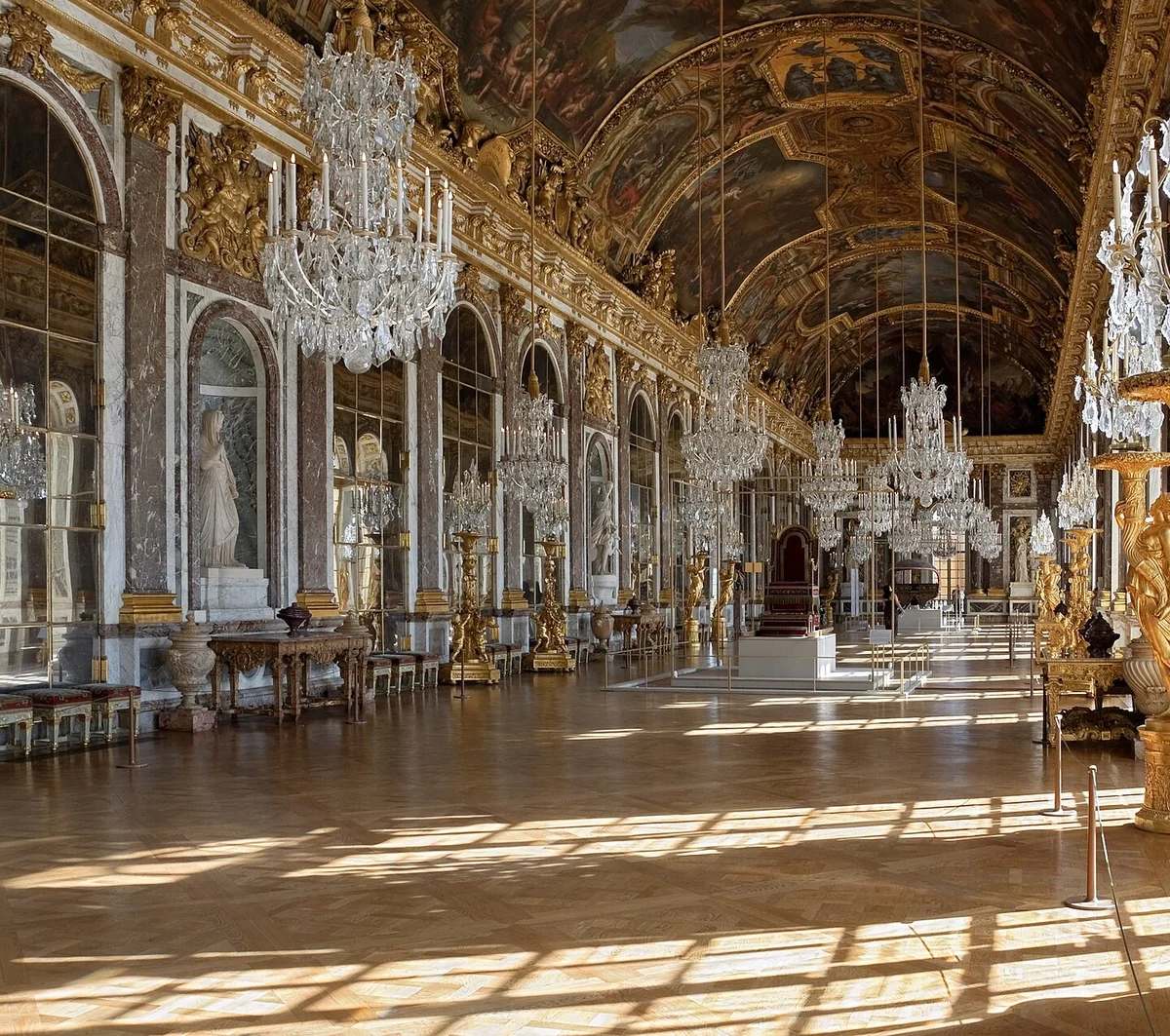
Quick answer
Discover Louis XIV, the Sun King who forged absolute France from chaos. Explore Versailles' opulent legacy and French grandeur that captivates luxury travelers seeking royal elegance in Europe's ti...
Seventy-two years is an eternity for absolute power. Louis XIV reigned longer than any European monarch in recorded history, ascending the throne at age four in 1643 and dying in 1715 after reshaping France so completely that his vision endured through revolution, empire, and republic. He transformed a kingdom perpetually threatened by aristocratic rebellion into the continent's dominant power, built Versailles to cage the nobility that had once besieged his childhood bedroom, and established French culture—language, fashion, architecture—as Europe's standard. His absolutism wasn't tyranny disguised as monarchy; it was a meticulously constructed system where every gesture carried meaning, every interaction reinforced hierarchy, and proximity to the king determined whether you prospered or disappeared. When he declared "L'État, c'est moi" (I am the state), it wasn't boasting—it was constitutional theory rendered as personal identity. He spent seven decades proving the Sun King metaphor literal: everything in France orbited him, drew light from him, and withered without his favor.
The Fronde: When Childhood Became Political Education
Louis was born September 5, 1638, at Saint-Germain-en-Laye to Louis XIII and Anne of Austria. His father died when he was four, making him king while his mother and Cardinal Mazarin governed as regents. Between 1648 and 1653, France convulsed with the Fronde—a series of civil wars where nobles and regional parlements rebelled against centralizing authority. Rioters broke into the royal apartments; the young king and his mother fled Paris multiple times, occasionally lacking money for food.
These childhood traumas imprinted permanently. Louis developed lifelong distrust of Paris and its uncontrollable mobs, of aristocrats who believed military power gave them veto authority over royal decisions, and of any institution—parlements, provincial estates, guilds—that claimed rights independent of the Crown. When Mazarin died in March 1661, the 23-year-old Louis shocked the court by announcing he would govern without a chief minister. Jean-Baptiste Colbert, his finance minister, asked whom he should consult on state matters. Louis replied: "Moi" (Me). It was the beginning of personal absolutism that would define his reign. He'd learned from the Fronde that divided authority meant civil war; concentrated power under one disciplined ruler meant stability.
Versailles: Architecture as Control
In 1661, Louis also began transforming his father's modest hunting lodge at Versailles into the palace that would become monarchy's physical embodiment. The project consumed astronomical resources—exact costs were deliberately obscured—and required 30,000 workers laboring for decades. By the 1680s, Versailles housed 10,000 people: the royal family, court nobility, servants, administrators, guards, and the infrastructure needed to feed and manage them all.
But Versailles wasn't excess; it was strategy. Louis required the high nobility to reside there for months annually, sometimes permanently. Aristocrats who once commanded private armies and provincial power bases competed instead for the honor of handing Louis his shirt at the morning lever ceremony or holding a candle at the evening coucher. The king's daily routine became public performance—waking, dressing, eating, attending Mass—with attendance signaling favor. His most devastating insult was telling someone "Je ne vous vois jamais" (I never see you), effectively banishing them from political relevance.
The palace's architecture reinforced this hierarchy. The Hall of Mirrors—73 meters of floor-to-ceiling arched mirrors reflecting gardens through 17 windows—was designed to bankrupt visiting diplomats with envy. State apartments flowed in sequence, each room filtering access until only the most privileged reached the king's presence. Versailles turned nobility from military threats into decorative courtiers whose status depended entirely on royal favor. Louis neutered aristocratic power by making proximity to himself more valuable than territorial independence.
Wars: Expansion and Exhaustion
Louis waged near-constant warfare throughout his reign, viewing military glory as essential to monarchy's prestige. The War of Devolution (1667-1668) seized parts of the Spanish Netherlands; the Dutch War (1672-1678) expanded French territory despite William of Orange's stubborn resistance. The War of the Grand Alliance (1688-1697) saw Europe unite against French aggression, draining treasuries on all sides. The War of Spanish Succession (1701-1714), fought to place Louis's grandson on Spain's throne, became his longest and costliest conflict.
These wars achieved territorial gains—Strasbourg, Franche-Comté, parts of Flanders—but at ruinous expense. Colbert's careful financial management gave way to desperate expedients: selling offices, debasing currency, borrowing at extortionate rates. The 1690s brought famine; peasants starved while Versailles consumed resources. Louis's military ambitions modernized French administration—centralized tax collection, standardized military organization, expanded road networks—but the human cost was staggering. By his death, France was exhausted, bankrupt, and facing demographic crisis. The Sun King's brilliance had burned through his kingdom's resources.
Religious Intolerance: The Edict's Revocation
In October 1685, Louis revoked the Edict of Nantes, ending nearly a century of limited religious tolerance for French Protestants. He'd concluded that religious uniformity strengthened absolutism; Protestant independence threatened it. The Revocation made Protestantism illegal, demolished Protestant churches, and expelled pastors. Perhaps 200,000 Huguenots—many skilled artisans, merchants, and professionals—fled France for England, the Dutch Republic, Prussia, and America, taking their expertise with them.
Louis believed religious unity would consolidate royal authority and demonstrate piety. Instead, it weakened France economically, strengthened enemies who welcomed Huguenot refugees, and branded him a persecutor across Protestant Europe. The Revocation revealed absolutism's fundamental flaw: when one man's convictions become state policy, errors compound. Louis's Catholic faith was genuine, but his decision to enforce uniformity through persecution damaged France more than any foreign enemy could. It proved that absolute power includes the power to commit absolute mistakes.
Cultural Dominance: French as Universal Language
If Louis's wars exhausted France, his cultural policies conquered Europe. He established the Académie Royale de Danse, the Académie Royale de Musique, and supported writers like Molière, Racine, and Corneille who defined French classical theater. French became Europe's diplomatic language, the tongue educated elites used regardless of nationality. Versailles set standards for architecture, garden design, fashion, and etiquette that courts from Madrid to St. Petersburg imitated.
This cultural hegemony outlasted Louis's political power. When Napoleon crowned himself emperor a century later, he did so in French Neoclassical style descended from Louis XIV's aesthetic. When the United States designed government buildings, they borrowed from French classicism. Louis understood that power required more than armies; it required shaping how others conceived of civilization itself. By making French culture synonymous with sophistication, he ensured France's influence persisted even when its military declined.
1715: The Sun Sets
Louis XIV died September 1, 1715, at Versailles, five days before his 77th birthday. Gangrene from diabetes had consumed his leg; he faced death with the same disciplined composure he'd applied to governance. His great-grandson, the future Louis XV, inherited a kingdom transformed but depleted—absolutism perfected but unsustainable. Louis XIV's legacy was paradoxical: he'd demonstrated that absolute monarchy could function brilliantly under an extraordinarily disciplined ruler working 16-hour days for seven decades. But that very success proved the system's flaw. His successors lacked his stamina, intelligence, and will. The machine he'd built required a Sun King to operate; mere mortals couldn't manage it. Within 74 years of his death, revolutionaries would execute his great-great-great-grandson and abolish the monarchy Louis XIV had made absolute.
Keep exploring: grand monuments of the Napoleonic empire · the five Statues of Liberty in Paris · Plan your Paris trip with a local
See how Chic Trip plans custom trips across France, coordinates the route and eligible bookings, and keeps every price clear before confirmation.
Plan my France trip
Ready to experience France for yourself? Plan Your France Trip with Chic Trip - a custom route, coordinated bookings and one accountable planner.
About Chic Trip
A journey designed exclusively for you: a personal itinerary, restaurant recommendations refined with your feedback, approved reservations and practical details in the Chic Trip app. Your written proposal confirms the total, inclusions and booking conditions before you commit. Start with a free call or email; no payment or price acceptance is required to enquire.