The Perfect 5-Day Paris Itinerary for American Travelers
Itinerary and planning 9 min read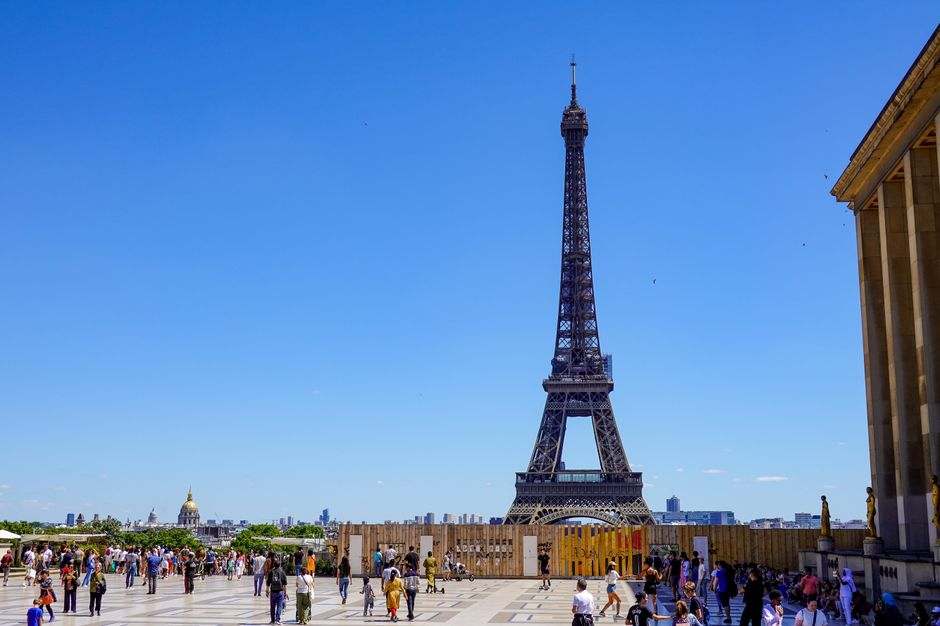
Quick answer
This practical, day-by-day 5-day Paris itinerary covers the best neighborhoods, restaurants, and pacing strategies so American visitors can see the city without burning out.
Five days in Paris sounds generous until you realize the city has 20 arrondissements, three major palaces, dozens of world-class museums, and more restaurants worth visiting than you could eat through in a month. The key to a successful first, or even second, trip is ruthless prioritization and smart pacing. This itinerary is built around one non-negotiable principle: quality over quantity. You will leave Paris having eaten well, walked purposefully, and actually absorbed what you saw, rather than sprinting between monuments in a jet-lagged blur. Each day is anchored in a specific neighborhood or theme, so your feet and your Metro card work efficiently together.
Before You Arrive: Logistics That Actually Matter
Book your museum tickets before you leave home. The Louvre, Musée d'Orsay, and the Palace of Versailles all require timed-entry reservations, and they sell out days or weeks in advance, especially from April through October. The Paris Museum Pass covers permanent collections at most major sites and is worth the investment if you plan to visit more than three museums. Buy it online before departure. For getting around, load the Bonjour RATP app on your phone and purchase a Navigo Easy card at any Metro station. It accepts contactless payment and is far simpler than hunting for individual tickets. Finally, book dinner reservations before you fly. Paris restaurants, even mid-range bistros, fill up quickly, and showing up without a reservation at 8 p.m. will cost you a meal.
Day One: Île de la Cité, Saint-Germain-des-Prés, and Recovering from the Flight
You will land exhausted. Resist the urge to power through a full sightseeing day on no sleep. Instead, use Day One to orient yourself gently. Check into your hotel, ideally in Saint-Germain-des-Prés or the 4th arrondissement for central access, then walk to the Île de la Cité. Notre-Dame de Paris is open to visitors with free cathedral admission. Check the official website for visiting hours, services and free reservation options; tower tickets are separate. Even from the exterior, the scope of the rebuilding effort is remarkable. Cross the Pont Saint-Louis to the Île Saint-Louis for an afternoon scoop of ice cream from Berthillon, the city's most respected glacier, operating since 1954.
Spend the late afternoon in Saint-Germain-des-Prés. Walk Boulevard Saint-Germain, browse the bookshops along Rue de Buci, and stop into the Église Saint-Sulpice if it is open. For dinner, book a table at Allard on Rue de l'Éperon, a classic French bistro that has been feeding the neighborhood since 1931. Order the duck with olives or the sole meunière. Keep it to two courses and one carafe of house wine. You have four more days.
Day Two: The Louvre, the Tuileries, and Palais Royal
This is your big museum day. Arrive at the Louvre at your reserved entry time, ideally 9 a.m. or 9:30 a.m. before tour groups stack up. Do not attempt to see the entire museum. It is not possible in a day and the attempt will destroy you. Choose two or three wings and commit. The Denon Wing holds the Italian paintings, including the Mona Lisa and Veronese's massive Wedding at Cana, as well as the Winged Victory and Venus de Milo. Two hours here is well spent. The Richelieu Wing covers Northern European painting and French sculpture and is consistently less crowded.
By noon, exit through the Tuileries Garden and walk east toward the Palais Royal. Have lunch at Café Kitsuné inside the Palais Royal gardens, a beautifully designed space serving simple, quality food at reasonable prices given the setting. After lunch, walk north to the 1st arrondissement's covered passages: the Galerie Vivienne and the Passages des Panoramas are extraordinary 19th-century arcades worth 45 minutes of wandering. In the evening, head to Le Marais for dinner. Septime releases reservations daily at 10 a.m. Paris time for dates 21 days ahead. Check its official booking calendar rather than trying to reserve months in advance. A far more accessible option is Breizh Café on Rue des Archives, widely considered the best crêperie in Paris, with buckwheat galettes filled with high-quality Breton ingredients and an exceptional cider selection.
Day Three: Versailles Day Trip
Take the RER C train from Gare d'Austerlitz or Musée d'Orsay station directly to Versailles-Château-Rive Gauche. The ride is about 35 to 40 minutes and runs frequently. Buy your timed-entry ticket to the Palace of Versailles in advance, and purchase a Passport ticket, which includes the palace, the Grand Trianon, the Petit Trianon, and the gardens. Plan to arrive when the palace opens, which is currently 9 a.m. Move through the State Apartments and the Hall of Mirrors first, before the afternoon crowds arrive. The Hall of Mirrors is genuinely overwhelming in scale and detail. Budget 90 minutes for the palace interior.
The gardens are where most visitors shortchange themselves. Walk south past the Orangerie to the Grand Canal and continue to the Trianon estate. The Petit Trianon and Marie Antoinette's Hamlet, a theatrical pastoral village she had built for private retreat, are among the most fascinating and strange things you will see in France. Bring lunch or buy it at the estate's café, as the restaurants on the grounds are overpriced and mediocre. Return to Paris by 5 p.m. to rest before dinner. For the evening, stay near your hotel. Day Three should be treated as a recovery night. A simple dinner at a neighborhood brasserie, nothing with a Michelin star, will serve you better than another ambitious meal.
Day Four: Montmartre in the Morning, the Marais in the Afternoon
Get to Montmartre early, before 9 a.m. if you can manage it. The neighborhood transforms entirely once the tourist buses arrive around 10:30 a.m. Walk up through the steep streets from Abbesses Metro station, stop at the Place du Tertre when it is still quiet, and continue up to the Sacré-Coeur. The interior of the basilica is worth a brief visit. More importantly, find a table at a café on Rue Lepic or Rue des Abbesses and have a proper French breakfast: a café au lait, a croissant, and a tartine with good butter. Le Relais de la Butte on Rue Ravignan is an honest neighborhood spot with none of the tourist markup.
Leave Montmartre by 11 a.m. and take the Metro to the Marais (Saint-Paul station). Spend the afternoon exploring. The Musée Picasso Paris on Rue de Thorigny is one of the finest single-artist museums in the world, covering Picasso's full career across a beautifully restored 17th-century mansion. Budget 90 minutes. Afterward, walk through the Place des Vosges, Paris's oldest planned square and still its most elegant. For dinner, book a table at Robert et Louise on Rue Vieille-du-Temple, a tiny, candlelit spot famous for its côte de boeuf carved tableside from a wood-fire grill. It is exactly the kind of meal that becomes a permanent memory.
Day Five: The Left Bank, Musée d'Orsay, and a Farewell Dinner
Save the Musée d'Orsay for your last full day. The Impressionist collection on the top floor, Monet, Renoir, Degas, Pissarro, all in one naturally lit room, hits differently when you have had four days to settle into Paris and slow your pace. Arrive at your reserved time and spend two hours here without rushing. The converted railway station building is itself one of the great architectural experiences in Paris.
After the museum, cross the Pont de la Concorde into the 8th arrondissement and walk toward the Grand Palais, which hosts rotating world-class exhibitions. From there, walk the length of the Champs-Élysées toward the Arc de Triomphe. Be honest with yourself: the Champs-Élysées is not what it was. It is now largely chain stores and tourist cafés. The value is in the walk and the scale of the urban planning, not the shopping. Climb to the top of the Arc de Triomphe at dusk for a view of Paris's grand axial design that you will not find anywhere else.
For your final dinner, make it count. La Fontaine de Mars in the 7th arrondissement, a beloved bistro on Rue Saint-Dominique, serves classical Southwestern French cooking in a setting that has barely changed in decades. The cassoulet, the foie gras, and the wine list represent exactly why French cuisine became the global standard. This is the meal you will describe to people when you get home.
How to Pace Your Days Without Burning Out
Americans tend to over-schedule Paris. Parisian days run late. Lunch is serious and slow. Dinner does not begin until 7:30 p.m. at the earliest, and 8 p.m. is more typical. Build two to three hours into every afternoon for a real sit-down lunch or a café stop, not a sandwich eaten standing. Your mornings should carry the heavier sightseeing load, between 9 a.m. and 1 p.m., when museums are freshest and neighborhoods are quieter. Afternoons from 2 p.m. to 5 p.m. are ideal for walking, shopping, and exploring neighborhoods at a looser pace. Evenings are for eating well and nothing else.
Resist the temptation to add more. If you are standing at the Musée d'Orsay and think you could quickly fit in a walk to the Eiffel Tower, you probably could, but you will arrive at dinner depleted and the meal will suffer for it. The Eiffel Tower looks extraordinary at night from almost anywhere in the city. You do not need to stand under it to have experienced Paris.
Where to Eat: A Practical Summary
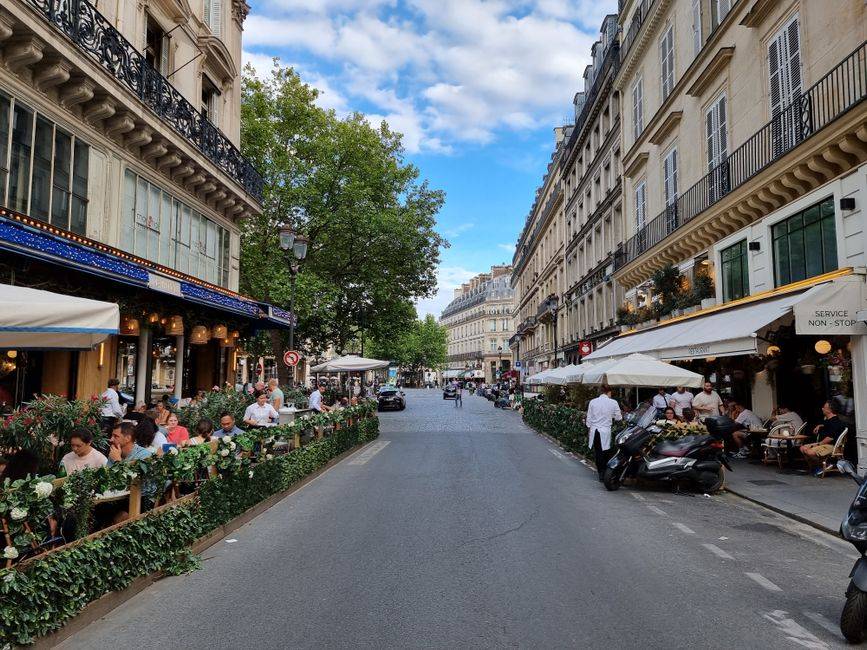
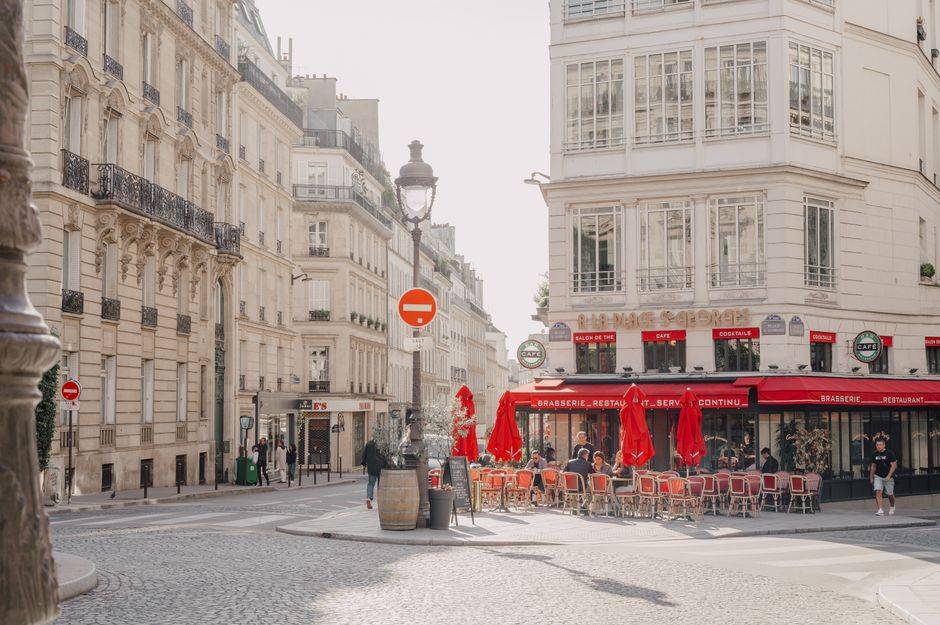
Beyond the specific restaurants already mentioned, a few practical rules apply across all five days. Avoid any restaurant displaying a menu in multiple languages with photographs. Eat lunch at places that write the daily menu on a chalkboard, as this indicates the kitchen is working with fresh, seasonal ingredients. For wine, ordering a pichet (a small carafe of house wine) at lunch is universally acceptable, inexpensive, and often excellent. For bread, it is free, it is unlimited, and it is some of the best in the world. Use it. Coffee in Paris is a short, strong espresso. If you order a coffee after dinner, you will receive an espresso. Café crème, the French equivalent of a latte, is a breakfast drink. Ordering one after a meal is a minor but real tell that you are not from here. None of this matters for enjoyment, but knowing it smooths the experience considerably.
Keep exploring: the 10 best restaurants in Paris · 15 hidden gems most tourists miss · Plan your Paris trip with a local
Get our free Insider Paris Guide: the neighborhoods, restaurants and hidden corners we send our own clients. No tourist traps, no filler.
Get the free guide
Ready to experience Paris for yourself? Plan Your Paris Trip with Chic Trip - a custom route, coordinated bookings and one accountable planner.
Planning your own Paris trip? Estimate your budget with the free Paris trip cost calculator, find out how many days you need in Paris, check when to book everything in Paris, or build a day-by-day plan with the Paris itinerary planner.
About Chic Trip
A journey designed exclusively for you: a personal itinerary, restaurant recommendations refined with your feedback, approved reservations and practical details in the Chic Trip app. Your written proposal confirms the total, inclusions and booking conditions before you commit. Start with a free call or email; no payment or price acceptance is required to enquire.