Paris for Older Travelers: A Slow, Comfortable Trip Guide
Itinerary and planning 9 min read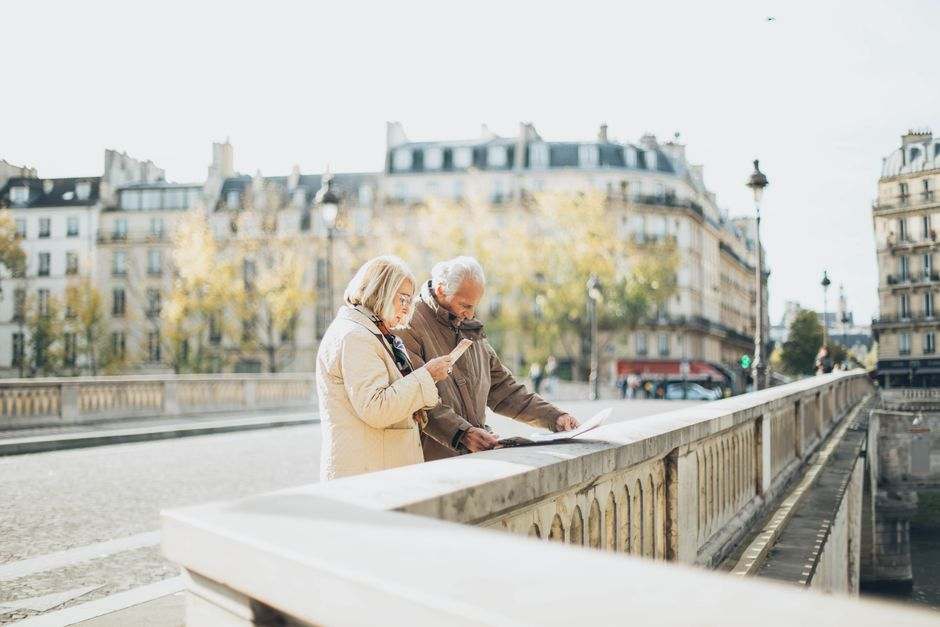
Quick answer
A practical guide to planning a slower, more comfortable Paris trip for older Americans, covering transport, accessible sights, and the right neighborhoods to stay in.
Paris rewards patience. For older American travelers who want to experience the city deeply rather than sprint through it, a slower pace is not a compromise, it is actually the better way to travel. You will linger over a proper lunch, take a car between neighborhoods, sit front-row at a museum with a fraction of the crowd, and return to a well-located hotel without wrecked knees. With careful planning around transport, accommodation, and daily rhythm, Paris is entirely manageable and genuinely enjoyable for travelers who want comfort built into every part of the day.
Choose the Right Neighborhood to Minimize Daily Effort
Where you stay determines how hard every day will be. For older travelers, the 1st arrondissement (Louvre, Tuileries) and the 7th arrondissement (Eiffel Tower, Musée d'Orsay) are the two strongest bases. Both are flat, central, and walkable in the immediate sense, meaning your hotel is close to meaningful sights, so you are not traveling far just to start your day. The Marais (3rd and 4th arrondissements) is charming but has uneven cobblestones that become tiring quickly. Montmartre is visually spectacular but involves steep hills and many steps. Saint-Germain-des-Prés (6th) is a reasonable alternative, with excellent restaurants, flat boulevards, and good taxi access, though it sits a bit further from the major Right Bank museums.
Avoid basing yourself in the outer arrondissements (11th through 20th) to save money. The extra travel time and unfamiliar streets make every outing more complicated without meaningful benefit.
Door-to-Door Transport: Taxis, Chauffeurs, and When to Use Each
The Paris Métro is genuinely difficult for anyone with mobility limitations, a bad back, or knee pain. Most stations involve long walks, staircases, and escalators that are frequently out of service. Skip it as your primary transport mode. Instead, build your trip around three reliable options.
G7 Taxis is Paris's largest licensed taxi company and can be booked by app or phone. Drivers are professional, vehicles are comfortable, and the pricing is metered and regulated. For shorter hops between neighborhoods, a G7 taxi is the equivalent of a New York yellow cab, familiar and straightforward. Book through their app for the best experience, as street-hailing during busy periods can involve a wait.
A private chauffeur can make a day with several transfers more comfortable. Ask for a written quote that specifies vehicle access, luggage or mobility-aid capacity, waiting time and the pickup plan. A hotel or concierge can coordinate the service, but confirm the actual operator and vehicle rather than relying on an old app or brand recommendation.
A rideshare can be convenient, but a comfort category is not a guarantee of wheelchair or scooter access. If vehicle height, folding equipment or assistance matters, arrange those details explicitly before travel. Do not rely on the app category alone.
For airport transfers, always pre-book. Charles de Gaulle to central Paris takes 45 to 75 minutes depending on traffic. A pre-arranged private transfer with a meet-and-greet service, where your driver waits in arrivals with a name sign, removes all stress from arrival and sets the right tone for the trip.
The Best Hotels for Comfort and Accessibility
Not every luxury hotel in Paris was built with accessibility in mind. Many of the most atmospheric properties are in historic buildings with narrow lifts, heavy doors, and rooms that require navigating several levels. When choosing a hotel, ask specifically about elevator dimensions, room step-free access, and distance from the front door to the lift. The following properties are consistently strong for older travelers.
The Hôtel de Crillon is on Place de la Concorde in the 8th arrondissement, not the 1st. On the Left Bank, the Lutetia now operates as Mandarin Oriental Lutetia, Paris, in the 6th. Treat these as locations to investigate, not blanket accessibility recommendations: confirm the specific room, lift, bathroom and step-free route with the property in writing.
The Grand Hôtel du Palais Royal is a five-star property near Palais-Royal, not a four-star alternative. Ask about the exact room and route from the street before booking. A low floor is not a substitute for step-free access or an appropriate emergency-assistance plan.
Accessible Museums: The Best Options and How to Visit Them Smartly
Paris has made significant accessibility improvements across its major cultural institutions. The key is to visit strategically, not by joining general timed-entry queues at peak hours.
At Orsay, check the official accessibility information and choose a focused route with breaks. Book the ticket required for your visitor category and follow its entrance instructions. Lifts and seating help with pacing, but no weekday or opening-time slot guarantees that the Impressionist rooms will be empty.
For the Louvre, use the official accessibility route for your needs rather than avoiding the Pyramid by default. Confirm assistance and any wheelchair-loan arrangements with the museum, then choose a manageable selection of rooms. Security and temporary lift or room closures can affect the route, so allow flexibility.
The Rodin Museum (7th arrondissement) is a genuine gem for slower-paced visitors. The sculpture garden is mostly flat, beautiful, and far less visited than the major museums. The interior mansion is small enough to see comfortably in 90 minutes. This is one of the most pleasant two-hour experiences Paris offers.
The Orangerie (1st arrondissement, in the Tuileries Garden) houses Monet's Water Lilies in two oval rooms designed specifically for the paintings. It is a small museum, entirely manageable in under two hours, with excellent seating inside the oval rooms. Book timed entry online and go mid-morning on a weekday.
Planning a Daily Rhythm That Does Not Exhaust You
The biggest planning mistake older travelers make in Paris is over-scheduling. One major activity per day, whether that is a museum, a neighborhood walk, or a Seine river cruise, is the correct pace. Fill the rest of the day with what Paris does better than anywhere else: sitting at a café terrace with a café crème, having a two-hour lunch, browsing a bookshop or antique gallery at leisure.
Build a mid-afternoon return to the hotel into every day. A 90-minute rest between 2:30 and 4:00 p.m. transforms the rest of the evening. Paris restaurants do not fill up until 7:30 or 8:00 p.m., so you have time to recover before dinner without missing anything.
A Seine cruise can offer a welcome seated break, but accessibility is boat- and departure-specific. Before booking, confirm the boarding slope and steps, wheelchair or scooter dimensions, accessible toilets, seating and assistance with the operator. Also confirm duration and the exact dock; do not assume every boat has step-free access or that reaching the dock involves no walking.
Seated Dining: Restaurants That Reward a Long Lunch
French restaurant culture is built for the kind of unhurried dining older travelers appreciate. A proper Paris lunch involves two or three courses, good wine, and no pressure to leave the table. These are not habits you need to adopt, they are simply the local standard, and they suit a relaxed travel pace perfectly.
Café de Flore and Les Deux Magots in Saint-Germain are tourist landmarks, but they remain functional, comfortable restaurants with cushioned banquettes, attentive service, and reliable French classics. Go for a mid-morning breakfast or a 12:30 lunch before the main rush.
For a more refined seated lunch, Le Grand Véfour inside the Palais Royal arcades (1st arrondissement) is a historic restaurant that has been serving since 1784. Seating is in upholstered antique booths, the menu is classic French haute cuisine, and the setting is one of the most beautiful dining rooms in the world. Reservations are essential and should be made several weeks in advance.
Brasserie Lipp (6th arrondissement) is a quintessential Paris brasserie with leather banquettes, a full menu of Alsatian and French classics, and the kind of steady professional service that makes a two-hour dinner feel effortless. It is not fancy, but the comfort level is high and the food is consistently excellent.
For travelers who prefer to dine early by Parisian standards, hotel restaurants are genuinely worth considering. The Lutetia's Brasserie Lutetia and the Crillon's Les Ambassadeurs both serve dinner from 7:00 p.m. and offer world-class food without a long wait or a noisy room.
Practical Details That Make a Real Difference
A few logistical choices will significantly affect daily comfort. Book flights into Charles de Gaulle in the morning rather than the afternoon, so you arrive with enough daylight to settle in without rushing. Always choose a nonstop flight even if it costs more. The difference in fatigue on arrival is substantial.
Pack light, or use a luggage delivery service such as AirPortr or Send My Bag to have bags shipped directly to your hotel before you arrive. Navigating Paris streets with large rolling suitcases is unnecessary friction.
Bring the mobility aids you normally use and discuss any new equipment with a qualified professional before the trip. Build in sitting breaks and keep daily distances realistic; carrying an unfamiliar cane is not a substitute for a route suited to your needs.
Before traveling, check whether your existing coverage applies abroad and consider travel medical and evacuation insurance appropriate to your circumstances. Review exclusions, pre-existing-condition rules and assistance arrangements with the insurer. Coverage and price depend on the traveler and policy; do not choose from an unverified provider name or assume every plan covers the same risks.
Finally, consider hiring a local Paris guide for one or two half-day sessions. A good private guide handles all navigation, queue management, and context, turning a potentially tiring museum visit into a relaxed, curated experience. Context Travel and Walks of Italy both operate excellent private guiding programs in Paris with guides who are specifically skilled at adapting pace and energy to their clients.
Keep exploring: the best time to visit Paris · where to stay in Paris · Plan your Paris trip with a local
Get our free Insider Paris Guide: the neighborhoods, restaurants and hidden corners we send our own clients. No tourist traps, no filler.
Get the free guide
Ready to experience Paris for yourself? Plan Your Paris Trip with Chic Trip - a custom route, coordinated bookings and one accountable planner.
Planning your own Paris trip? Estimate your budget with the free Paris trip cost calculator, find out how many days you need in Paris, check when to book everything in Paris, or build a day-by-day plan with the Paris itinerary planner.
About Chic Trip
A journey designed exclusively for you: a personal itinerary, restaurant recommendations refined with your feedback, approved reservations and practical details in the Chic Trip app. Your written proposal confirms the total, inclusions and booking conditions before you commit. Start with a free call or email; no payment or price acceptance is required to enquire.