Paris Flea Markets: The American Traveler's Guide to Saint-Ouen and Vanves
Itinerary and planning 11 min readQuick answer
Everything American travelers need to know to shop Saint-Ouen and Vanves like a pro, from timing and transport to bargaining and international shipping.
Paris flea markets are not a tourist novelty. They are serious, rewarding shopping destinations where interior designers, antiques dealers, and savvy collectors from around the world come to find pieces that simply do not exist back home. For American travelers, two markets stand above all others: the vast, world-famous Marché aux Puces de Saint-Ouen in the north and the smaller, more intimate Marché aux Puces de la Porte de Vanves in the south. Both reward preparation. Knowing which market suits your goals, when to arrive, how to negotiate, and how to get your finds back to Chicago or Charleston without drama is the difference between a triumphant haul and a frustrating morning spent wandering the wrong aisles. This guide gives you exactly that, in practical terms, so you can spend your time shopping rather than figuring out logistics on the fly.
Understanding the Two Markets Before You Go
Saint-Ouen and Vanves are not interchangeable. They serve different purposes and attract different vendors, and choosing the right one for your trip depends entirely on what you are looking for and how much time and energy you want to invest.
Saint-Ouen, often called Clignancourt after the nearest Metro stop, is one of the largest antiques markets in the world. It covers roughly 17 acres and contains somewhere between 2,000 and 2,500 dealers spread across 15 distinct sub-markets, each with its own personality. Marché Paul Bert Serpette is the prestige address, stocked with properly curated mid-century furniture, Art Deco lighting, vintage textiles, and architectural salvage. Marché Dauphine is more eclectic, with jewelry, vintage clothing, ceramics, and prints. Marché Biron skews formal, with Louis XV and Louis XVI furniture and the kind of dealers who have regular clients at Sotheby's. Plan to spend a full day here. You will not see everything in a morning.
Vanves is the opposite experience in the best possible way. Set along two short streets near the Porte de Vanves on the southern edge of the city, this open-air market has roughly 380 vendors and operates entirely outdoors. The scale is human. You can see most of it in two or three hours, and the dealers tend to be individual collectors selling personal collections rather than professional merchants. That means prices are often softer and the finds more unexpected. Vanves is excellent for vintage silver, old maps and prints, mid-century barware, linen, small decorative objects, vintage French advertising posters, and the kind of charming ephemera that packs flat and ships easily. It is also deeply pleasant simply to walk, which is not something you can always say about Saint-Ouen.
When to Go: Timing Your Visit for Maximum Advantage
Both markets operate on weekends only. Saint-Ouen is open Saturday, Sunday, and Monday, from roughly 10 a.m. to 6 p.m., though some vendors in the outdoor sections start earlier on Saturday. Vanves operates Saturday and Sunday from approximately 7 a.m. to 1 p.m., and this timing matters enormously. At Vanves, the serious pickers, local dealers, and design professionals arrive before 8 a.m. If you sleep in and arrive at 11, you will find picked-over tables and vendors beginning to pack. For Vanves, arriving by 8 to 8:30 a.m. is not optional if you want the best selection.
At Saint-Ouen, the calculus is different. The indoor markets under the Marché Paul Bert Serpette and Marché Dauphine roofs do not open until 10 a.m. and are fully operational through the afternoon. Arriving at 10 a.m. when doors open gives you a calm, unhurried start. Saturdays are busy but manageable. Sundays draw larger crowds and more tourists. Monday at Saint-Ouen is a genuinely underrated option, particularly for the indoor markets, where crowds thin considerably and dealers who are willing to negotiate tend to be more flexible after a full weekend of business.
Avoid visiting in August if you can. Many of the best dealers at both markets close for summer vacation and do not reopen until September. The fall months, particularly September through November, represent the strongest inventory and the most active trading season.
Getting to Saint-Ouen Comfortably
The Metro is the default recommendation for Saint-Ouen, and Line 4 to Porte de Clignancourt is indeed direct from central Paris. But if you are planning to buy anything larger than a handbag, reconsider. The walk from the Metro exit through the street market gauntlet that surrounds the entrance, past vendors selling knockoff sneakers and sunglasses, is disorienting for first-timers, and the Metro home with a wrapped lamp or a stack of framed prints is genuinely awkward.
A taxi or rideshare from central Paris to Saint-Ouen takes 20 to 35 minutes depending on traffic and costs roughly 15 to 25 euros. Book a return taxi through your hotel concierge or use the G7 taxi app, which allows advance scheduling. Many dealers at the better markets can also arrange delivery to your hotel for larger pieces, which eliminates the transport problem entirely. If you do take the Metro, Line 4 to Porte de Clignancourt deposits you at the edge of the market, and from there it is a five-minute walk past the informal street stalls to the entrance of the main covered markets. Keep your bags close in this stretch.
Getting to Vanves Without the Stress
Vanves is straightforward. Metro Line 13 to Malakoff Plateau de Vanves, or the T3a tram to Porte de Vanves, both drop you within a two-minute walk of the market on Avenue Marc Sangnier and Avenue Georges Lafenestre. The neighborhood is calm and residential. There is no gauntlet to navigate, no density of tourist-oriented distractions. Taxis and rideshares work well here too, and since you are arriving early, traffic is light. From Saint-Germain-des-Prés, the ride takes under 15 minutes on a Saturday morning.
Because Vanves is primarily an outdoor market and vendors display on folding tables, there is no complicated layout to decipher. Walk both streets completely before you buy anything. This is important. Dealers at the far end of the market often have the most interesting inventory precisely because fewer buyers make it that far.
What to Buy and What to Skip
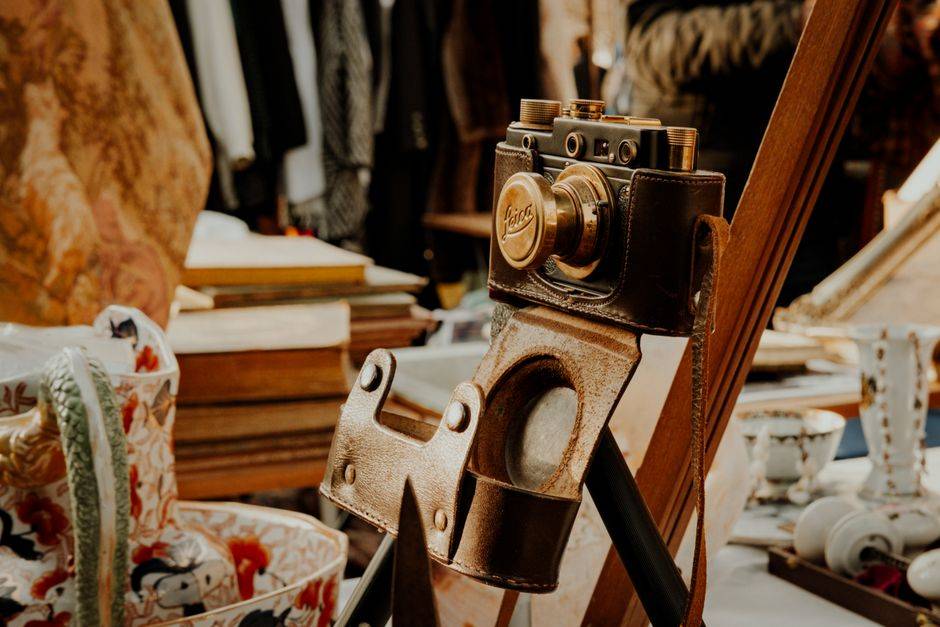
Saint-Ouen excels in furniture, lighting, architectural elements, vintage fashion, fine jewelry, and significant decorative objects. If you are looking for a 1950s Italian ceramic lamp, a pair of Art Deco armchairs, a collection of vintage Hermès scarves, or a set of brass drawer pulls for a renovation project, Paul Bert Serpette is your market. Budget accordingly. Prices here are professional, and exceptional pieces are priced to reflect their quality. That said, everything is negotiable, and asking for a reduction of 10 to 20 percent is standard and expected. Asking in French, even a rough attempt, is appreciated and often rewarded.
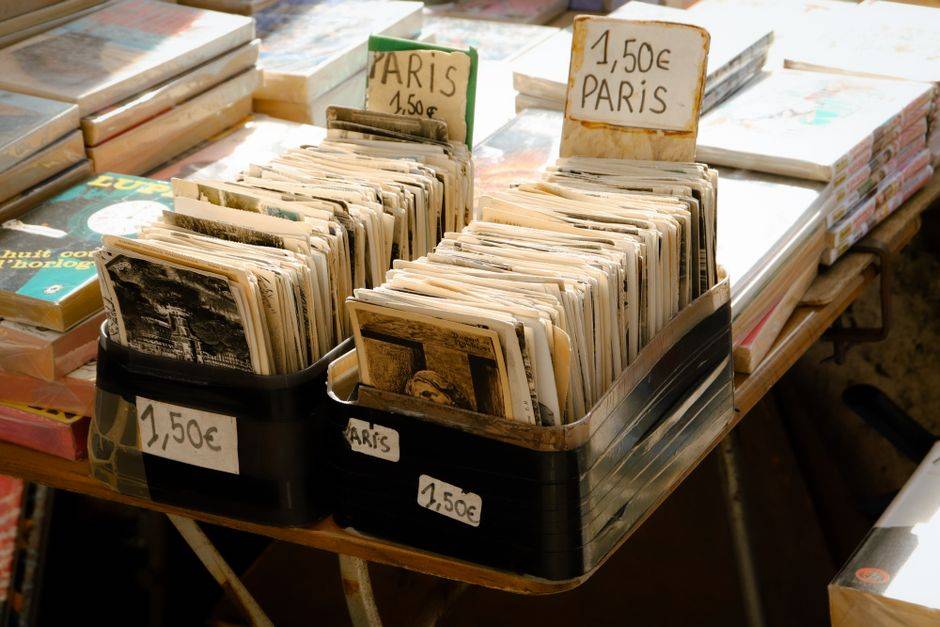
Vanves is better for smaller, more portable finds. Vintage French linen tea towels and tablecloths, sterling silver flatware sets, old Michelin guides, framed botanical prints, vintage postcards, Quimper pottery, mid-century barware, brass candlesticks, and enamelware are all common finds and all pack or ship easily. Do not overlook vintage jewelry here. Individual sellers often price it based on personal sentiment rather than market value, which creates genuine opportunities.
At both markets, avoid buying anything described as a reproduction unless you want a reproduction. Ask directly: is this original or a reproduction? Reputable dealers will answer honestly. At Saint-Ouen in particular, established dealers in the covered markets carry business cards and can provide provenance documentation, which matters if you are buying anything of significant value.
Negotiating Without Awkwardness
Negotiation at Paris flea markets is expected, but it operates on a register that differs from, say, a bazaar in Marrakech. The approach is quieter and more respectful. State your interest, ask if there is any flexibility on the price, and let the dealer respond. Opening with an offer that is 30 percent below asking is not appropriate at the better stalls in Saint-Ouen and will likely end the conversation. Ten to fifteen percent below asking is a reasonable opening, and the final price typically lands somewhere between the two. At Vanves, where vendors are often private sellers rather than professionals, you sometimes have more room, but the same courteous approach applies.
Buying multiple pieces from the same dealer is your strongest negotiating tool. If you are interested in three items, asking for a prix groupé, a combined price, almost always produces better results than negotiating each piece individually. Pay in cash when possible. Most established dealers at Saint-Ouen accept credit cards, but cash reliably produces a slightly better price, and smaller vendors at Vanves often prefer it. Bring a mix of bills and have plenty of small denominations.
Shipping Your Purchases Back to the United States
This is where many American buyers get tripped up, so pay attention. The good news is that shipping antiques and vintage goods from France to the United States is completely routine, and there are excellent options at every price point.
For small, flat, or lightweight items, the French postal service, La Poste, and carriers like DHL and FedEx handle shipments easily. Pack carefully, declare contents accurately on customs forms, and keep your receipts. Items over 100 years old qualify as antiques and enter the United States duty-free. Vintage items that do not meet the antiques threshold are subject to import duties that vary by category, typically between 4 and 6 percent of declared value for decorative objects. Your receipts are your proof of value.
For furniture, large lighting, or fragile pieces, use a specialist fine art and antiques shipper. Several companies operate specifically in this niche and have offices or partners near Saint-Ouen. Hedley's Humpers, Dietl International, and Gander & White all have Paris operations and are accustomed to handling purchases from the flea markets. Expect consolidation shipping, where your pieces share a container with other buyers' purchases, to take four to eight weeks to arrive in the United States. Door-to-door service from Paris to a US address typically costs between $800 and $2,500 depending on volume and destination, and is often worth every dollar when you consider what you are bringing home.
Several of the larger dealers at Saint-Ouen, particularly in Paul Bert Serpette, have preferred shipping partners and can arrange collection directly from their stall. Ask at the point of purchase. Many will hold your pieces for a few days while shipping arrangements are confirmed, which gives you time to consolidate purchases from multiple dealers into a single shipment and reduce costs.
One practical note on customs: US Customs allows each traveler to bring back $800 worth of goods duty-free as a personal exemption. Beyond that threshold, duties apply. If you are carrying purchases in your luggage rather than shipping, be accurate in your declarations. For anything of real value, shipping separately and declaring properly is cleaner, easier, and protects the pieces from the indignities of checked luggage.
Practical Details to Handle Before You Leave Your Hotel
Bring a soft measuring tape if you are shopping for furniture or rugs, since you will want to check dimensions against spaces at home. Download the Google Translate app with French offline capability for reading handwritten price tags and dealer notes. Wear comfortable, flat shoes. Both markets involve considerable walking on uneven pavement, cobblestones, and in the case of Vanves, standing on a sidewalk in whatever weather arrives. Bring a tote bag for small purchases so your hands stay free. At Saint-Ouen, the market has a left-luggage service near the main entrance on Rue des Rosiers where you can deposit earlier purchases while you continue shopping. Use it.
Have your hotel concierge reserve a taxi for your return from Saint-Ouen. Saturday afternoon traffic around Clignancourt can be significant, and having a driver who knows where to meet you simplifies the end of what will likely be a long and rewarding day. A good rule: budget more time, more euros, and more shipping capacity than you think you will need. The markets have a way of exceeding expectations.
Keep exploring: where to stay in Paris · a 4-day Paris itinerary for first-timers · Plan your Paris trip with a local
Get our free Insider Paris Guide: the neighborhoods, restaurants and hidden corners we send our own clients. No tourist traps, no filler.
Get the free guide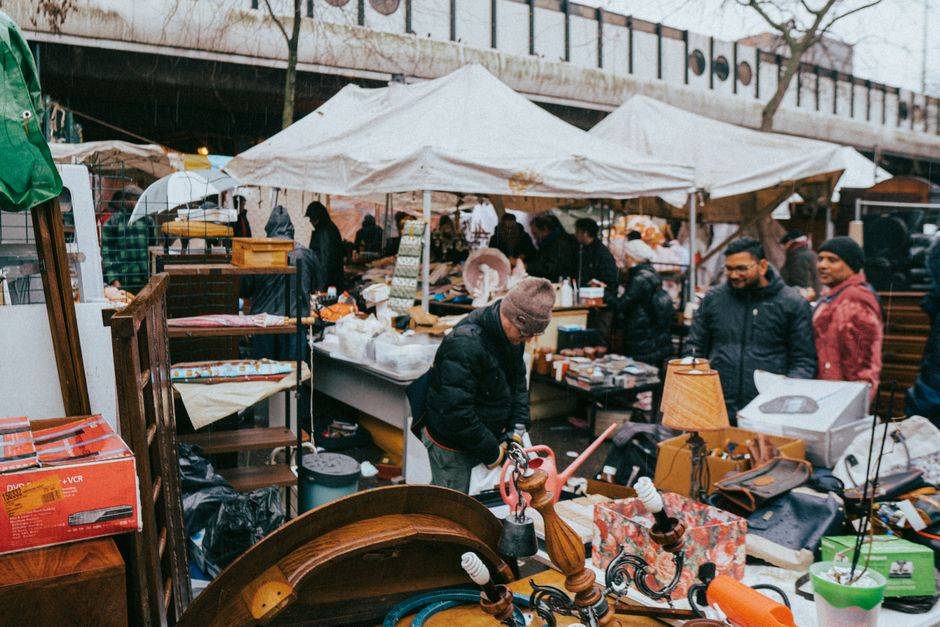
Ready to experience Paris for yourself? Plan Your Paris Trip with Chic Trip - a custom route, coordinated bookings and one accountable planner.
Planning your own Paris trip? Estimate your budget with the free Paris trip cost calculator, find out how many days you need in Paris, check when to book everything in Paris, or build a day-by-day plan with the Paris itinerary planner.
About Chic Trip
A journey designed exclusively for you: a personal itinerary, restaurant recommendations refined with your feedback, approved reservations and practical details in the Chic Trip app. Your written proposal confirms the total, inclusions and booking conditions before you commit. Start with a free call or email; no payment or price acceptance is required to enquire.